Serbian Tricolour Hound
A separate Serbian scenthound with red, black and white markings, covering daily scent outlets, family routines and health decisions where breed-specific evidence is limited.
How these guides are researched and reviewed
- Origin
- Serbia
- Adult male height
- 45–55 cm; ideal 51 cm
- Adult female height
- 44–54 cm; ideal 49 cm
- Coat
- Short red, black and white
General information for owners. These articles have not been reviewed by a veterinarian. Medical decisions need your dog's history and an examination.
A separate Serbian scenthound with three defined colors
The Serbian Tricolour Hound has its own breed identity and standard. It is not simply a Serbian Hound whose owner prefers more white in the coat. The Serbian name Srpski Trobojni Gonič may appear on paperwork, while older international material can use Yugoslav wording. Keep those naming questions separate from an assumption that every hound with red, black, and white markings belongs to this breed.
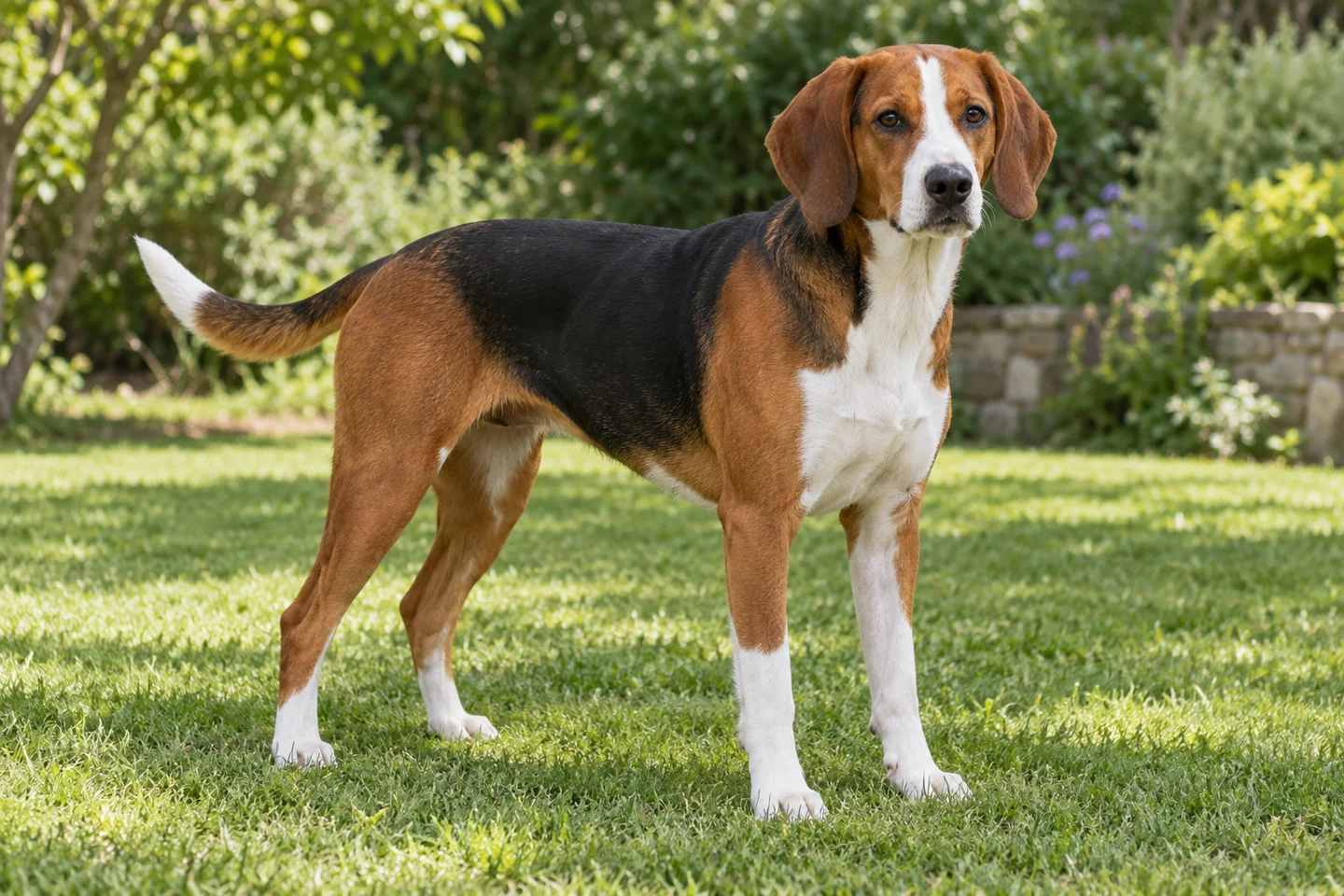
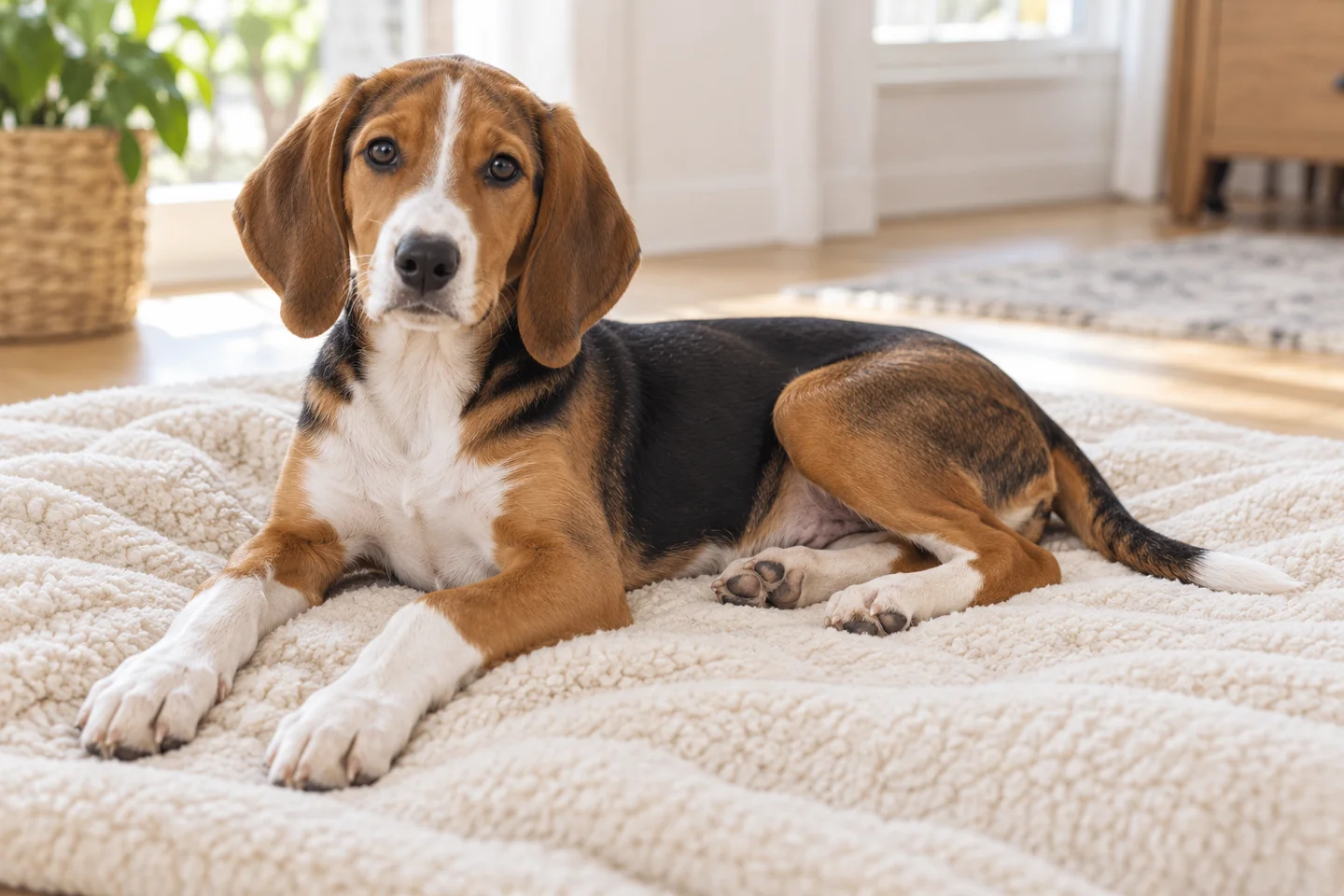
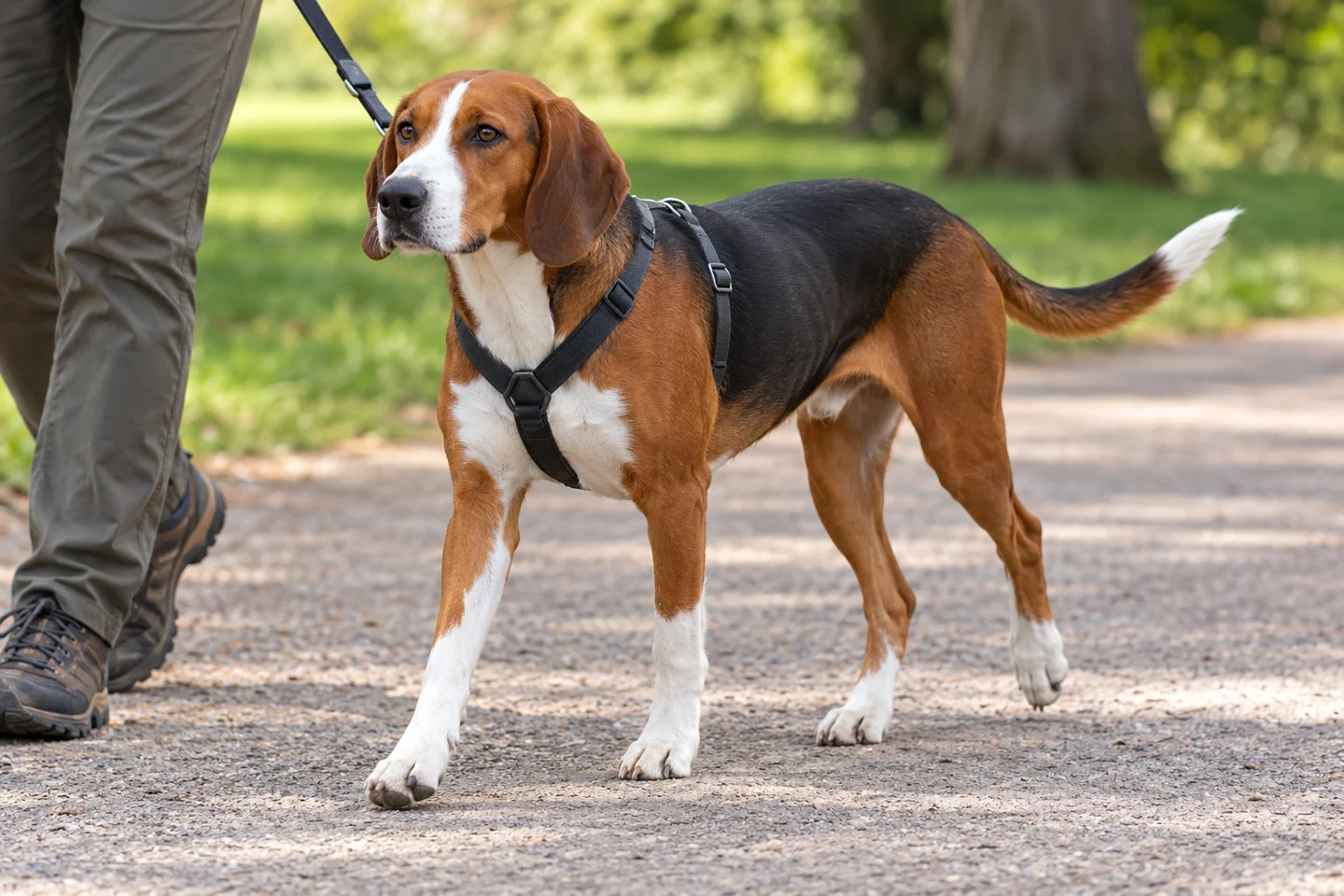
The selected illustrations show a short-coated, medium-sized hound with hanging ears and an unaltered tail. They provide an appearance reference, not a record of real animals or evidence of pedigree. When looking for a companion, request the actual dog's identification, history, and medical information. Observe how it moves and responds to everyday handling. A recognizable color pattern cannot tell you whether the dog has learned to travel comfortably, relax when visitors arrive, or remain safe around the animals already living in your home.
Breed history and what recognition means
The FCI account records separate breed status and a first standard in 1946, a Belgrade exhibition appearance in 1950, and international recognition in 1961. Those dates describe formal classification. They should not become a promise that a particular puppy will excel at a task or fit a particular family. Shared regional origins with other Balkan hounds do not erase the separate records used for this breed today.
Ask about the recent circumstances behind the litter or adult you are considering. Has the dog experienced household noise, comfortable confinement for travel, or a veterinary waiting room? What does the breeder do when the weather prevents the usual activity? Answers with concrete examples are more useful than a historical slogan about toughness. If a rescue has little background, start from present observations and allow time to learn. A dog accustomed to a different environment may need a structured transition even when it is physically mature and people describe it as experienced.
Height, proportions, and judging condition
The male height range is 45–55 cm, with 51 cm ideal in the FCI standard. Females measure 44–54 cm, with 49 cm ideal. These are measurements at the withers. The document does not establish a fixed adult weight interval, so do not borrow one from the red-and-black Serbian Hound or a superficially similar tricolour breed. Ask the veterinary team how to assess the individual animal's condition.
The outline is moderately rectangular rather than square. Sound movement and comfortable daily function matter more to an owner than trying to reproduce a drawing through extra feeding. Check whether the dog turns easily in the car and has a secure sleeping place during travel. A narrow seat arrangement that fitted a puppy may become awkward for the adult. Teach getting in and out without a scramble, using a stable aid when needed. If that familiar movement later becomes difficult, consider discomfort and obtain advice rather than assuming the animal has suddenly stopped cooperating.
The tricolour pattern and responsible identification
The standard combines a deep red ground color, a black mantle or saddle, and defined white markings. White may appear on the head, neck, chest, limbs, and tail tip, with limits specified for the overall pattern. A puppy's photograph should be discussed in the context of its development and documented family. A seller should be able to explain breed identity without changing labels whenever you ask about the parents.
Use secure identification for the individual dog whatever its markings. Check microchip registration after a change of ownership and keep usable photographs available. A rescue may resemble the breed without documented ancestry; acknowledge that uncertainty rather than converting a resemblance into a pedigree. The practical care decisions still depend on size, behavior, medical findings, and the household. Public photographs also deserve a privacy check. Remove visible addresses, travel routines, and identifying paperwork before sharing a profile. People arranging a dog walk do not need information that locates your front door.
Living with persistence and an active nose
A scent-led dog can keep investigating when the person at the other end of the lead thinks the interesting part has ended. Set up walks with some opportunities for safe investigation and some short periods of moving together. Reward cooperation while it is still achievable. If every request comes only after the animal is completely absorbed, both handler and dog have fewer chances to practice a successful response.
At home, look for a balance between meaningful activity and reliable rest. Continual access to a noisy boundary may keep the dog alert long after the walk. A quieter resting room, a predictable schedule, and gradual practice relaxing while people move around can help. If the dog remains distressed or cannot settle, discuss the pattern with a veterinarian or behavior professional. Breed descriptions cannot distinguish excitement, fear, pain, and separation problems. Recording when the difficulty occurs provides a better starting point than assuming any persistent hound simply needs an exhausting run.
Training around the car park and trail entrance
The beginning of an outing is a useful training project. Park with enough space to attach equipment before opening access to the outside. Reward the hound for waiting while you organize the lead, then release it deliberately. Practice the same procedure in quiet places before attempting a popular trail entrance. A hurried first minute can otherwise set up pulling and frustration before the walk has begun.
Use a familiar response, such as orienting toward the handler, at manageable distances from distractions. Reinforce it with food or access to an appropriate smell. A long line can provide practice space where safe and lawful, but it must be handled without wrapping around people or snagging obstacles. Do not treat equipment as proof of reliable recall. Teach returning as a useful part of exploration rather than always the signal that everything enjoyable ends. Ask an instructor for hands-on help if the dog's speed or strength makes the arrangement difficult to manage safely.
Exercise over a week rather than one ambitious day
Plan for the ordinary week: working days, poor weather, and the evenings when someone gets home late. A single very long weekend outing cannot substitute for suitable regular movement and investigation. Offer varied walks and achievable scent tasks, with the amount adapted to age, condition, and recovery. Let puppies develop through manageable activity instead of following an adult hound's endurance routine.
When trying a new route, consider footing, livestock, road crossings, water, and the possibility of leaving early. Bring drinking water and choose conditions that do not place the dog under unnecessary heat strain. An animal keen to continue may still need the handler to stop. After the outing, note persistent licking of a foot, altered stride, or unusual reluctance to rise. Repeated changes need veterinary assessment. Check gates and fences in any hired exercise enclosure, including spaces beneath hedges or around equipment. The dog cannot be expected to respect a boundary whose physical condition nobody has inspected.
Socialization without compulsory greetings
Choose experiences that teach the hound it can observe unfamiliar things safely. Watch a bicycle pass at a comfortable distance, practice resting while a visitor sits down, or reward walking across a new surface. Change one difficulty at a time. A crowded event with noise, dogs, children, and unfamiliar handling gives little control over what the animal actually learns.
Meeting every available dog is unnecessary. Practice moving past others as well as approaching a suitable partner. People should wait for the dog to show interest rather than restraining its head for contact. For a newly adopted adult, start with a quiet routine and broaden it as its responses become clearer. If avoidance grows, reduce the pressure rather than trying to overcome it through prolonged exposure. A qualified reward-based trainer can help identify a workable starting distance and progression. Comfortable recovery matters: an encounter that leaves the dog unsettled for the rest of the day needs a different plan next time.
Children and routines that prevent conflict
Consider the busiest points in a family day. A school departure may involve open doors, dropped food, and children moving quickly through a narrow space. Give the dog a comfortable separate place during that rush and bring it back when adults can manage contact. This is more dependable than repeatedly asking a young child to remember every rule while carrying bags and breakfast.
During calmer time, children can learn to call the dog over, pause after brief contact, and respect a decision to move away. Adults must prevent climbing, rough grabbing, and interference with sleep or food. A hound carrying a found object needs adult help with an exchange, not a child trying to pull it out. Watch the dog's response to visiting children individually; familiarity with one family member does not extend automatically to everyone. If you cannot actively supervise, use an appropriate barrier. A safe arrangement should work while the household cooks, answers the door, or attends to another child's needs.
Aggression: identify the trigger before another meeting
A report that a dog is aggressive needs a description of the event. Did it react when cornered, when another dog approached food, or when someone touched a sore ear? The answer changes the immediate prevention plan. Record the sequence while it is fresh, including how the people responded and what ended the incident. Do not stage a repetition to establish whether the reaction was real.
Arrange veterinary assessment when discomfort or an abrupt behavioral change may be involved. Recurrent threatening behavior also needs qualified behavior support, with physical arrangements that prevent further access to the trigger while teaching proceeds. Leave warnings such as growling available as information; punishment can make the next encounter less predictable without resolving the concern. If a muzzle is recommended, teach wearing it comfortably in separate sessions. It should not be used to hold the dog in an encounter it is trying to leave. A bite requires attention to the injured person and a practical review of how another injury will be prevented.
Canine housemates, cats, and small animals
Compatibility has to be assessed for the particular animals. Before introductions, arrange separate feeding areas and places to rest, with a way for each dog to reach them without being blocked. Outside, use handlers who can separate calmly and choose ground with room to move. Play should remain reciprocal. One dog repeatedly trying to hide or leave is enough reason to interrupt, even when the other seems enthusiastic.
A cat's needs continue throughout the introduction period. Protect its access to litter and food and provide routes that do not require passing close to the hound. Prevent chase rehearsals instead of hoping the animals will negotiate safety themselves. Small mammals require secure physical protection, including a plan for times when their enclosure is opened. Discuss the practical layout honestly before accepting a dog. Previous behavior can guide the assessment, but a new home, unfamiliar animal, or sudden running movement may produce a response that was not apparent during a brief visit.
Grooming and examining the working surfaces
Use brushing time to examine skin and places that contact the ground or equipment. Check pads, nails, the spaces between toes, and the chest beneath a harness. Dry the dog comfortably after wet activity and investigate persistent redness or odor. A short coat reduces the amount of hair to manage, but it does not eliminate grooming work or make every injury obvious on first inspection.
Ear care deserves patience. Repeated head shaking, scratching, discharge, or pain can have several causes, and veterinary examination helps determine treatment. Do not put deep tools into the canal or choose medication from a previous episode without advice. Practice gentle ear and mouth handling when the dog is comfortable, rewarding brief cooperation. Tooth brushing and nail maintenance are easier when introduced as ordinary routines. If the animal suddenly objects to a familiar procedure, pause and consider a physical explanation before increasing restraint. Handling success is useful, but it should not come at the expense of overlooking pain.
Health questions when population evidence is limited
There is no verified universal Serbian Tricolour Hound health-testing panel established by the sources used in this guide. Reliable breed-wide disease frequencies are also not supplied here. That is a limitation of the evidence, not a declaration that the population has no inherited problems. Nor does it justify importing a long disease list from another tricolour hound simply because the photographs look similar.
Ask the breeder to identify the current rules of the registry used for the litter and explain any completed screening in that context. Inspect records with names or identification matching the parents. Ask about diagnoses in relatives, including conditions appearing after a dog began breeding. An unspecified statement that a DNA panel was clear needs clarification about exactly what variants were tested and why they matter. A veterinarian can help distinguish an established screening recommendation from exploratory testing. For a rescue with missing background, current examination, symptom history, and continuity of medical records provide a practical foundation for care.
Health monitoring through ordinary observations
Notice changes in behavior around routine tasks. A dog that begins avoiding a turn in the hallway, shaking its head after walks, or waking repeatedly may be showing a problem before the cause is visible. Describe the change and when it began to the veterinary team. Avoid diagnosing an inherited disorder from a social-media comparison. Equally, do not dismiss persistent changes because the breed is advertised as hardy.
Keep emergency arrangements usable. Check which practice provides care at night, how to reach it, and who can help transport the dog if the usual driver is unavailable. Store medicines and chemicals where the animal cannot reach them, including in bags left after an outing. Suspected poisoning, severe breathing difficulty, or collapse needs urgent professional advice. Provide the clinic with the substance or packaging information when known. Giving a human medicine or improvising treatment can create another problem. Discuss an individual plan for any established illness and make sure a temporary carer can find and follow it.
Nutrition, mixes, and choosing a sustainable home
Choose a complete diet suitable for life stage and discuss medical dietary needs with the veterinary team. Measure what goes into the bowl and what is delivered as rewards. Review the ration when exercise changes, rather than assuming the same amount suits every season. Body condition and weight trends are more useful than comparing the dog's appetite with another hound. Persistent digestive signs or an unexplained weight change need assessment.
A Serbian Tricolour mix can inherit different proportions, coat, voice, or behavioral tendencies from its backgrounds. A crossbreed label cannot establish predictable adult suitability or guaranteed freedom from inherited disease. Ask what ancestry is documented and use actual observations where it is unknown. Before committing, obtain local costs for veterinary care, secure care during absences, training, transport, and suitable equipment. Consider whether another adult can manage walks and entrances if the main carer is ill. A sustainable home has a workable plan for ordinary inconvenient days as well as the time and enthusiasm for enjoyable outings.
dogsDating: agree on the kind of walk first
On dogsDating, describe the dog's preferences as observations. Say whether it walks calmly alongside one companion, needs a larger gap, or becomes difficult to redirect near scent trails. Keep exact home coordinates and your address private. Suggest a public place within an approximate area and confirm that both handlers can arrive without bringing the dogs into immediate contact beside a car door.
Agree on a route, an initial gap, and an easy way to end the meeting. The first outing can involve walking in view of each other without physical greeting. Observe whether both animals can investigate the environment and respond to their handlers. Shorten the plan if one becomes repeatedly fixated, avoids the other, or struggles to recover after passing. Do not use food scattered between them to manufacture closeness. Later, compare what each handler noticed and decide whether the same arrangement helped both dogs. Neither a shared breed nor a good profile photograph obliges the animals to become play partners.
Sources and editorial notes
Sources checked October 22, 2026. Breed measurements describe reference ranges, not a diagnosis or an individual dog's ideal weight. Images are AI-generated breed illustrations and do not document a particular dog or health condition.
- AVSAB: Humane Dog Training Position Statement
- VCA Animal Hospitals: Food aggression in puppies
- VCA Animal Hospitals: Common emergencies in dogs
- Orthopedic Foundation for Animals: CHIC health screening programs
- VCA Animal Hospitals: Aggression toward unfamiliar dogs, diagnosis
- VCA Animal Hospitals: Grooming and coat care for your dog
- VCA Animal Hospitals: Ear infections in dogs (otitis externa)
- AAHA: Feeding plans for healthy, appropriate weight cats and dogs
- VCA Animal Hospitals: Heat stroke in dogs
- AVSAB: Puppy Socialization Position Statement
- VCA Animal Hospitals: Dog behavior problems, aggression toward children
- FCI Serbian Tricolour Hound standard 229: separate breed recognition, adult size and markings
Keep getting to know dogs.
Read another guide or return to your dogsDating community.
Explore breed guidesBack to dogsDating