Sharplanina Shepherd Dog
A mountain livestock guardian requiring secure boundaries, prepared visitor routines and realistic handling plans, with clearly distinguished breed standards and health-evidence limits.
How these guides are researched and reviewed
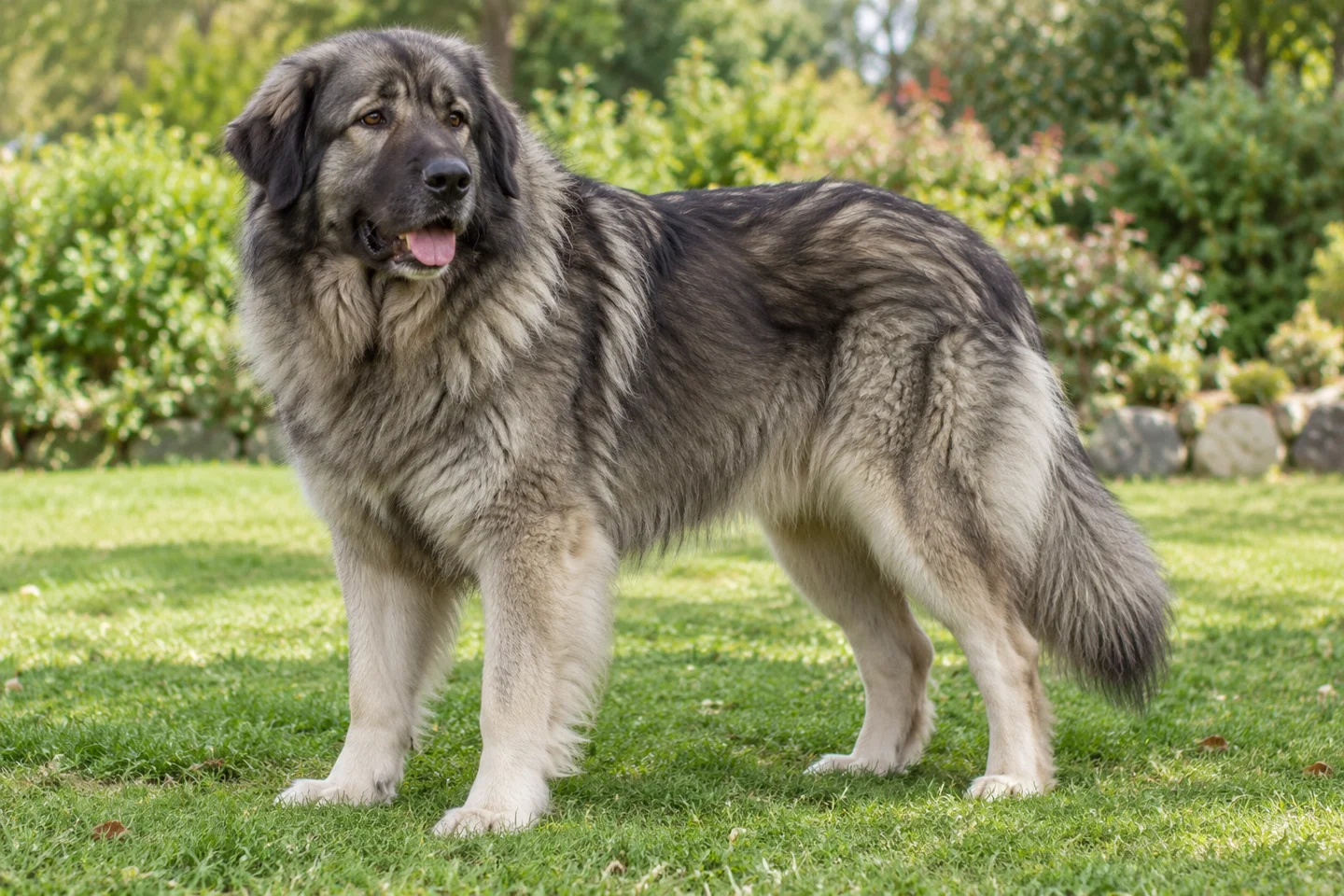
- Origin in FCI standard
- Serbia/Macedonia
- Average adult height
- Males 62 cm; females 58 cm
- Adult weight reference
- Males 35–45 kg; females 30–40 kg
- Coat
- Long, thick and comparatively coarse
General information for owners. These articles have not been reviewed by a veterinarian. Medical decisions need your dog's history and an examination.
A mountain livestock guardian with a specific identity
The Sharplanina Shepherd Dog, also called Šarplaninac, is a substantial livestock guardian associated with the Šar Mountains. It is distinct from herding breeds whose usual task involves moving stock under close direction. A guardian background creates practical questions about boundaries, visitors, and independent decisions. Anyone considering this dog should discuss those subjects before choosing a puppy for its impressive coat or size.
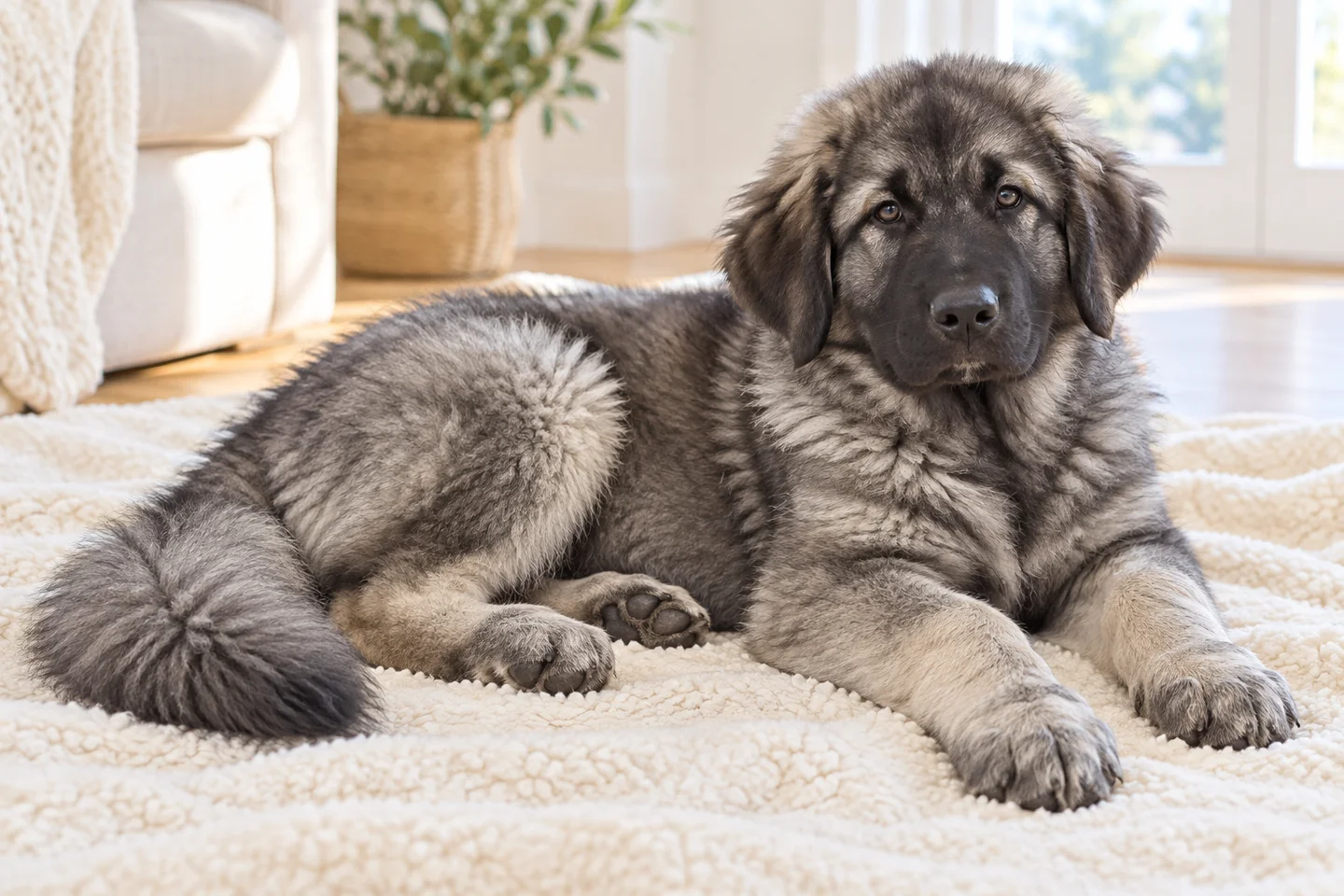
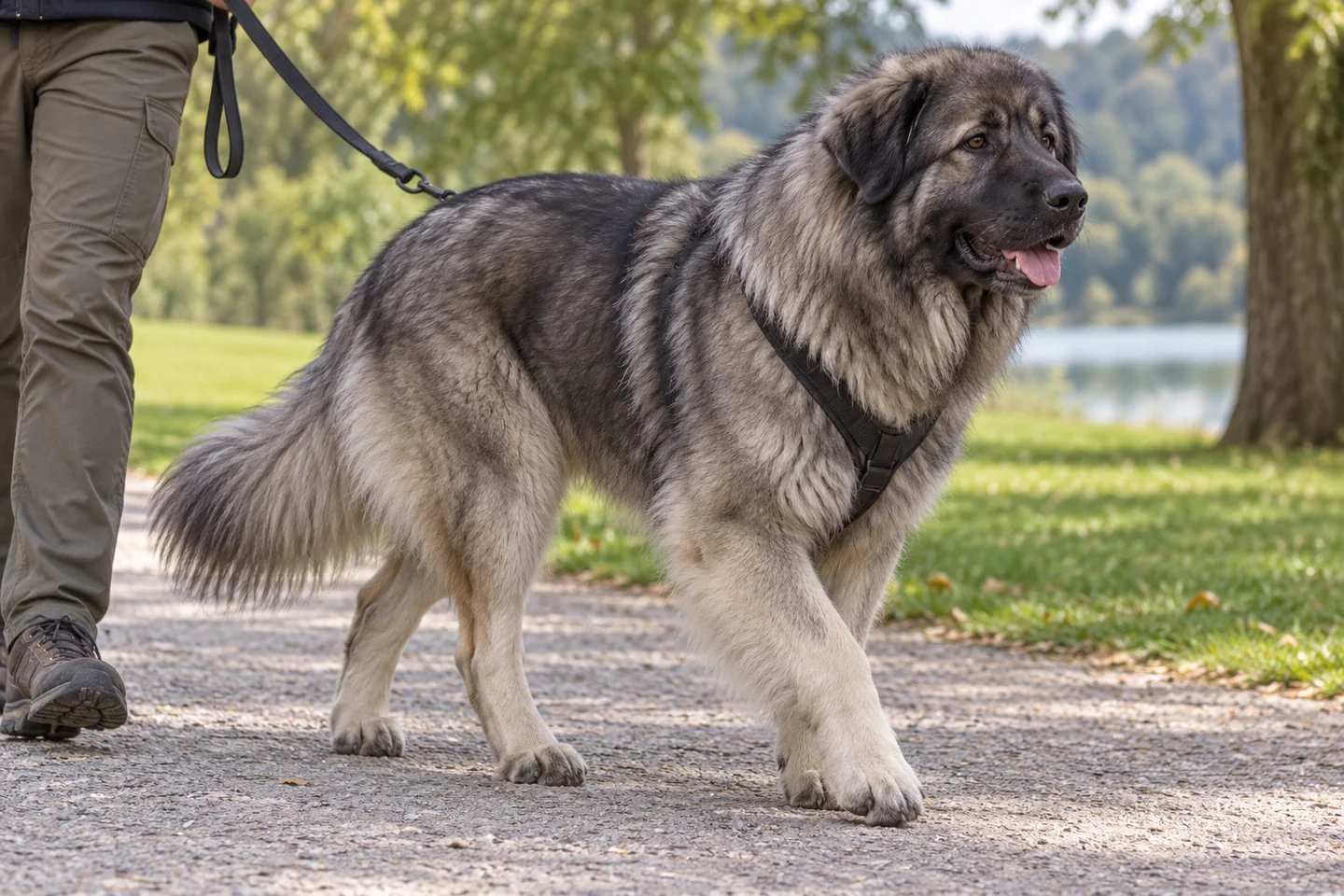
The FCI standard uses the origin wording Serbia/Macedonia and the name Yugoslavian Shepherd Dog Sharplanina. Modern discussion may refer to North Macedonia and surrounding regions. Use the precise name on registration documents rather than treating political or geographic wording as proof of different ancestry. The illustrations here select an iron-gray appearance with natural hanging ears and a complete tail. They illustrate a breed type; they cannot show an individual dog's suitability for a suburban household, a working farm, or contact with unfamiliar people.
History and the work behind independence
The FCI account describes the dog protecting livestock against predators in mountain regions and records recognition under an earlier name in 1939, followed by the Sharplanina naming change in 1957. It also acknowledges uncertainty about remote origins. Avoid turning speculative ancestry into a promise of ancient purity or superior judgment. Present-day breeding, early care, and the individual animal's experience are more useful when assessing a particular placement.
Ask how the breeder's dogs live and what situations they have actually managed. Experience guarding familiar stock does not automatically establish comfort in a busy home, and success with one flock does not prove safety with unfamiliar animals. If the dog is intended for working placement, seek experienced local guidance about livestock introduction, supervision, fencing, and predator-management law. A puppy is not ready to assume responsibility simply because its breed has a working history. Companion placement also requires purpose and preparation, with secure management that remains realistic as the dog grows.
Adult size and the physical demands of care
The FCI gives average withers heights of 62 cm for males and 58 cm for females. It lists male weights of 35–45 kg and female weights of 30–40 kg. These are standard references, not permission to feed a puppy toward a maximum as quickly as possible. Ask the veterinary team to assess growth and condition in the individual dog. The coat can make changes in the body harder to notice from a distant view.
Think through transport and handling before an emergency. Can the dog turn and lie comfortably in the vehicle? Can it reach the examination room safely if walking becomes painful? Teach a stable ramp or another suitable entry method early, without pushing the puppy through a frightening exercise. Floors need dependable traction, particularly near doors where the animal may turn abruptly. Equipment and gates must be selected for the adult's strength. An arrangement that works while the owner can lift a small puppy may fail once that same animal becomes a large, reluctant adult.
Coat, outline, and choosing for function
The standard describes a thick, long, comparatively coarse coat over a robust frame. It allows several solid-color appearances with shading, and the selected gray illustration represents one choice rather than every permitted dog. The natural ears hang beside the head. Color and mane cannot establish temperament, and an especially heavy-looking coat should not distract from movement, comfortable skin, and the quality of routine care.
Meet dogs when they are doing ordinary things. Watch them walk on a surface with traction and settle without being continually posed. Ask how they accept brushing, foot checks, and veterinary handling. A photograph can conceal restricted movement or a coat that needs substantial work. Be cautious about sales language that equates the biggest puppy with the best guardian. Selection should include health information, observed behavior, and the practical setting available for adulthood. For a rescue, appearance may suggest a guardian background, but uncertain ancestry should remain uncertain while care follows the dog's actual needs.
A household boundary plan before arrival
Map where visitors, delivery workers, children, and other animals enter the property. Give the dog a secure resting area that can be reached without crossing those routes. A boundary should prevent access even when somebody forgets that a guardian is present. Use a second barrier where appropriate so that opening the outer entrance does not depend on a person physically holding the animal back.
Practice moving to the protected area with rewards before real arrivals occur. The dog should learn the routine when nothing urgent is happening, and every household adult should be able to carry it out. Post clear practical instructions for carers without relying on strangers to interpret the dog's intentions. Avoid allowing repeated confrontations at a fence as entertainment or proof of protective ability. Such rehearsals can make departures and arrivals harder to manage. If the property cannot provide reliable separation from public access, reconsider whether this particular placement is workable before the animal becomes established there.
Training cooperation without provoking a contest
Teach skills that solve daily problems: moving away from an entrance, standing for a brief examination, releasing an object through exchange, and following the handler into a secure area. Use small steps and worthwhile reinforcement. Independent work does not remove the need for learned cooperation. It does mean the handler should avoid assuming that repeated loud commands will produce a response in an emotionally difficult setting.
Do not create challenges around food or handling to prove leadership. Reaching into a bowl, forcing the dog onto its back, or intimidating it near a gate can add conflict to situations the household needs to manage safely. An instructor experienced with guardian dogs and reward-based methods can help build realistic exercises. Ask how the trainer prevents access to hazards during learning and how difficulty is adjusted. A claim that harshness is necessary because the breed is powerful is a poor substitute for a clear plan. The goal is dependable handling supported by physical safeguards, not a performance of control.
Exercise and observation rather than forced endurance
Provide movement appropriate to age and medical condition, with opportunities to investigate safely. Secure walks and manageable outdoor tasks can be useful for a companion, while working activity needs supervision appropriate to the setting. Growing puppies should not be pushed through an adult distance schedule. Development, footing, and recovery deserve attention even when the puppy appears willing to continue.
The heavy coat does not excuse ignoring temperature. Offer drinking water, shelter, and cooler conditions during warmth, and seek advice if breathing or recovery becomes abnormal. A fenced property is not a complete exercise plan if the dog spends its time pacing one boundary. Consider whether the environment allows relaxed movement or keeps the animal continuously watching for intrusion. When returning from activity, check for lameness, damaged pads, and equipment rubbing. Record recurring changes and consult the veterinary team. An animal bred to work outdoors can still develop injury, illness, or distress that requires a change in routine.
Socialization that includes predictable visitor routines
For a young guardian, socialization should include seeing people behave ordinarily without every approach becoming direct contact. A visitor can sit at a distance while the puppy receives rewards for relaxed observation. Gradually introduce different clothing, movement, surfaces, and safe locations. Keep an option to withdraw. Crowding the dog with a succession of strangers can teach a very different lesson from the one intended.
Practice veterinary-style handling and travel separately. Comfort with household members touching a paw does not automatically extend to a stranger in a clinic. Ask the practice how to prepare for calm appointments, including waiting arrangements. Continue learning as the dog matures and after a move or major household change. If suspicion or avoidance increases, obtain guidance early. Owners should not promise that extensive exposure will make every adult guardian welcome everyone. Training and social experience support the animal, while secure management remains necessary for situations it may find difficult.
Children and a large guardian’s private space
Give children clear physical boundaries that adults maintain. The dog's resting place should be outside running routes and inaccessible to unsupervised visiting children. Prevent climbing on its body, grabbing the coat, or approaching when it is eating. A large animal can injure a child through movement alone, so a friendly interaction still needs active adult attention and enough room.
Plan for friends arriving unexpectedly and games that change quickly. The dog should be safely separated before boisterous play begins, rather than asked to interpret children shouting or wrestling. Explain the arrangement to other parents and carers. Familiarity with household children cannot establish safety with every visiting group. A young person should not be responsible for restraining the adult dog at the gate or resolving a conflict over an object. If the layout requires the guardian to share every busy family moment, consider whether protected space can be created. Suitability includes the adults' ability to maintain those arrangements throughout ordinary life.
Aggression and the danger of rewarding intimidation
Do not encourage lunging or threatening behavior as a demonstration of breed authenticity. A dog guarding a boundary needs a handler who prevents unsafe access and understands the triggers, not an audience cheering the response. Record whether incidents involve the property, food, unfamiliar handling, or particular animals. Those details help a veterinarian and behavior professional assess the problem and design prevention.
If warning behavior occurs, remove the immediate pressure and secure the setting. A new response to touch or movement needs medical investigation. Recurrent threats require qualified assistance before another visitor or dog is used as a test. Punishment can intensify conflict and make necessary handling more difficult. A basket muzzle may be advised for some procedures, with gradual conditioning and appropriate fit, but it cannot replace a safe visitor plan. After any bite, arrange care for the injured person and review the exact failure that allowed contact. Strength and territorial context make prevention especially consequential, without determining the behavior of every individual guardian.
Livestock, dogs, and smaller household animals
A livestock-guardian label does not guarantee immediate acceptance of every animal. Introductions to stock need knowledgeable supervision, suitable separation, and observation over time. An unfamiliar species, newborn animal, or unusual movement may change the situation. Do not leave a young dog responsible for a flock before experienced assessment supports that decision. Working arrangements should protect both livestock and the developing dog.
For canine housemates, consider separate resources and the ability to divide space permanently if needed. Avoid bringing an unfamiliar dog directly onto an established guardian's property as the first encounter. Discuss neutral-ground assessment with an experienced professional and maintain appropriate distance. Cats and small pets also need protected accommodation. Living peacefully with one resident animal does not certify the dog around another animal outdoors. Where ancestry or history is unclear, manage the uncertainty explicitly. A home without a workable separation plan may be unsuitable even if a short initial meeting appears uneventful.
Grooming a substantial double coat
Work through the coat systematically so that the surface does not conceal tangles near the skin. Check behind ears, beneath the collar, around limbs, and in places where moisture or debris collects. Keep sessions achievable and teach the dog to stand or lie comfortably on a nonslip surface. A large dog struggling through a prolonged grooming session presents a problem for both animal and carer.
Ask a suitable groomer or veterinary professional to demonstrate coat maintenance for the individual. Avoid cutting close to the skin through a knot without knowing where the skin lies. Painful mats may need professional help. Maintain nails and inspect ears for soreness, discharge, or repeated shaking. Dental care also needs cooperation rather than force. If handling becomes newly difficult, investigate discomfort before deciding the dog is being defiant. A coat-care routine should include enough access to examine the body; otherwise weight loss, skin changes, and small injuries may remain hidden beneath the hair.
Health evidence and questions for the source
The FCI description is not a breed health-testing protocol. The verified sources used for this guide do not establish a universal Sharplanina screening panel or a reliable worldwide disease prevalence. Avoid substituting a panel from another large guardian as if the breeds shared identical evidence. Limited published information should lead to specific questions and veterinary interpretation, not an unsupported claim that the population is free of inherited disease.
Ask which current national breeding requirements apply and request the actual results for the identified parents. Discuss the relevance of orthopedic assessment and any specialist findings with the veterinary team, without presenting every available test as mandatory. Family history should include later-life diagnoses and problems in close relatives. For an adult rescue, obtain the best available account of medication, mobility, skin, and past treatment. A large dog that can still work or walk may nevertheless have a clinical problem. Screening background and present examination answer different questions, so keep both kinds of information accessible.
Health planning when handling is physically difficult
Prepare the clinic visit while the dog is well. Ask about a quiet arrival, a suitable waiting place, and how the practice wants equipment fitted. Teach the animal to approach a scale and tolerate brief contact using manageable steps. Tell the team honestly if there has been growling, snapping, or difficulty around unfamiliar people. That information lets them plan care rather than discover the risk during an urgent procedure.
Keep the emergency contact and transport plan available to anyone responsible for the dog. Sudden collapse, serious breathing trouble, major injury, and suspected poisoning need prompt veterinary direction. Do not improvise with human medication. If a regular prescription exists, provide written instructions to carers and confirm who can authorize care during your absence. A plan that depends on physically lifting or wrestling the animal may become impossible during illness. Rehearse safe vehicle access and secure waiting arrangements early, and update the plan as age, mobility, or household circumstances change.
Food, mixes, and the cost of practical suitability
Feed a complete diet appropriate to growth or adulthood and review portions through condition assessment. Ask the veterinarian about feeding a growing large dog rather than adding calcium or supplements on the assumption that bigger is healthier. Count training food and review the ration when activity changes. Persistent appetite, stool, thirst, or weight changes need assessment, even when the coat makes the body appear unchanged.
A Sharplanina mix may vary in guardian behavior, size, coat, and responses to strangers. A crossbreed name cannot guarantee an easier family dog or cancel inherited risk. Discuss both documented backgrounds where known and acknowledge uncertainty where they are not. Obtain local costs for secure fencing, appropriate transport, veterinary care, experienced training, and suitable cover during absences. Boarding availability may depend on handling arrangements. A prospective owner should meet that practical burden before committing, including the ability to maintain protected space for visitors and children throughout the adult dog's life.
dogsDating introductions away from the home boundary
A Sharplanina dogsDating profile should explain the individual dog's experience with unfamiliar dogs and the conditions under which walking is manageable. Keep exact home coordinates private, along with the household address. Use an approximate locality to select a public place outside the dog's established property. Avoid inviting a new partner to the gate as an informal compatibility test.
For a dog with relevant difficulties, obtain professional advice before scheduling an introduction. Where a meeting is appropriate, agree on generous initial distance, separate handlers, and a route that permits an uncomplicated departure. A walk may remain entirely without greeting. Watch the ability to disengage and move with the handler, rather than measuring success by physical closeness. If either animal becomes fixed on the other or cannot recover, end the exercise calmly and reassess the plan. Both owners should be able to decline further contact. The purpose is to find an arrangement that suits these dogs, with secure handling throughout, rather than prove that breed labels predict friendship.
Sources and editorial notes
Sources checked October 22, 2026. Breed measurements describe reference ranges, not a diagnosis or an individual dog's ideal weight. Images are AI-generated breed illustrations and do not document a particular dog or health condition.
- AVSAB: Humane Dog Training Position Statement
- VCA Animal Hospitals: Food aggression in puppies
- VCA Animal Hospitals: Common emergencies in dogs
- Orthopedic Foundation for Animals: CHIC health screening programs
- VCA Animal Hospitals: Aggression toward unfamiliar dogs, diagnosis
- VCA Animal Hospitals: Grooming and coat care for your dog
- VCA Animal Hospitals: Ear infections in dogs (otitis externa)
- AAHA: Feeding plans for healthy, appropriate weight cats and dogs
- VCA Animal Hospitals: Heat stroke in dogs
- AVSAB: Puppy Socialization Position Statement
- VCA Animal Hospitals: Dog behavior problems, aggression toward children
- FCI Sharplanina standard 41: origin wording, guardian history, size and coat
Keep getting to know dogs.
Read another guide or return to your dogsDating community.
Explore breed guidesBack to dogsDating