Silken Windhound
A developed feathered sighthound, with UKC size references, secure running guidance, MDR1 clinical records and source-specific cardiac and congenital-health questions.
How these guides are researched and reviewed
- Development
- United States
- Adult height
- 18½–23½ inches (47–60 cm)
- Coat
- Silky with moderate feathering
- Colors
- All colors and markings accepted by UKC
General information for owners. These articles have not been reviewed by a veterinarian. Medical decisions need your dog's history and an examination.
The Silken Windhound is a developed breed of its own
The Silken Windhound is a small-to-medium sighthound with a silky, feathered coat and an athletic body. It has its own registry history and standard. It should not be confused with the Silken Windsprite or treated as a generic name for any long-haired Whippet cross. Confirm the identity on registration and medical records, particularly when a seller uses several similar names interchangeably.
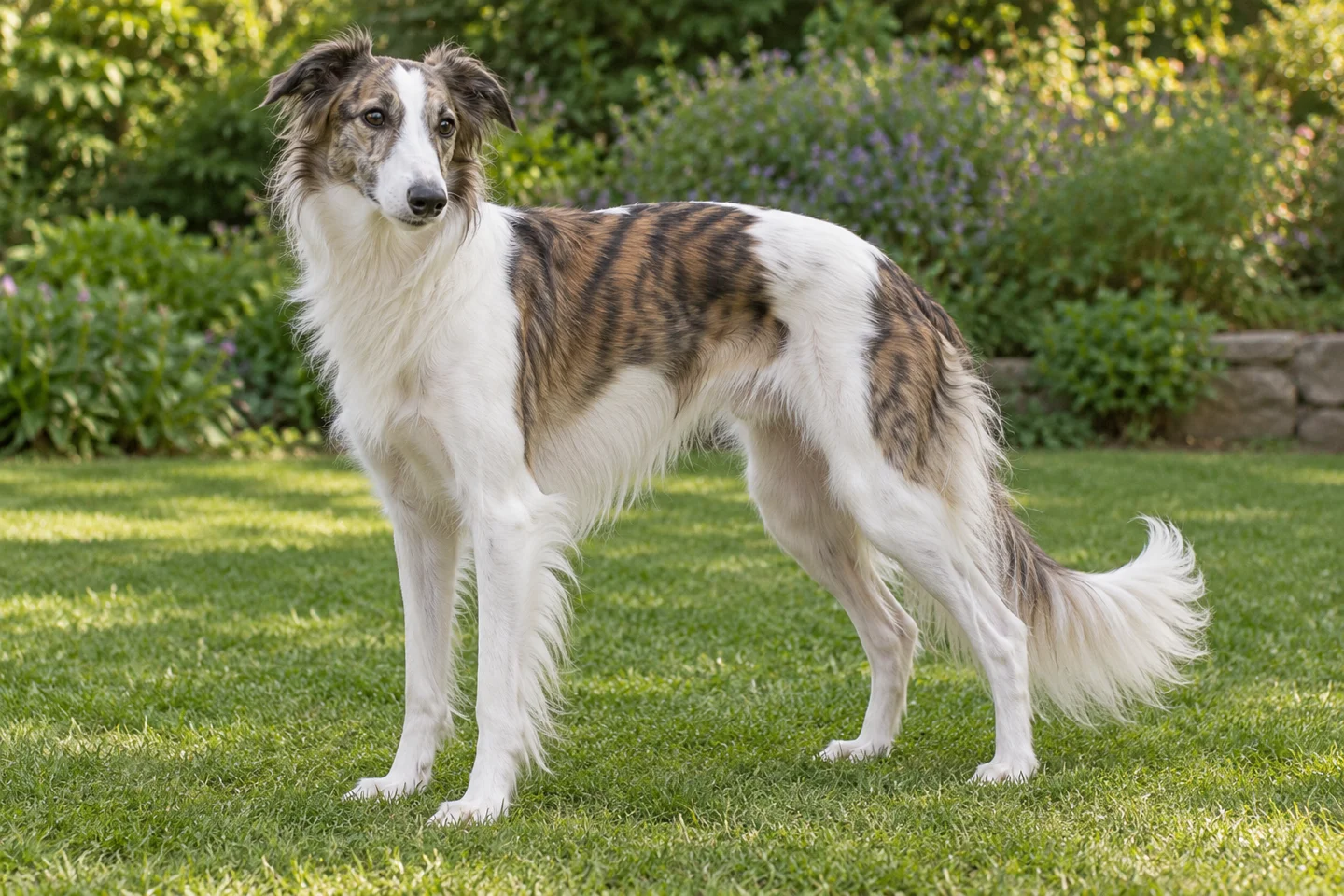
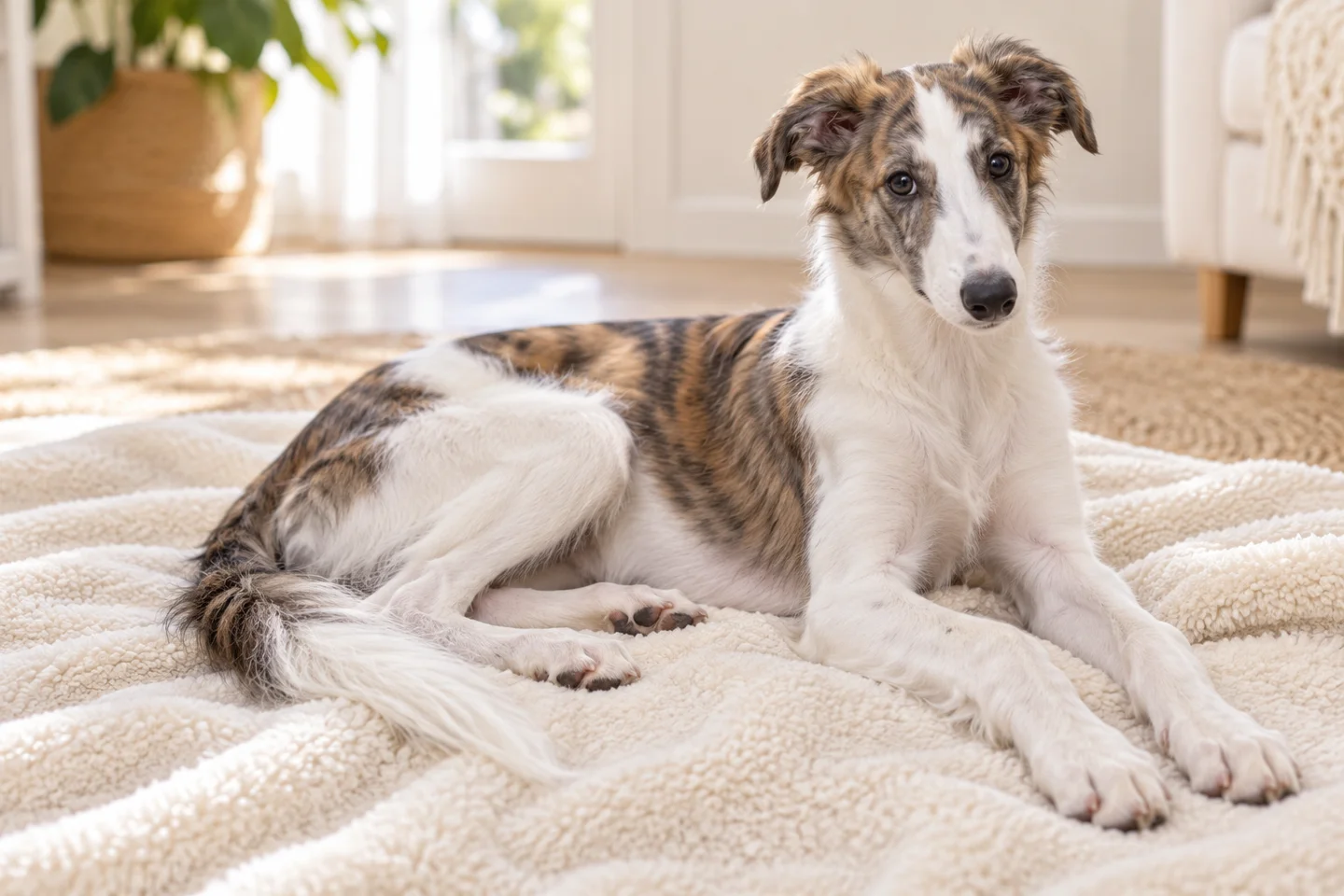
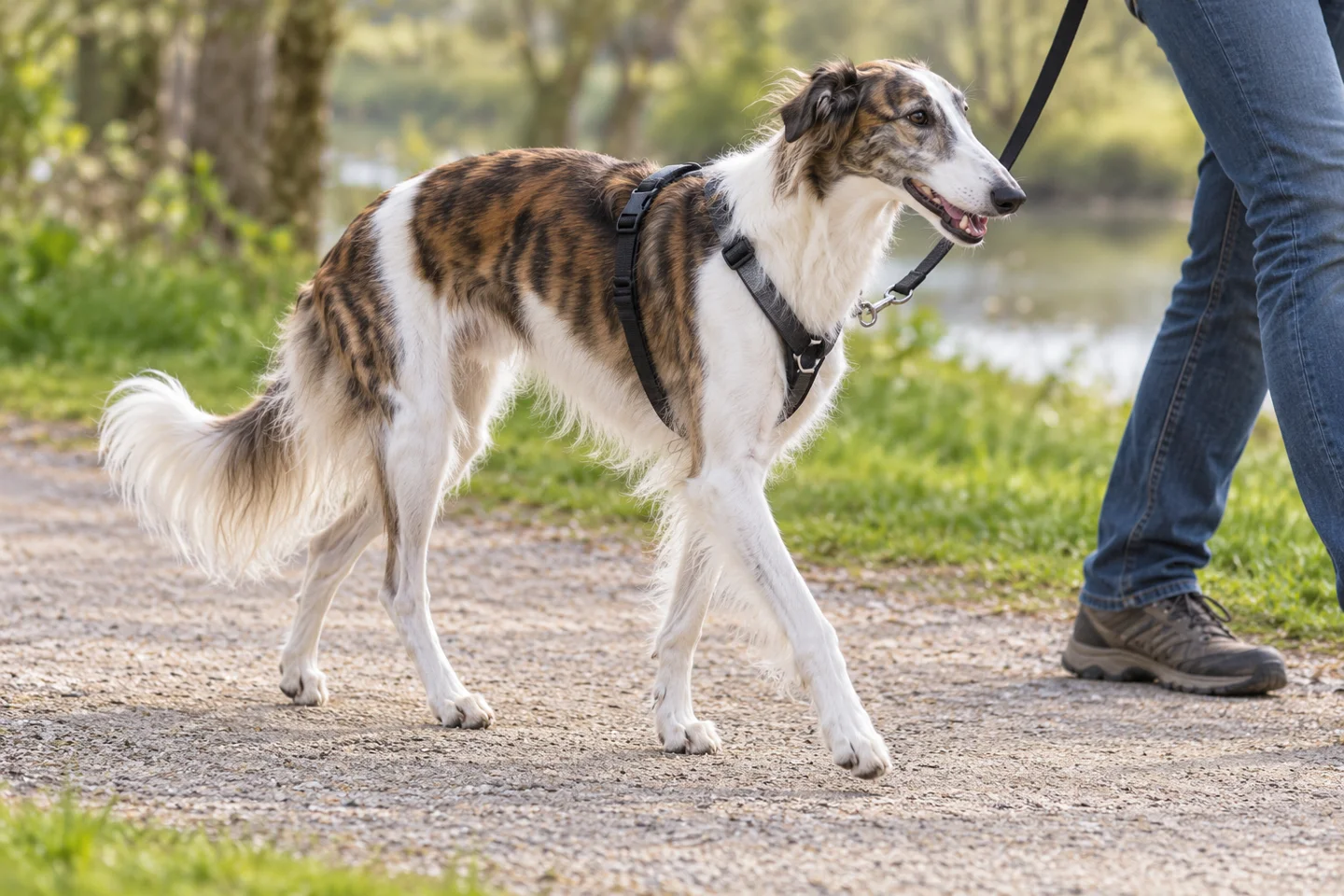
The illustrations select white with brindle markings, natural folded ears, and a complete long tail. Other colors are possible. These images show an intended appearance rather than a real dog's ancestry or ability. Owners need to assess the animal they may bring home: how it travels, rests, responds to handling, and behaves around movement. The elegant outline does not establish fragility, and a friendly expression does not establish safety. Ask for ordinary examples and identifiable records instead of choosing solely from a photograph or a promise about the breed's general reputation.
Documented development and why foundations are not guarantees
The UKC account describes development involving Borzoi, Whippets, and a multigenerational line of smaller Whippet-based lurchers. It records UKC recognition in 2011. Those foundations explain the broad sighthound context without making a modern Silken interchangeable with any one foundation breed. Health information should likewise be assessed for its relevance rather than copying a complete list from whichever ancestor looks most similar.
Ask a breeder about the actual family and its current living conditions. A dog successful in a show ring may still need deliberate teaching about a busy home, while a companion with no competition record may have extensive domestic experience. Discuss what you want to do and what the adults genuinely enjoy. If sport is an interest, learn the eligibility, safety, and welfare requirements of the relevant organization before buying equipment. A puppy's pedigree cannot substitute for gradual development or veterinary assessment of readiness. Participation should follow the individual dog's condition and comfort, not a need to fulfill a historical description.
Height and a body that should remain functional
The UKC standard gives a height range of 18½–23½ inches, expressed there as 47–60 cm. It does not divide that interval into separate male and female ranges. It also does not prescribe a fixed adult weight target. Ask the veterinary team to assess the individual frame, muscle, and condition rather than feeding toward a number taken from another sighthound.
A deep chest and tucked-up outline should still allow ordinary comfortable movement. Do not interpret every visible contour as underfeeding or use thinness as proof of fitness. Let a clinician demonstrate condition assessment through the coat. For daily equipment, check fit during growth and make sure a backing movement cannot slip the dog free. The vehicle needs space for a relaxed posture and suitable restraint. Teach standing on a scale and entering the car while those tasks are easy, so that later appointments and changes in mobility do not introduce every handling challenge at once.
Silky feathering and natural anatomy
The coat should remain suitable for movement rather than become so profuse that it conceals the animal or interferes with activity. Feathering appears on the limbs, neck, chest, and tail, while parts of the face and legs have shorter hair. The standard accepts all colors and markings. Color preference can be discussed without elevating a fashionable pattern above health, structure, and behavior.
Natural ears fold back in repose and can change position with attention. The tail is long and flexible, rather than tightly curled. A puppy's feathering and proportions develop over time, so one early picture is not an exact forecast of adult coat. Ask about grooming requirements in the particular family. Meet adults if possible and see how their hair behaves after a normal walk, not only immediately after preparation for a photograph. For a rescue, do not let uncertain parentage distract from evaluating skin condition, matting, comfort, and the care the animal presently needs.
Training for movement that suddenly becomes interesting
Start with short attention and return exercises in quiet places. Reward the dog for turning toward the handler, then allow further safe investigation when appropriate. A return should not always predict confinement or the end of enjoyable activity. Build difficulty in small stages. The response available in a kitchen may not be available beside a running animal, regardless of how affectionate the dog is at home.
Use secure physical arrangements while learning continues. A long line requires a safe open setting and careful handling to avoid entanglement. A fence needs to contain the particular dog rather than merely mark a property edge. Teach doorway pauses and comfortable equipment fitting separately, before an exciting outing. Avoid trying to prove obedience by removing safeguards near roads or wildlife. An instructor can help set realistic exercises and evaluate handling technique. Successful training includes knowing when a situation is beyond the current skill, then adjusting distance or access before the animal practices a dangerous response.
Exercise and safe access to speed
Provide regular movement with scope for sniffing and relaxed exploration. If the dog is to run freely, inspect the enclosure and surface first, with attention to openings, sharp turns, obstacles, and other users. Do not assume a public park is suitable simply because another sighthound owner uses it. The handler is responsible for lawful access and for protecting wildlife and unfamiliar animals.
Increase demanding activity gradually and review recovery afterward. Puppies need developmentally appropriate experiences, while older dogs may benefit from changes in distance, footing, and rest. Seek veterinary advice before starting strenuous sport or when discomfort appears. Carry water and adapt to heat or cold rather than treating enthusiasm as a reliable temperature assessment. A chase game that repeatedly produces near-collisions may need a different setup. Calm searching and ordinary walks remain useful parts of the week. The exercise plan should be sustainable when the weather is poor or the usual enclosed field is unavailable.
A home that supports settling and time apart
Prepare a resting place where the dog can stretch out without being stepped over. Teach moving there for short comfortable periods while ordinary household activity continues. If a door or window repeatedly produces excitement, consider changing the visual access and rewarding disengagement. Rest should not depend on the animal being physically exhausted first.
Introduce absences gradually and observe what happens. Pacing, vocalizing, or inability to eat can provide information that damage alone misses. Persistent distress warrants veterinary and qualified behavior advice. Acquiring another dog may create additional needs without resolving the original problem. Arrange a trusted carer before an unavoidable long absence and practice the handover. The carer should understand equipment, doors, feeding, and the animal's preferences around contact. A household with an appealing weekend routine still needs a plan for ordinary working days. Discuss that schedule honestly with a breeder or rescue so they can assess the match using the actual circumstances.
Socialization in places where the puppy can recover
Introduce new surfaces, noises, people, and handling at an intensity the puppy can manage. A quiet view of a bicycle path can be a useful lesson without requiring close contact with every passing person. Give strangers clear instructions and keep an exit available. For a dog that is hesitant, a forced greeting may make the next approach harder rather than teach friendliness.
Practice necessary care independently of social outings. A brief paw touch, a comfortable vehicle journey, and standing for examination each deserve their own achievable steps. Adults entering a new home need the same assessment of experience. A previous rural life may not include busy pavements, while a city dog may never have seen livestock. If the dog repeatedly withdraws or remains unsettled afterward, reduce difficulty and obtain guidance. Observe the quality of recovery, sleep, and ordinary engagement. Simply remaining present through a long encounter does not establish that useful learning took place.
Children and the risks of fast-moving games
Running games can change the energy of a room quickly. Arrange the Silken's comfortable separate space before children begin racing, wrestling, or waving toys. The dog should not have to decide which sudden movements are appropriate play. Outdoor games also need room and adult oversight, since a moving dog can collide with a child even when there is no threatening intent.
Teach children to leave sleeping animals undisturbed and to invite contact rather than pursue it. An adult can help a child offer a reward for a known cue while maintaining control of the situation. Children should not retrieve food or objects from a dog's mouth. Notice attempts to turn away or leave and stop contact promptly. Familiarity with household children cannot establish comfort with visitors. When attention must shift to cooking or another child, use reliable separation. Suitability depends partly on whether the adults can preserve these arrangements consistently, not just whether the breed is described as gentle.
Aggression and the context behind an incident
Do not dismiss a warning because the Silken is expected to be sociable. A growl during grooming, a snap near a chew, and a response to a crowded doorway may involve different concerns. Prevent another encounter with the immediate trigger and record what happened before the behavior. Note access to escape, contact, resources, and any signs of pain. Repeating the scene to check the response risks another injury.
A veterinarian should investigate abrupt changes and sensitivity to handling. For recurring defensive behavior, qualified reward-based support can help design the management and teaching. Punishment for warning may leave the concern intact while making it harder to observe. If safety equipment is advised, introduce it through comfortable training and follow the professional plan. It is not permission to force social contact. After a bite, arrange appropriate care for the person and examine how access occurred. A breed standard describes an ideal, while prevention must address the actual animal and the circumstances of the incident.
Dogs, cats, and sighthound pursuit
Meet unfamiliar dogs in a place where both handlers can create space. Watch for reciprocal pauses and the ability to disengage, rather than assuming that energetic running always means enjoyment. A dog trying to hide or leave needs help. Differences in speed and play style can matter even when both animals are generally sociable.
At home, arrange separate feeding and resting options before adding a companion. Cats need protected routes to their essentials, and the hound should not rehearse chasing them while the household waits for familiarity to develop. Acceptance of one cat cannot establish safety around another running animal outdoors. Small pets require physical protection whenever they are housed, handled, or moved. Ask about the individual's history and observe the current response, acknowledging where information is missing. If secure separation cannot be maintained through ordinary chores and absences, reconsider the placement. Affection toward people and interest in moving animals can coexist in the same dog.
Grooming feathering without making care a struggle
Check longer hair where it rubs against equipment or gathers debris, including behind the ears and around the limbs and tail. Work through small areas gently rather than pulling through a knot. If you cannot identify the skin safely beneath matting, ask a professional for help. A coat described as easy to maintain still needs regular attention adapted to the individual.
Dry the dog appropriately after bathing and inspect irritated or persistently damp areas. Keep nails maintained and examine pads after running on unfamiliar ground. Teach tooth brushing through brief cooperative sessions. Ears need observation for odor, discharge, and soreness regardless of their natural position. Avoid deep tools and unprescribed leftover medication. If handling becomes difficult in one area, investigate discomfort before increasing restraint. Keep a record of skin changes or repeated licking. Grooming provides an opportunity to notice a medical concern, without turning every finding into a breed-specific diagnosis from an online comparison.
Health: MDR1 results belong in the clinical record
The International Silken Windhound Society discusses MDR1 drug sensitivity and encourages testing. The relevant result concerns how the dog may respond to particular medicines; it is not a broad measure of health or an explanation for every adverse reaction. Give the veterinarian the actual laboratory result and retain a copy when changing practices. An owner should not decide drug safety from a breed label alone.
Before prescribing or anesthesia, remind the clinical team of the documented result and current medication. A veterinarian can assess the drug, dose, route, and individual circumstances. Do not stop prescribed parasite prevention or construct a universal banned-drug list from another owner's experience. A temporary carer needs to know where the result is stored and whom to contact. If a test has not been performed, say so plainly rather than assuming the dog is unaffected because it looks well. The practical benefit of knowing the genotype is more informed clinical decision-making, not a promise that all other medication risks have disappeared.
Cardiac health: different tests answer different questions
The ISWS veterinary explanation of Holter testing distinguishes listening with a stethoscope, ultrasound examination, and electrical recording. A Holter records cardiac electrical activity over an extended period, while an echocardiogram assesses structure and pumping. They are not interchangeable certificates. Ask the breeder which evaluations were performed, when, and how the findings were interpreted rather than accepting the single word heart-tested.
For your dog, fainting, reduced exercise tolerance, or an unusual recovery pattern needs clinical attention. Do not assume athletic appearance rules out a problem. Equally, an isolated sound heard during examination should be interpreted by the veterinarian rather than diagnosed through a group discussion. Ask what further assessment is indicated and what activity is appropriate while waiting. Keep reports with the dog's identification and bring them to future appointments. Screening recommendations and club programs can change, so confirm the current requirements relevant to a planned litter rather than presenting an old webpage as a permanent checklist.
Lotus syndrome and honest discussion of family information
ISWS describes lotus syndrome as a serious congenital problem involving reduced fetal movement and abnormalities affecting newborn puppies. Its research page discusses fetal akinesia deformation sequence and uncertainty around the cause. Do not convert that discussion into a claim that every adult Silken has a progressive disorder, or promise that a routine commercial panel excludes every possible occurrence.
A prospective puppy owner can ask whether the breeder has encountered affected puppies, what veterinary investigation followed, and how family information is recorded and shared. The answer should distinguish an observed case from a confirmed diagnosis or research hypothesis. Mortality and congenital findings should not be hidden because surviving puppies appear normal. At the same time, avoid assigning blame or inventing a frequency from anecdotes. Discuss relevant records with a veterinarian before a breeding decision. For an established adult companion, follow its individual clinical needs rather than seeking unrelated treatment because the breed has a research topic. Accurate reporting supports useful assessment without making unsupported predictions.
Feeding, mixes, and ownership costs
Use a complete diet suitable for the dog's life stage and measure the regular ration. Include training rewards and review condition when activity changes. A sighthound outline does not justify arbitrary feeding restriction or repeated calorie additions without assessment. Persistent digestive signs, altered thirst, or unexplained weight change should be discussed with the veterinary team. Homemade diets require suitable formulation.
A Silken mix needs its own evaluation of size, coat, pursuit, and social behavior. Documented ancestry can inform questions, but a crossbreed name does not guarantee easier ownership or freedom from inherited risk. Ask about relevant assessment in both backgrounds where known. Obtain local costs for veterinary care, safe running access, grooming help, training, transport, and cover during absences. Check whether carers can manage secure equipment and household entrances. A successful match includes a sustainable plan for the routine week, not only a wish to own a beautiful running dog.
dogsDating with room for different play preferences
On dogsDating, describe what your Silken actually enjoys: perhaps walking with one calm dog, or suitable running in a verified enclosure after careful assessment. Keep exact home coordinates and the household address private. Use an approximate locality to select a public starting point where equipment can be organized without crowding either animal.
Start with controlled movement and space rather than releasing both dogs immediately. Watch whether each can stop, move away, and rejoin comfortably. A speed difference or repeated one-sided pursuit is a reason to change the plan. Do not use a shared food scattering to draw unfamiliar dogs together. Agree that either handler can pause or finish the meeting without pressure. Afterwards, compare concrete observations before scheduling another outing. Similar appearance or a shared interest in running cannot establish compatibility, and a calm parallel walk can remain a useful relationship without progressing to close play.
Sources and editorial notes
Sources checked October 22, 2026. Breed measurements describe reference ranges, not a diagnosis or an individual dog's ideal weight. Images are AI-generated breed illustrations and do not document a particular dog or health condition.
- AVSAB: Humane Dog Training Position Statement
- VCA Animal Hospitals: Food aggression in puppies
- Orthopedic Foundation for Animals: CHIC health screening programs
- VCA Animal Hospitals: Aggression toward unfamiliar dogs, diagnosis
- VCA Animal Hospitals: Grooming and coat care for your dog
- VCA Animal Hospitals: Ear infections in dogs (otitis externa)
- AAHA: Feeding plans for healthy, appropriate weight cats and dogs
- VCA Animal Hospitals: Heat stroke in dogs
- AVSAB: Puppy Socialization Position Statement
- VCA Animal Hospitals: Dog behavior problems, aggression toward children
- United Kennel Club: Silken Windhound breed standard, development and size
- International Silken Windhound Society: MDR1 drug sensitivity and testing
- International Silken Windhound Society: veterinarian explanation of Holter and other cardiac tests
- International Silken Windhound Society: lotus syndrome and fetal akinesia research discussion
Keep getting to know dogs.
Read another guide or return to your dogsDating community.
Explore breed guidesBack to dogsDating