Skye Terrier
A long, low Scottish terrier with prick or drop ears, substantial coat care and source-specific guidance on puppy lameness, kidney records and liver research.
How these guides are researched and reviewed
- Origin
- Great Britain; Scottish breed
- Ideal height
- 25–26 cm; females slightly smaller in proportion
- Ears
- Prick and drop varieties recognized
- Coat
- Long straight double coat
General information for owners. These articles have not been reviewed by a veterinarian. Medical decisions need your dog's history and an examination.
The Skye Terrier is a long, low Scottish breed
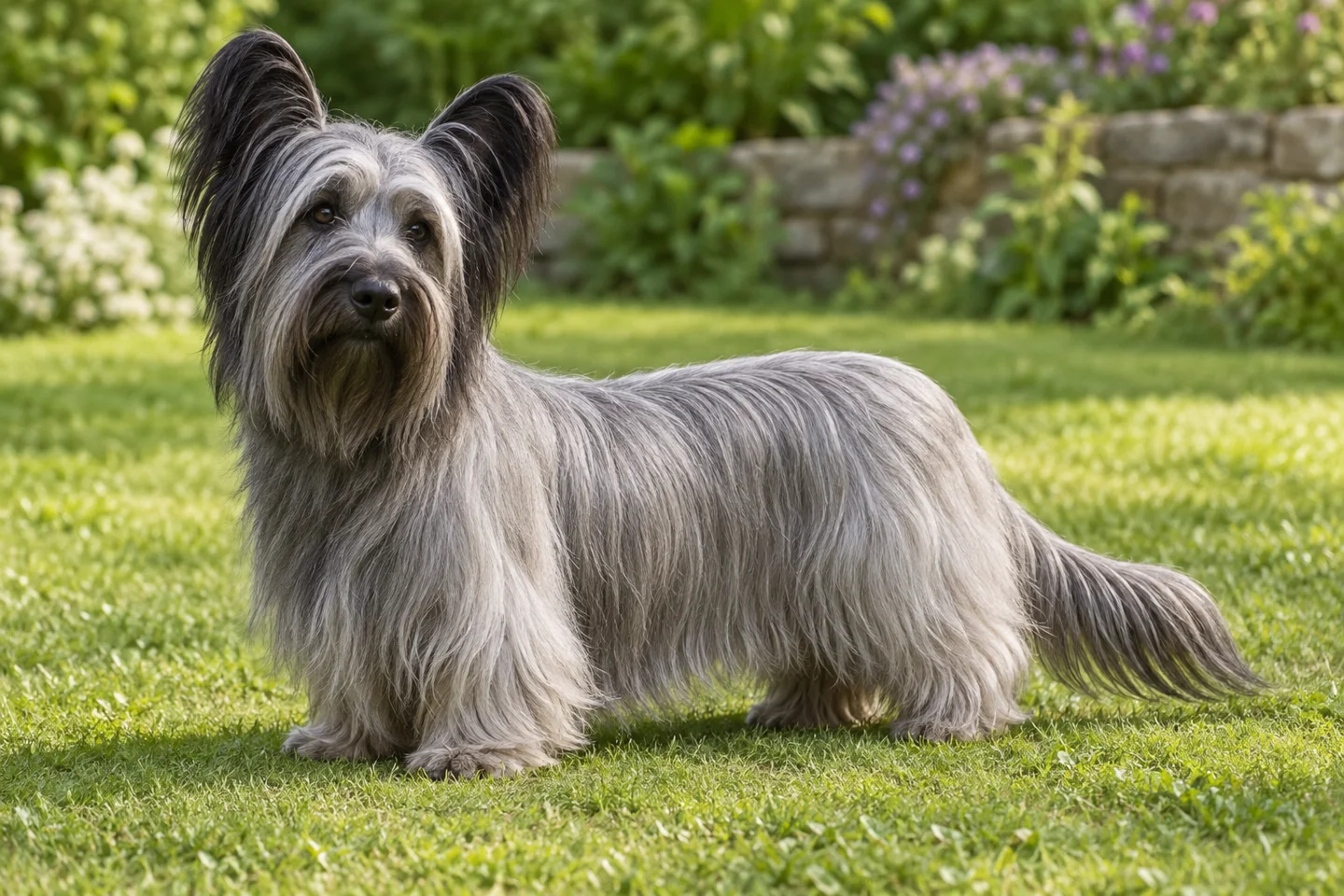
The Skye Terrier has a long, low body and a straight double coat. It is separate from the Cairn, Scottish, and West Highland White Terriers, despite their shared Scottish context. The selected illustrations show gray dogs with dark points and natural prick ears. Drop ears are also recognized, so a hanging ear does not automatically mean a different breed.
A long coat can dominate first impressions, but owners need to assess the animal beneath it. Ask how it moves, rests, tolerates ordinary care, and responds when someone unfamiliar approaches. The illustrations are appearance references, not photographs of real dogs or proof of parentage. For a rescue, acknowledge any uncertainty about ancestry and base care on the actual medical and behavioral findings. A recognizable outline does not establish comfort in a family home, and a story about breed devotion cannot tell you whether the individual welcomes handling by every household member.
Scottish history without a promise of automatic devotion
The FCI account places the Skye among the older Scottish breeds and describes earlier Western Isles terrier naming. Historical descriptions and familiar stories about individual dogs should not become a guarantee that a puppy will bond in one prescribed way. Temperament develops through the individual animal's inheritance, experience, health, and circumstances. A household needs to assess the actual relationship rather than expect a legend to repeat itself.
Ask a breeder what familiar and unfamiliar people can do comfortably around the adults. How are grooming, veterinary visits, and time with a substitute carer managed? Describing a dog as devoted does not explain those practical details. A companion should learn cooperation with more than one safe person so that care does not become impossible when the usual owner is ill. In adoption, allow the dog time to form new routines without imposing immediate affection. Quiet shared activity and predictable handling provide more useful foundations than demanding a demonstrative response on the first day.
Height, long proportions, and ordinary movement
The FCI gives an ideal height of 25–26 cm, describing females as slightly smaller in proportion. The characteristic body is long and low. The standard does not provide a compulsory adult weight interval. Discuss suitable condition with the veterinary team rather than trying to make every dog fit an unsupported kilogram target or a measurement borrowed from another terrier.
Consider the layout of the home and vehicle. Slippery floors, awkward entry points, and repeated uncontrolled jumps can make daily access harder. Teach an appropriate supported entry or stable ramp when the dog is comfortable, without forcing it through a frightening exercise. If assistance with lifting is necessary, ask for a demonstration that supports the body properly. Observe changes in gait or willingness to turn and report persistent differences. The familiar silhouette does not justify dismissing lameness as a normal consequence of being long-bodied. Clinical assessment is needed to determine whether a change involves growth, injury, pain, or another cause.
Natural ear varieties and a coat that permits function
Both prick and drop ears appear in the breed standard. The chosen prick-eared illustration does not make that version the only correct Skye. The full feathered tail is natural too. Coat length and a distinctive head should not obscure vision, normal movement, or the animal's ability to live comfortably. Ask a groomer how to preserve function in the care arrangement you can realistically maintain.
Puppies have less developed coats than adults and should not be expected to resemble a fully prepared show dog immediately. A photograph cannot explain whether hair is tangled near the skin or whether grooming has become painful. Meet the actual animal and ask to see ordinary care conducted gently. Avoid a seller who treats an impressive coat as an answer to questions about health or temperament. For an adult with neglected hair, prioritize comfort and professional assessment over retaining a particular appearance. A practical coat can be maintained thoughtfully without making each session a struggle.
Training through predictable requests and exchanges
Begin with the daily tasks the household needs: moving to a bed, following the handler through a doorway, standing briefly, and exchanging a harmless object. Use achievable steps and rewards that matter to the individual. A short session completed comfortably can teach more than a prolonged contest after the dog has become frustrated or worried. Review distraction, fatigue, and possible discomfort when a familiar response changes.
Practice object exchanges before an actual hazard is involved. Do not make a habit of chasing the terrier and pulling items from its mouth. Secure rubbish, medicines, and small household objects so that management supports learning. If guarding already occurs, qualified reward-based help can design a safer plan. Teach a pause at an external door behind a secure barrier and ensure every carer knows the procedure. The dog's size should not lead people to skip training because they can physically carry it. Cooperative skills create options that remain valuable during grooming, medical care, and changes in the household.
Exercise adapted to development and footing
Offer regular walks and appropriate opportunities to investigate, changing the amount to suit age, condition, and recovery. Growing puppies need manageable movement rather than an adult endurance target. Vary safe experiences without repeatedly forcing high-impact jumps or rough games. An older Skye may still enjoy a short search and familiar route after longer distances become uncomfortable.
Consider ground conditions from the dog's height. Deep vegetation, debris, and rough surfaces may create different demands from a clear path. Check feet and coat after activity, including places where material may collect beneath the body. Bring water and avoid unnecessary heat exposure; a long coat is not protection from every temperature risk. If a limp or altered movement appears, shorten the immediate demands and seek veterinary advice. Do not use an online claim about typical puppy development to postpone evaluation. The exercise plan should follow the individual findings and professional guidance rather than a requirement to complete the same route every day.
Rest, separation, and care by another trusted person
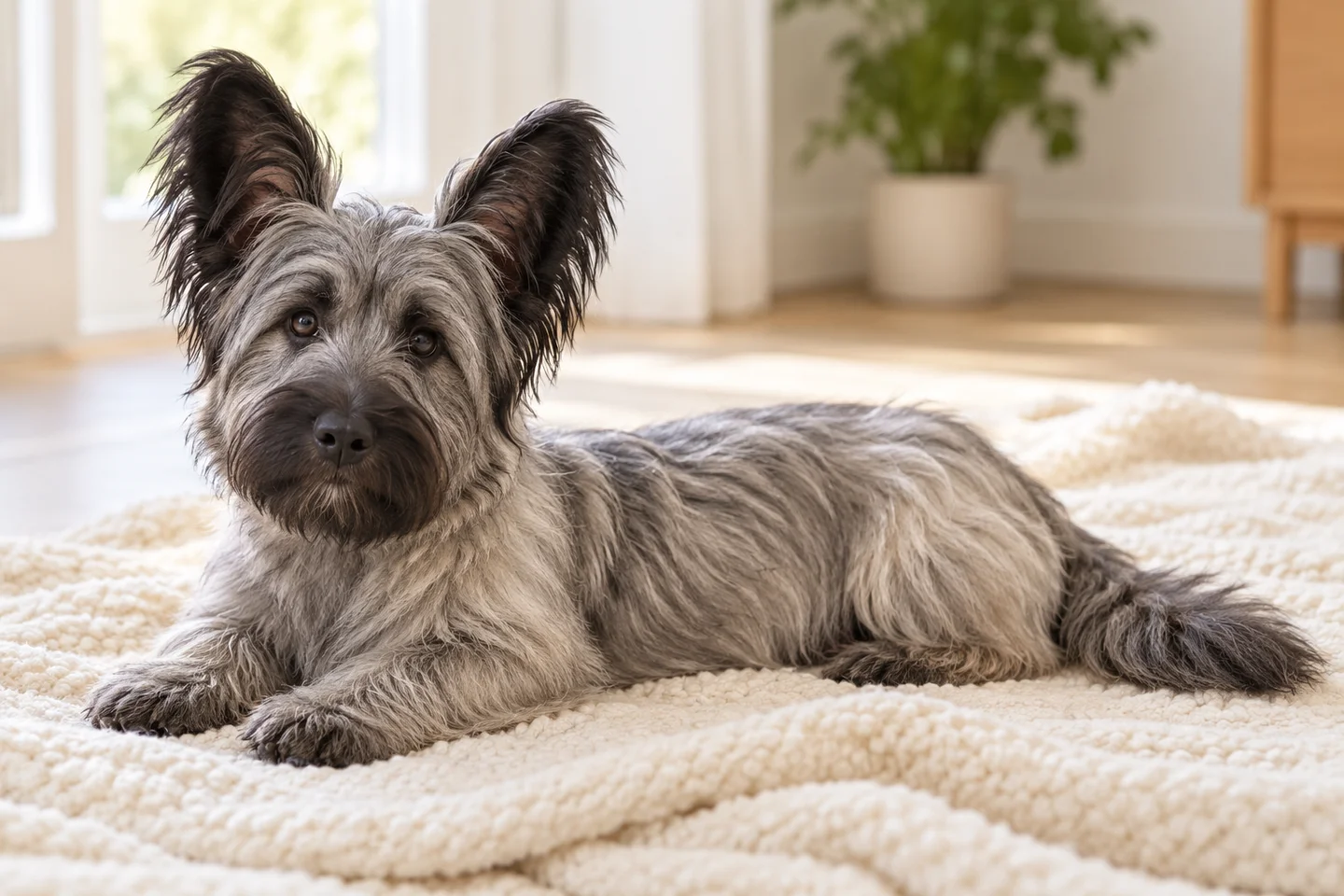
Set up a sleeping place outside the busiest walking route and protect it from repeated interruption. Practice calm time there while the household continues ordinary tasks. A dog that follows one person continually may need gradual help learning that a short separation is safe. Do not assume attachment alone explains pacing, vocalizing, or inability to settle.
Introduce time apart at a manageable level and observe the actual response. Persistent distress deserves veterinary and qualified behavior advice. Another dog is not a guaranteed solution. Arrange a trusted carer before a long absence becomes unavoidable, and practice handling, feeding, and walks together. The carer needs access to medical instructions and an understanding of the dog's preferences. A breed described as strongly attached to its person still needs workable care when that person cannot be present. Evaluate that practical responsibility before placement rather than discovering during an emergency that nobody else can manage grooming or a veterinary journey.
Children and respecting a low resting dog
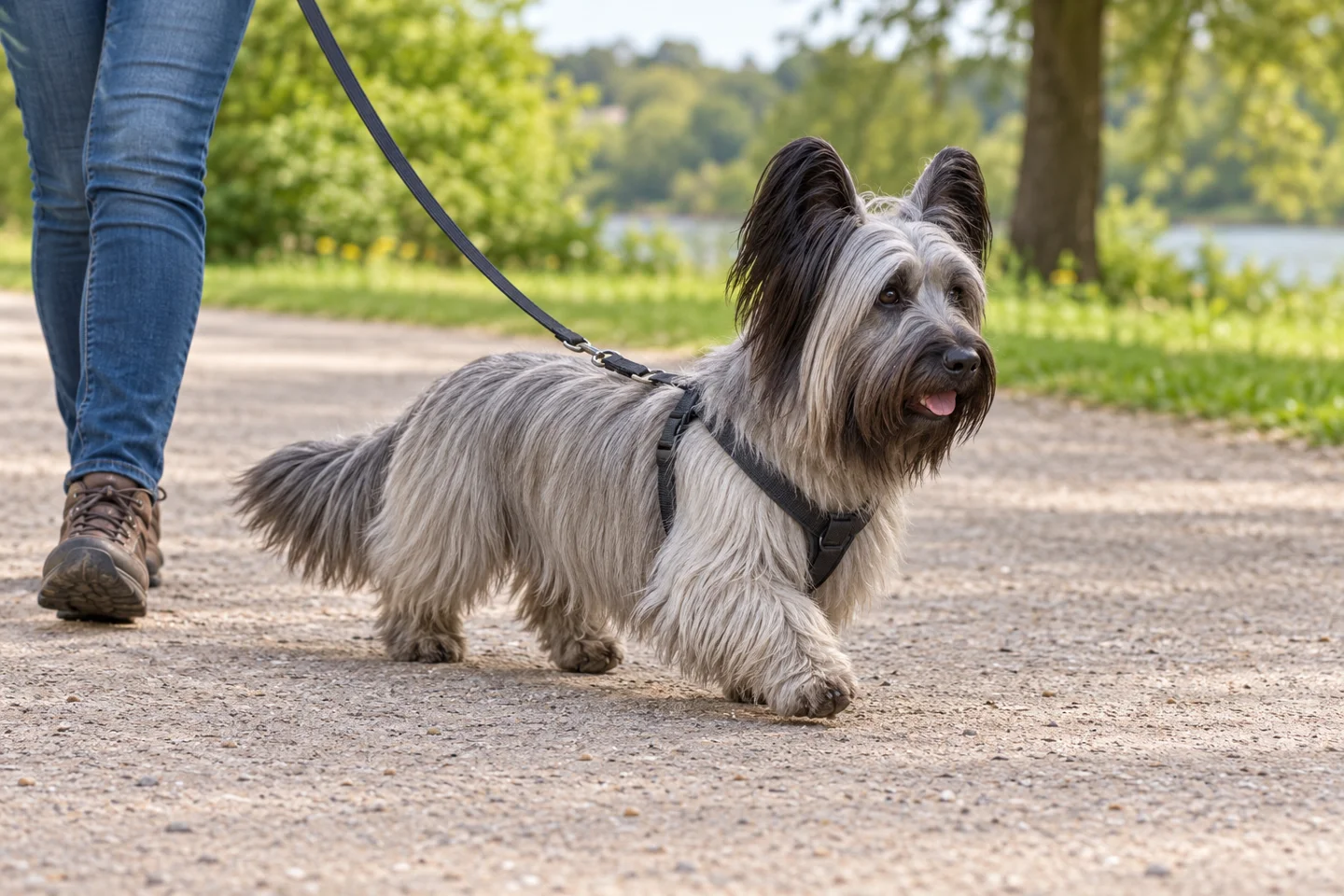
A long, low dog may rest close to routes children use between furniture. Create a protected bed that is not underfoot and prevent children stepping over or climbing across the animal. The coat is not a handle. Young children should not lift the dog, pull ear hair, or restrain it for a hug. Adults manage necessary handling with suitable support.
In calm interactions, help a child invite the dog nearer and pause after brief contact. A turn away is a reason to stop, not to follow. Keep meals and chews protected, and leave retrieval of objects to adults using a safe plan. Visiting children need active supervision regardless of the dog's familiarity with family members. During games, parties, or divided adult attention, appropriate separation can be the best arrangement. The adults should be able to maintain these boundaries consistently. A general reputation for loyalty does not establish that this animal is comfortable with rough play, sudden lifting, or a crowded group of young visitors.
Canine companions, cats, and terrier interests
Introduce dogs where each can move away without becoming trapped beside a person or boundary. Match the pace and intensity to both animals. A much larger dog bouncing repeatedly on the Skye is a reason to interrupt even if no one appears overtly threatening. Observe whether each animal can pause, disengage, and resume ordinary activity.
Inside, prepare separate resources and routes before adding a companion. Cats need reliable protected access to food, litter, and rest. Prevent chasing during introductions instead of expecting the animals to negotiate safety. Small pets require secure accommodation and a plan for cleaning or handling that does not expose them to the terrier. A previous peaceful relationship provides useful history, but cannot predict every new animal or sudden movement. If the household cannot maintain separation during daily chores and absences, reconsider the match. Training can improve cooperation without making a universal promise about pursuit or resource sharing.
Grooming down to the skin with patient technique
Part and examine the coat methodically rather than brushing only the visible surface. Check behind ears, beneath equipment, around limbs, and under the body. Small tangles are easier to address before they become tight mats. Ask a professional to demonstrate tools and technique, especially if you cannot safely distinguish skin from hair. Pulling repeatedly through a knot can make future sessions more difficult.
Use a nonslip surface and short cooperative sessions. Introduce bathing, drying, nail care, and tooth brushing gradually. Hair around the face must allow normal vision, and the dog should be able to move without the coat catching repeatedly. Watch for irritation or damp areas beneath long hair. Ear odor, discharge, or pain needs veterinary advice rather than deep cleaning with tools or reused medication. If one part becomes newly difficult to touch, investigate discomfort. The grooming routine is also an opportunity to observe body condition and skin changes that the long coat otherwise conceals.
Health: puppy limp requires assessment, not dismissal
The Skye Terrier Club monitors puppy limp and discusses developmental limb concerns. An owner should not assume that a limping puppy has a harmless breed trait. Arrange veterinary assessment and give the clinician the breed information as context. Several causes of altered movement can look similar, and identifying the individual problem matters more than applying a familiar label.
Describe when the limp started, which activities precede it, and whether the dog appears uncomfortable or reluctant to move. A safe video may help show an intermittent change. Ask what activity and follow-up are appropriate while investigation proceeds. The club also describes a specific elbow-imaging project; it should not be confused with every other elbow-scoring system. If screening is offered, ask which protocol was used and who interpreted it. Breeding records and current clinical care answer different questions. A favorable parental result cannot explain every new limp, and an adult looking comfortable in a photograph cannot certify how its offspring will develop.
Kidney records and liver-disease research
The club's renal dysplasia initiative recommends identifiable kidney ultrasound records before breeding. A prospective owner can ask whether that assessment was performed and request the report, rather than accepting a general claim that the parents were checked. Have a veterinarian explain what the scan establishes and what remains outside its scope. Do not present an ultrasound as a lifetime genetic clearance.
The club's 2024 report explains that the condition historically called Skye Terrier hepatitis is being studied as Skye Terrier liver disease, with variable presentation and continuing investigation. Avoid promising a routine DNA exclusion test from that research discussion. Ask about relevant family diagnoses and how new findings are communicated. For the individual dog, changes in drinking, urination, appetite, weight, or abdominal appearance warrant clinical advice. A report of one condition in the breed cannot identify the cause of every symptom. Keep actual examination and laboratory records available so the veterinary team can distinguish family information from the dog's current problem.
Reading surveys without inventing population risk
The club collects health reports and publishes survey information, including attention to cancer and other diagnoses. Reported case counts and percentages among respondents should not be converted into worldwide prevalence. Participation, age, diagnostic certainty, and the group surveyed all affect interpretation. Ask which report a claim comes from before repeating it as a probability for every puppy.
Useful conversations focus on the family, the evidence behind a diagnosis, and what action is appropriate. Ask a breeder how owners can share new medical findings and whether information about relatives is retained. Report confirmed conditions through the relevant club process when you choose to participate, while respecting privacy. For your own dog, new lumps, unexplained weakness, or persistent changes in normal behavior need veterinary assessment. Severe collapse or breathing difficulty requires urgent help. Do not diagnose cancer from a breed statistic or delay care because a screening result once looked favorable. Clinical investigation remains specific to the actual animal.
Nutrition, mixes, and maintaining the routine
Measure meals, count training food, and review body condition through the coat with veterinary guidance. A long silhouette does not determine a universal ration. Choose complete food appropriate to life stage, and discuss persistent digestive problems or unexpected weight change. Homemade feeding needs proper formulation; supplements should have a defined purpose rather than follow a promise about coat beauty.
A Skye mix may vary in proportions, coat, behavior, and grooming needs. Documented ancestry can inform questions without guaranteeing a particular adult result or freedom from inherited disease. Ask what is known about both backgrounds where available. Budget locally for veterinary care, grooming assistance, training, transport, and trusted cover during absences. Include the time needed to maintain the coat between appointments. If one person performs every care task, teach another suitable adult before illness or travel interrupts the routine. Practical suitability includes the ability to preserve comfort on busy days, not only enthusiasm for the breed's distinctive appearance.
dogsDating walks at a comfortable pace
Describe the Skye's preferred outing on dogsDating, including pace, suitable partners, and any sensitivity around close approaches. Keep exact home coordinates private, and do not publish the street address. An approximate area is sufficient to choose a public start with room for each handler to prepare separately. Avoid making a first introduction beside the home entrance.
Choose ground that both dogs can use comfortably and begin with space between them. Physical greeting is optional. Observe the ability to turn away, continue walking, and recover after noticing the other animal. If a companion repeatedly crowds the Skye or the Skye tries to retreat, change the arrangement promptly. Keep shared toys and food out of the initial encounter. A short quiet walk can provide enough information to decide whether another meeting is useful. Compare specific observations afterward, and allow either person to decline. Matching profiles do not oblige dogs to enjoy the same pace or style of social contact.
Sources and editorial notes
Sources checked October 22, 2026. Breed measurements describe reference ranges, not a diagnosis or an individual dog's ideal weight. Images are AI-generated breed illustrations and do not document a particular dog or health condition.
- AVSAB: Humane Dog Training Position Statement
- VCA Animal Hospitals: Food aggression in puppies
- Orthopedic Foundation for Animals: CHIC health screening programs
- VCA Animal Hospitals: Aggression toward unfamiliar dogs, diagnosis
- VCA Animal Hospitals: Grooming and coat care for your dog
- VCA Animal Hospitals: Ear infections in dogs (otitis externa)
- AAHA: Feeding plans for healthy, appropriate weight cats and dogs
- VCA Animal Hospitals: Heat stroke in dogs
- AVSAB: Puppy Socialization Position Statement
- VCA Animal Hospitals: Dog behavior problems, aggression toward children
- FCI Skye Terrier standard 75, October 2026: proportions, height and natural ear varieties
- The Skye Terrier Club: monitored conditions, kidney-ultrasound initiative and health surveys
- The Skye Terrier Club: 2024 health report and liver-disease research clarification
Keep getting to know dogs.
Read another guide or return to your dogsDating community.
Explore breed guidesBack to dogsDating