Sloughi
A short-coated North African sighthound, distinguished from Saluki and Azawakh, with secure exercise planning, Sloughi-specific PRA information and dated screening guidance.
How these guides are researched and reviewed
- Origin in FCI standard
- Morocco
- Adult male height
- 66–72 cm
- Adult female height
- 61–68 cm
- Coat
- Short; no feathering
General information for owners. These articles have not been reviewed by a veterinarian. Medical decisions need your dog's history and an examination.
The Sloughi is a short-coated North African sighthound
The Sloughi is a distinct North African sighthound, with Morocco identified as the country of origin in the FCI standard. It is separate from the Saluki and Azawakh. The name should not be used as a general label for every lean, sandy-colored dog with hanging ears. Registration details and actual background matter when comparing standards, medical information, and a proposed placement.
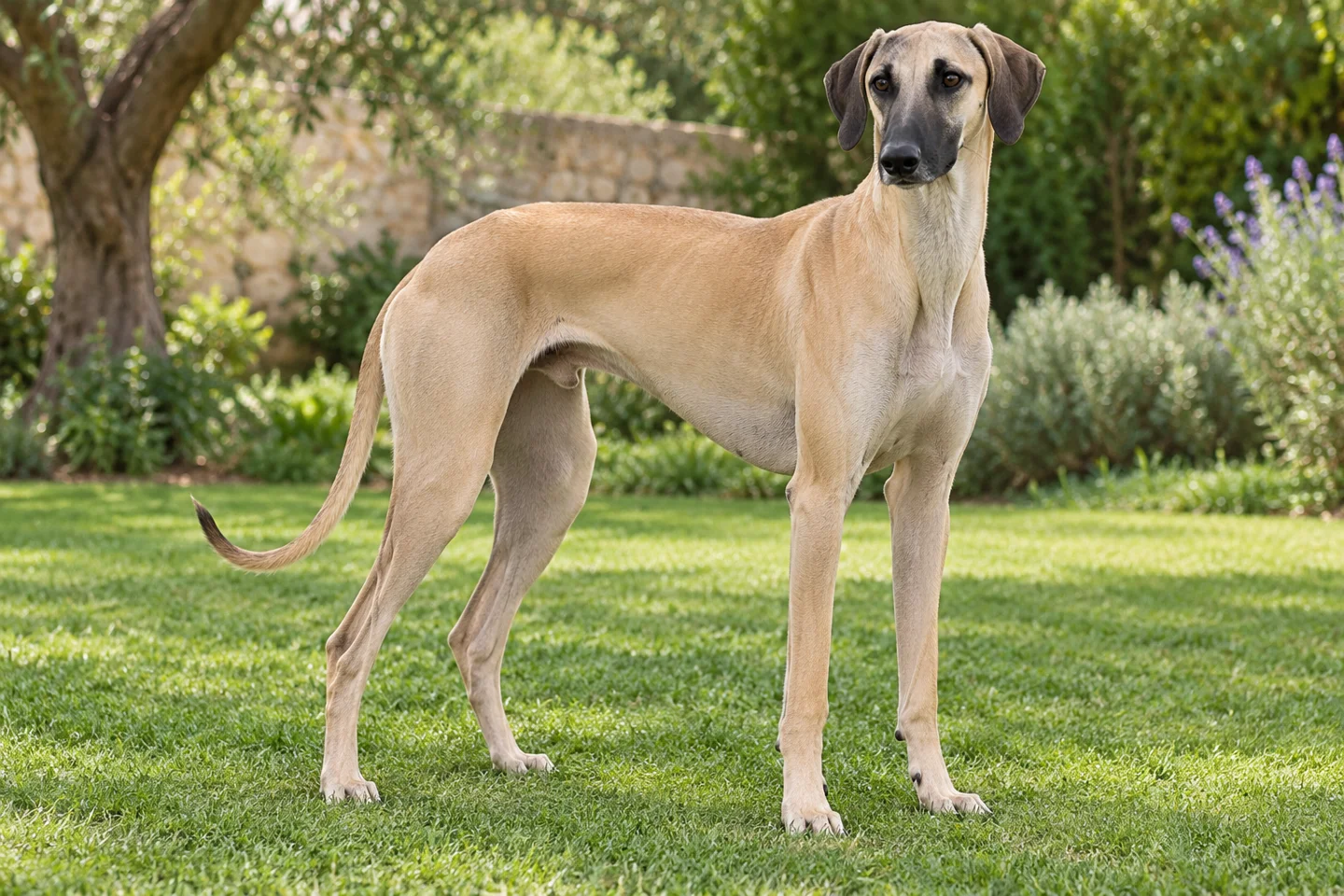
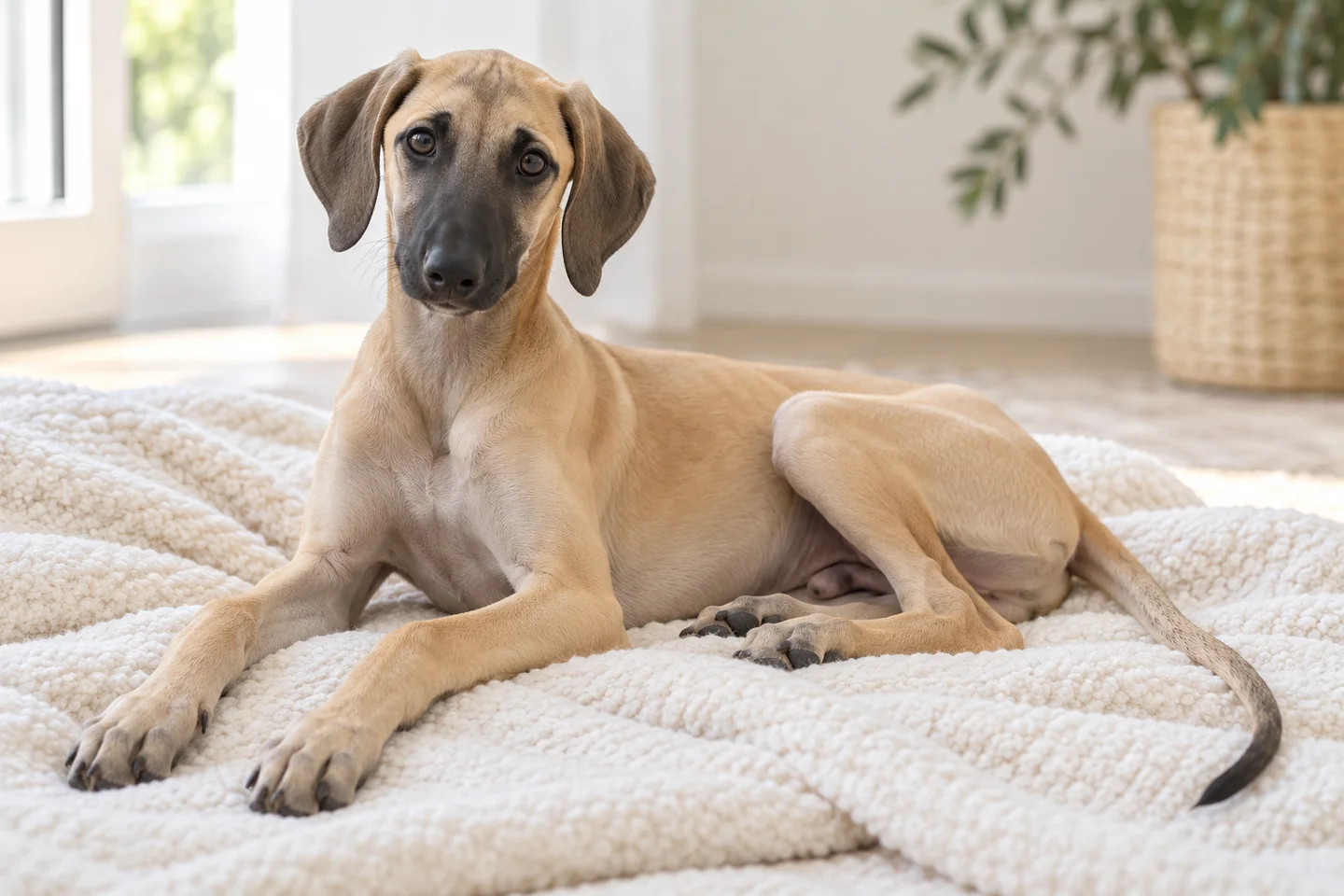
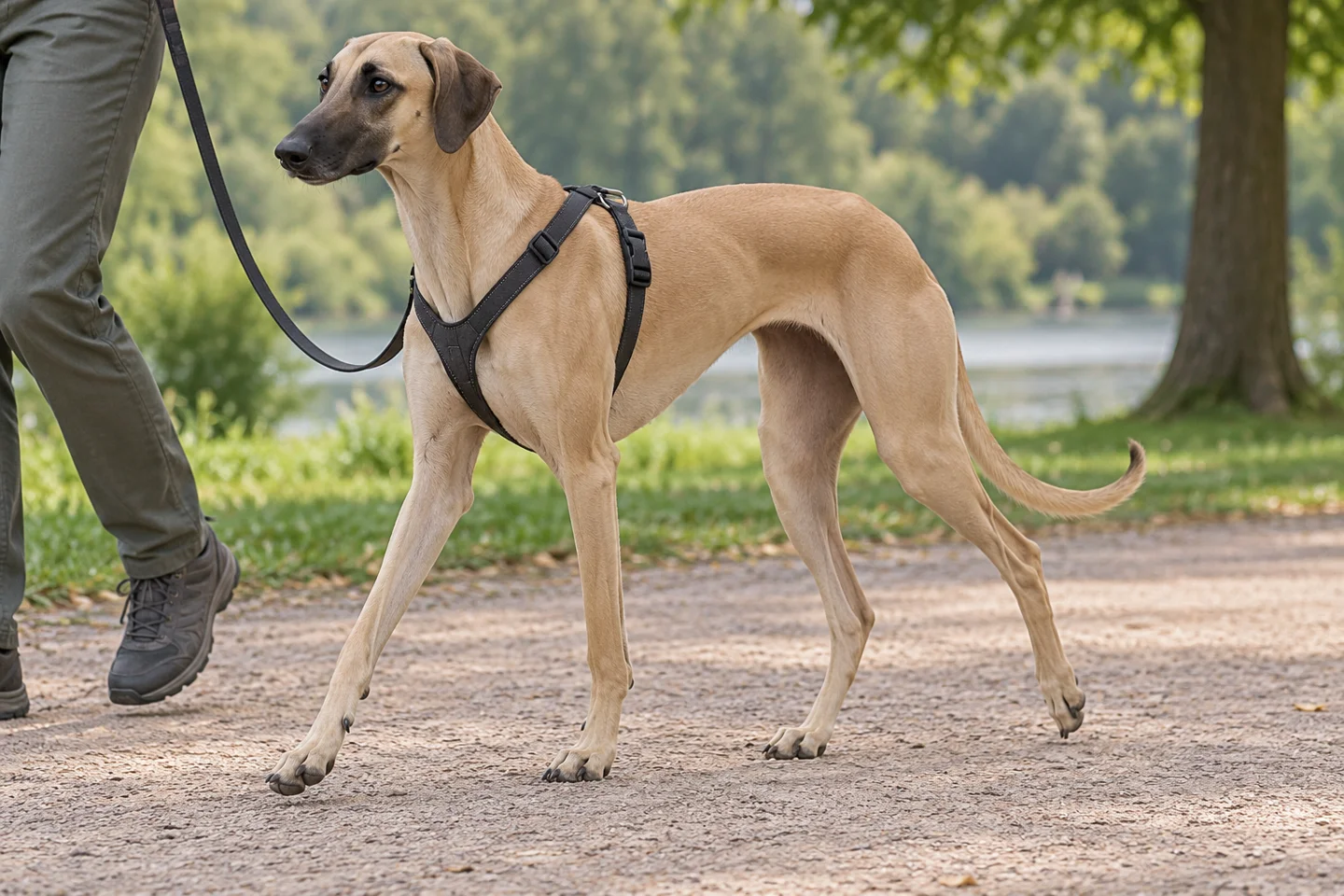
The selected illustrations show a sandy dog with a black mask, natural dropped ears, a full fine tail, and a short coat without feathering. Those features distinguish the intended example from a feathered Saluki illustration. Images cannot document a real dog's ancestry or medical findings. For a rescue with uncertain background, describe the uncertainty and assess the animal directly. Observe ordinary movement, rest, responses to handling, and behavior around other animals. An elegant outline does not establish fitness, and an appealing expression cannot answer whether this individual is comfortable in your particular household.
Geographic history without unsupported ancestry stories
The FCI account describes a long North African history and present concentration in Morocco. That context is more useful than an invented claim of direct descent from a particular ancient monument or famous animal. Historical depictions may resemble modern sighthounds without supplying a documented pedigree. Do not turn a romantic origin story into a promise about an individual puppy's health or temperament.
Ask about the recent lives of the family instead. What activity do the adults receive, where do they rest, and how are visitors and veterinary care handled? A dog experienced in one environment may need a deliberate transition to another. Companion ownership can provide suitable movement and investigation without allowing access to quarry. Where sport is planned, learn the relevant organization's rules and safe progression before participating. The practical question is whether your circumstances can support this dog's everyday needs, including secure access and competent care, rather than whether you can recreate every aspect of a historical working life.
Adult height and assessing condition on a lean frame
The FCI gives males a height range of 66–72 cm at the withers and females 61–68 cm. It does not prescribe an adult kilogram interval in that standard. Ask the veterinary team to demonstrate appropriate body-condition assessment for the individual instead of using a weight copied from another sighthound. A lean outline needs interpretation through muscle, condition, and clinical findings.
Plan household and vehicle space for the adult. The dog should be able to lie comfortably in suitable restraint and move without becoming wedged among bags or passengers. Teach calm entry and exit with the vehicle secured. If a ramp or other support will be needed, introduce it while the animal is well rather than waiting for injury. Slippery surfaces and awkward turns can become more difficult with age. A change in movement deserves assessment even if the dog remains eager to go out. Athletic appearance cannot establish the absence of pain or determine how strenuous an outing should be.
Short hair, permitted patterns, and natural ears
The Sloughi standard describes a short-haired dog. Sandy shades, black masking, and specified darker patterns can occur; the selected masked sand illustration is one choice. There should be no long ear or tail feathering in that example. The ears naturally hang, unlike breeds whose standard calls for a folded rose ear. A correct image should preserve those distinctions rather than combine attractive features from several sighthounds.
Coat color should not dominate selection. Ask how the puppy is developing and examine the actual animal's comfort and care. A photograph cannot show every skin change or demonstrate sound movement. For an adult, inspect equipment contact points and ask about routine handling. A seller who answers health questions only with claims about rare color is not supplying the information you need. For an adopted dog, medical records and observed responses remain useful regardless of whether resemblance can support a confident breed identification. Care should follow evidence about this dog rather than an appearance-based certainty.
Training a return before relying on it
Teach turning toward the handler and coming back in quiet, secured conditions. Reinforce promptly and sometimes allow the dog to resume an appropriate investigation. A response that always ends the outing may become less useful when the environment offers strong competing interests. Build difficulty deliberately, recognizing that movement at a distance can change the task substantially.
Maintain physical safeguards around roads, livestock, and wildlife while training develops. A line must be handled in a suitable space without wrapping around people or obstacles. Ask for instruction if the animal's speed makes the setup hard to control. Secure gates and teach the household's opening routine before an exciting departure. Do not test supposed loyalty by removing equipment where a failure would be dangerous. Cooperation and management support each other. An affectionate dog can still react quickly to moving animals, and recall learned at home cannot be treated as a guarantee in every outdoor setting.
Exercise with an inspected place to run
Regular movement should include a plan appropriate to the individual's age, fitness, and health. Safe opportunities for running may be valuable, but the word enclosed is not enough. Walk the boundary and inspect gates, gaps, surface hazards, and obstacles. Consider other users and whether dogs can be separated before release. A crowded area with unpredictable approaches may be unsuitable even when the fence is intact.
Introduce strenuous activity gradually and ask the veterinary team about readiness for sport. Puppies need manageable development rather than adult-distance targets. Older dogs may need different footing, duration, and recovery. Carry water and adjust for temperature; a North African background does not make heat illness impossible. Notice changes after activity as well as during it. Repeated stiffness, limping, unusual breathing, or delayed recovery needs advice. A sustainable exercise plan also includes ordinary walks and quiet investigation for days when safe running space is unavailable. Do not substitute an uncontrolled chase for a considered outlet.
A comfortable home and predictable time apart
Provide a resting place away from heavy foot traffic, with suitable bedding and the ability to stretch comfortably. Teach settling there during brief ordinary activities. If an outside view prompts continual vigilance, change access while rewarding a calmer alternative. Rest should not depend on exhaustion or require the dog to remain beside every household event.
Introduce absences gradually and observe the response rather than judging only by damage. Pacing, vocalizing, or failure to settle can indicate difficulty that needs a revised plan. Persistent distress warrants veterinary and qualified behavior advice. Another dog may add a relationship to manage without resolving the original concern. Arrange a trusted carer and practice the transition before an unavoidable trip. The person needs to understand equipment, entrances, feeding, and the dog's preferences about touch. Discuss the actual working week with the source before placement so that a companion is chosen for a routine the household can maintain.
Socialization and a stranger who waits
A visitor can begin by ignoring the dog and allowing observation from a comfortable distance. Contact should follow voluntary interest, with an option to leave. Prevent leaning over, restraining the head, or insisting on a greeting because the person likes sighthounds. A manageable encounter can teach more than prolonged exposure that leaves the animal unable to recover.
Include gentle handling, travel, surfaces, and everyday noises in gradual learning. Practice standing briefly for examination and comfortable equipment fitting before those skills are needed in a busy clinic. Adult rescues also need an assessment of actual experience. Familiarity with one environment does not establish understanding of another, and apparent composure can conceal avoidance. Watch the response during and after the session. If the dog repeatedly freezes, retreats, or remains vigilant later, lower the demands and seek guidance. Socialization supports coping through achievable experience, not a requirement that every dog accept every person or animal at close range.
Children and respect for sleeping and moving dogs
A long-legged dog needs room to move without children running beneath or directly across its path. Plan games so that sudden chasing or wrestling does not take place beside the resting animal. Adults should interrupt unsafe movement before a collision, regardless of whether the dog appears friendly. A separate comfortable space is useful during lively visits or parties.
Teach children to invite the dog over and stop contact when it turns away. Prevent hugging around the neck, pulling ears, climbing, and interference with meals. A child must not retrieve objects from the mouth or be responsible for controlling the animal near a road. Adults can arrange suitable shared tasks with rewards and clear limits. Visiting children need supervision even when familiar family members interact comfortably. If an adult cannot watch closely, separate the parties. A general description of devotion to the family cannot establish tolerance for rough contact, sudden lifting, or a crowded group of excited visitors.
Aggression and listening to the situation around a warning
A Sloughi showing a threat needs space and a plan, rather than dismissal because the breed is expected to be dignified or reserved. Record the approach, contact, resources, and escape options before the response. A warning during painful handling is different from a reaction to another dog crowding a bed. Prevent another exposure while the cause is assessed.
New sensitivity or abrupt behavioral change needs veterinary investigation. Qualified reward-based behavior assistance can help with recurring defensive responses and the practical arrangements required during learning. Avoid punishing a growl or staging another encounter to prove whether the warning was serious. If safety equipment is advised, introduce it comfortably and use it for the agreed purpose. It does not make forced contact acceptable. A bite requires appropriate care for the injured person and a review of how access occurred. The next meeting should depend on a specific prevention plan, not reassurance drawn from the dog's breed or earlier affectionate behavior.
Other dogs, cats, and the response to movement
Assess a proposed canine companion with room to move and separate handlers. Look for pauses and the ability to disengage. Fast running is not automatically reciprocal play; one dog repeatedly trying to leave needs help. Differences in size, speed, and social style can matter even when both animals are generally comfortable with known dogs.
For cats, protect access to food, litter, and rest throughout the introduction process. Prevent pursuit from becoming a repeated household activity. A familiar resident cat and an unfamiliar running animal outdoors present different situations, so avoid universal promises based on one peaceful relationship. Smaller pets require secure physical protection, including when their accommodation is opened. Ask about the individual history and acknowledge gaps. If the home's ordinary layout or daily routine cannot maintain necessary separation, reconsider placement before adoption. Training helps the dog cooperate with its handler without guaranteeing that moving animals will cease to attract attention in every setting.
Grooming a short coat and examining feet
Use gentle coat care to inspect skin and the places equipment touches. Short hair makes some findings easier to see but does not eliminate parasites, small wounds, or friction. Check pads and nails after unfamiliar ground. Notice repeated licking or tenderness, and seek advice if a problem persists rather than assuming a motivated dog cannot be uncomfortable.
Introduce nail maintenance and tooth brushing through brief cooperative sessions. A stable nonslip surface makes examination easier. The dropped ears should be observed for odor, discharge, scratching, and pain. Avoid deep tools or medication left over from another episode; treatment depends on the cause. If one area suddenly becomes difficult to touch, investigate before increasing restraint. Keep notes or a safe photograph of a changing skin area when useful. The purpose of routine care is to maintain comfort and notice change, not to diagnose every mark from breed-group advice or force completion of an arbitrary grooming session.
Health: the Sloughi-specific retinal test matters
UC Davis describes a Sloughi-specific inherited retinal disorder, also called rcd1a-PRA, associated with PDE6B. It is autosomal recessive: a dog with one relevant variant is a carrier, while two copies are associated with disease. A carrier result for this condition does not mean that the animal is blind. A clear result applies to that tested variant, not every possible cause of visual impairment.
Ask for the actual report and check the dog's identification and exact test name. Do not assume a test labeled PRA for a different breed answers the same question. Clinical eye assessment remains useful alongside DNA results. If the dog begins hesitating in low light, bumping into objects, or behaving differently around obstacles, arrange examination rather than diagnosing inherited PRA yourself. Keep the environment predictable while obtaining advice. A pedigree or favorable parental appearance cannot substitute for relevant testing, and an identifiable result gives the veterinarian more information than an assurance that the family's eyes seem fine.
Health recommendations have a date and jurisdiction
The American Sloughi Association's AKC-hosted statement, approved in August 2017, recommends an OFA eye examination within twelve months before breeding and DNA screening for PRA for U.S. breeding dogs. State the date rather than presenting the document as an automatically updated worldwide rule. Ask which current requirements apply to the litter under consideration and request the corresponding records.
The Sloughi Club UK health page discusses proposed broader procedures and explicitly notes that formal Royal Kennel Club adoption and inclusion in its code are still to follow in that discussion. Distinguish a club proposal, an established registry requirement, and a veterinarian's recommendation for one animal. More tests are not interchangeable with more certainty. Ask what question each assessment answers and how the result influences a decision. Family medical information and the individual examination remain relevant even when formal screening is complete. Avoid inventing a prevalence or a universal genetic clearance from a set of favorable reports.
Medication records and preparation for urgent care
The UC Davis Sloughi panel includes MDR1 drug-sensitivity testing. If a result exists, give the actual genotype report to the veterinary team rather than using a broad label such as sensitive to anesthesia. The clinician needs the specific information when considering medication and procedures. Do not stop prescribed prevention or substitute another drug on the basis of a breed-group list.
Keep current prescriptions, relevant results, and the emergency contact accessible to carers. Know how to reach out-of-hours care and how the dog will travel securely. Collapse, serious breathing difficulty, major trauma, or suspected poisoning needs prompt professional advice. Provide information about possible exposures without delaying attendance. Human medication and another animal's prescription are unsafe substitutes for assessment. For an established illness, ask for an individual care plan and review it after changes. A dog that still appears athletic can have a significant clinical problem, so observed changes deserve attention rather than reassurance from an attractive silhouette.
Feeding, mixes, and ownership costs
Review the regular ration against condition and activity, counting food used in training. Choose a complete diet suitable for life stage and seek veterinary guidance for persistent digestive signs, unexplained weight change, or altered thirst. A lean frame should not prompt automatic restriction or repeated extra feeding without assessment. Homemade diets need proper formulation, and supplements require a clear reason.
A Sloughi mix may vary in adult build, coat, pursuit, and social behavior. Ask which ancestry is documented and avoid treating a crossbreed label as a promise of easy recall or freedom from inherited disease. Relevant parental information still matters when a litter is planned. Budget locally for veterinary care, secure equipment, safe exercise access, training help, transport, and appropriate cover during absences. The person providing cover must understand the dog's handling and door routine. An appealing weekend outing is only part of suitability; the household needs a workable plan for ordinary difficult days too.
dogsDating meetings with space and a clear finish
A Sloughi dogsDating profile can explain preferred pace, known walking partners, and situations requiring extra distance. Keep exact home coordinates and the household address private. An approximate locality is enough to select a public starting point where both handlers can prepare without an immediate close encounter. Avoid inviting an unfamiliar dog into the home as the first compatibility test.
Agree on an initial gap and a route with easy turning options. Physical contact is optional. Watch whether each dog can notice the other, resume ordinary investigation, and respond to its handler. Repeated fixation, blocking, or attempts to retreat mean the arrangement needs to change. Keep shared resources out of the initial meeting and do not release the dogs merely to see what happens. Afterwards, compare concrete observations and decide whether another outing would suit both animals. Either person can decline, and calm walking at a distance can remain a useful relationship without progressing to close play.
Sources and editorial notes
Sources checked October 22, 2026. Breed measurements describe reference ranges, not a diagnosis or an individual dog's ideal weight. Images are AI-generated breed illustrations and do not document a particular dog or health condition.
- AVSAB: Humane Dog Training Position Statement
- VCA Animal Hospitals: Food aggression in puppies
- VCA Animal Hospitals: Common emergencies in dogs
- Orthopedic Foundation for Animals: CHIC health screening programs
- VCA Animal Hospitals: Aggression toward unfamiliar dogs, diagnosis
- VCA Animal Hospitals: Grooming and coat care for your dog
- VCA Animal Hospitals: Ear infections in dogs (otitis externa)
- AAHA: Feeding plans for healthy, appropriate weight cats and dogs
- VCA Animal Hospitals: Heat stroke in dogs
- AVSAB: Puppy Socialization Position Statement
- VCA Animal Hospitals: Dog behavior problems, aggression toward children
- FCI Sloughi standard 188: North African identity, short coat and adult height ranges
- UC Davis Veterinary Genetics Laboratory: Sloughi-specific rcd1a-PRA, inheritance and result interpretation
- American Sloughi Association: August 2017 U.S. breeding-health statement hosted by AKC
- Sloughi Club UK: health procedures discussed as a developing club statement
- UC Davis Veterinary Genetics Laboratory: Sloughi health panel including MDR1
Keep getting to know dogs.
Read another guide or return to your dogsDating community.
Explore breed guidesBack to dogsDating