Slovakian Wirehaired Pointer
A grey rough-coated Slovak working pointer whose care should combine purposeful searching, cooperative skills, comfortable recovery, and careful interpretation of a small breed’s health evidence.
How these guides are researched and reviewed
- Origin
- Slovakia
- FCI male height
- 62–68 cm
- FCI female height
- 57–64 cm
- Coat
- Harsh straight grey coat with beard and eyebrows
General information for owners. These articles have not been reviewed by a veterinarian. Medical decisions need your dog's history and an examination.
One Slovak breed with several English names
The Slovakian Wirehaired Pointer is also called the Slovakian Rough Haired Pointer, Wirehaired Slovakian Pointer, or Slovenský hrubosrstý stavač. These names refer to the same recognized Slovak breed, rather than separate coat varieties that an owner must choose between. Its grey wire hair and beard can invite comparison with other gundogs, but identity should come from records. An unknown grey rough-coated animal cannot be assigned a confirmed pedigree from appearance alone. A useful ownership discussion begins with this particular dog's background, behavior, and practical care needs.
The working purpose involves field, woodland, and water, including searching and retrieving after a shot. A household that does not hunt still needs appropriate outlets for investigation and cooperation. Ask the source how its adults spend a normal week and how they settle when activity ends. Affection and an appealing coat do not establish that a dog can cope with long unsupported absences or an unchanging short pavement route. Plan company, transport, safe boundaries, learning, and recovery before bringing one home. A source willing to describe inconvenient behavior gives the buyer a better starting point than a promise that every member of the breed is effortless.
A modern working identity without an invented family recipe
The FCI identifies Slovakia as the country of origin and describes a versatile pointer of moderate strength. Its framework emphasizes functional movement and work, rather than a heavy body or extravagant facial hair. When researching ancestry, distinguish the recognized breed from an informal crossing of visually similar dogs. The present registered animal belongs to a breeding population with its own records and selection decisions. A named ancestor or a familiar founding breed cannot establish a precise proportion of personality, inherited risk, or training ease in an individual puppy.
Ask what selection means in the current source's programme. Are adults assessed for working ability, comfortable structure, and temperament suitable for the intended placement? How are later medical findings collected? If importing, obtain original identification, pedigree, and treatment reports, with understandable translations where needed. Know who will answer questions after arrival. A rescue may have limited lineage information but useful observations from everyday care. Preserve both the evidence and its limits. A placement should be chosen because the individual fits a sustainable routine, rather than because an uncommon national name seems to promise a more unusual version of a familiar pet.
Size, grey hair, and a full natural tail
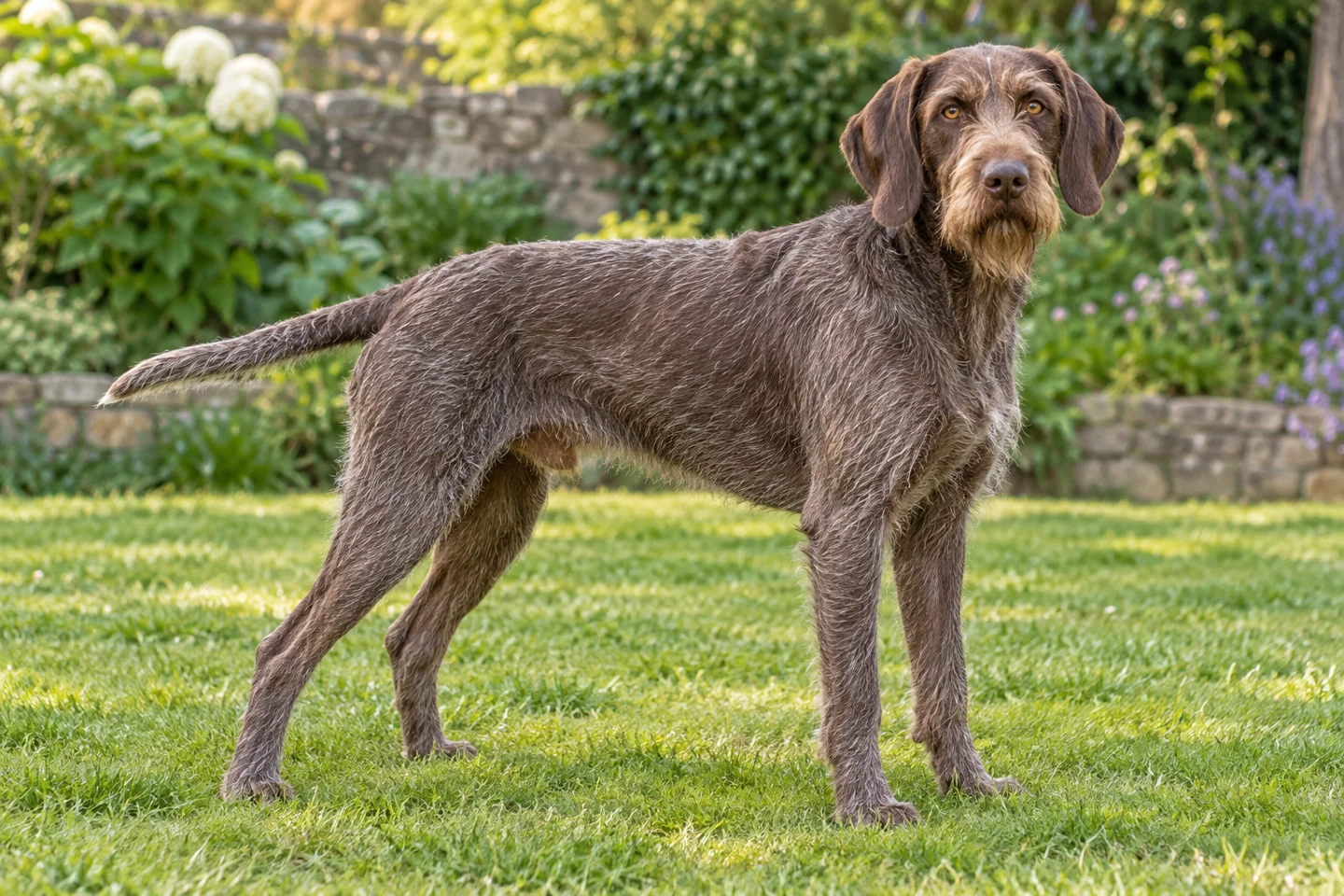
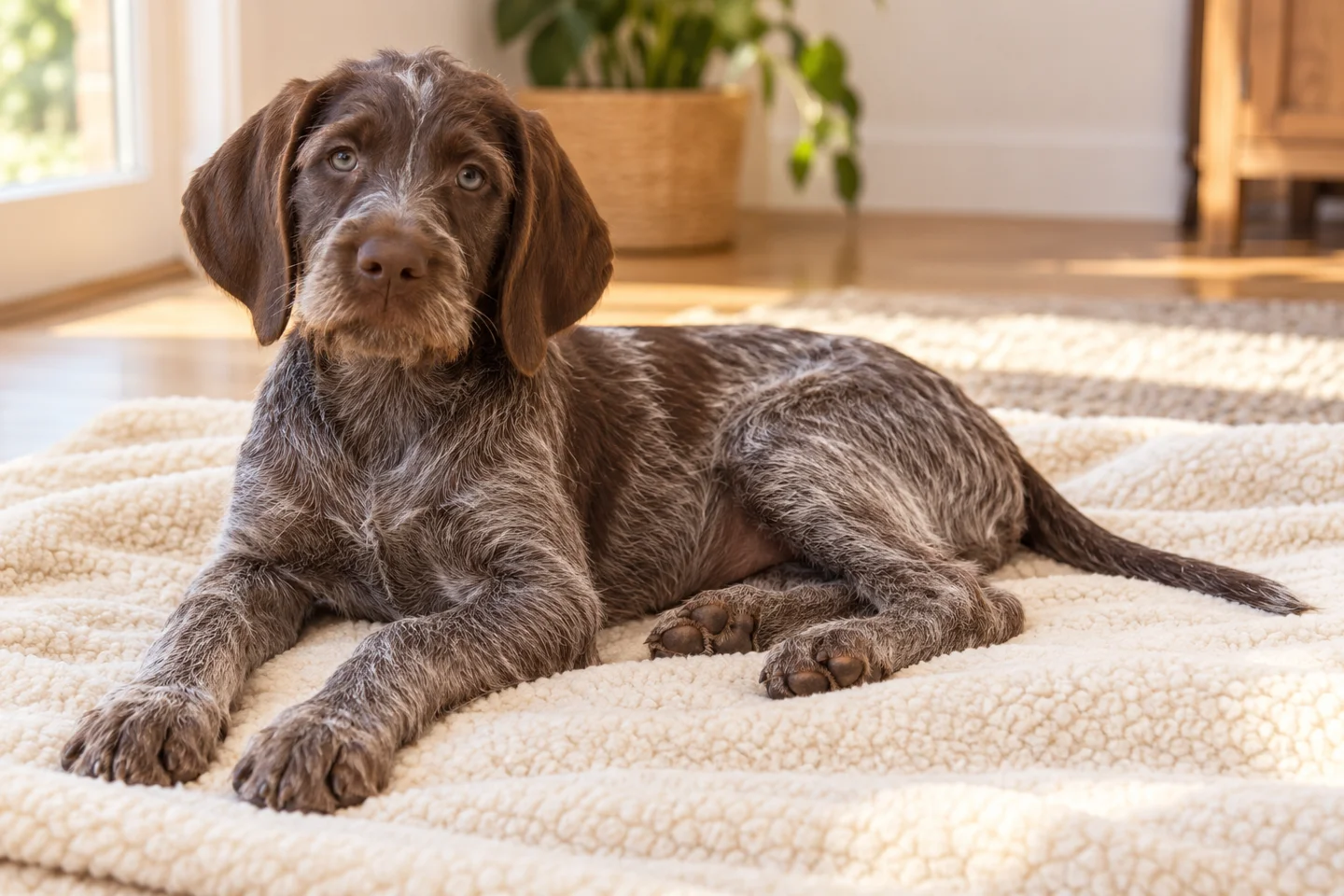
The FCI height ranges are 62–68 cm for males and 57–64 cm for females. A harsh straight outer coat lies relatively flat, with a shorter fine undercoat and longer hair forming a moustache and eyebrows. The basic shade is described as grey, with permitted variation and markings under the standard. Adults have amber eyes; young dogs may have blue eyes. The illustrations choose a grey-brown example with natural rounded hanging ears and a full tail. They are labeled AI illustrations, not photographs documenting a named dog or medical finding.
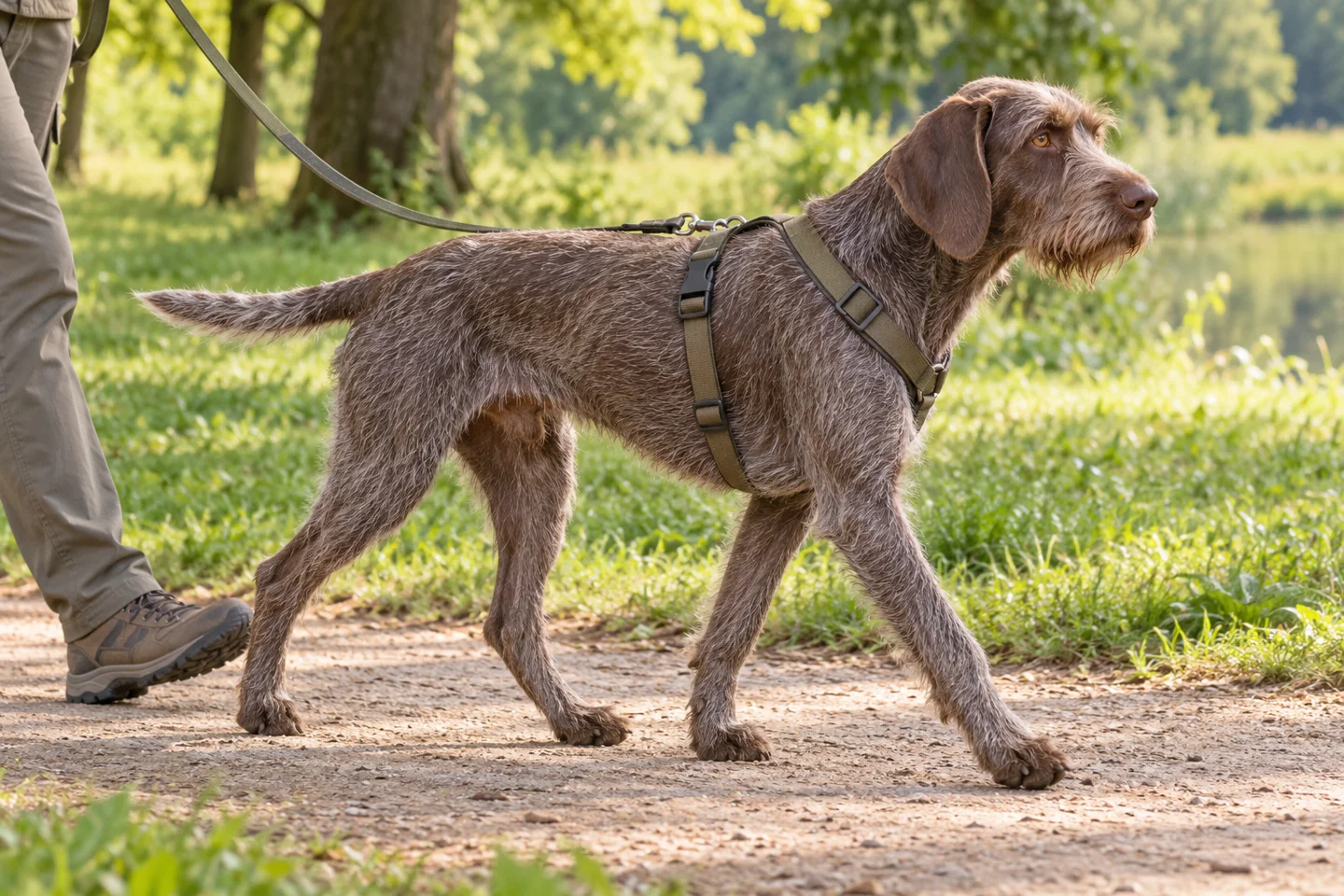
The older FCI text describes docking, while the UK club's April 2025 reproduction of the Royal Kennel Club standard expressly includes an undocked tail. Its carriage is down at rest and level with the back during movement. This guide depicts that natural option. Assess a real dog's comfortable movement and condition rather than altering it to resemble a picture. Check harness fit beneath the wire coat and recheck growing puppies. A standard supplies a reference for type; it does not determine a healthy weight or prove that an individual animal has sound joints, skin, or vision.
Temperament and changing from work to rest
A dog interested in searching can need help changing tasks when the route ends. Reinforce check-ins during investigation and make the move back indoors predictable. Offer a quiet resting area where the dog is not required to watch every visitor or delivery. Reward settling without repeatedly turning relaxation into another demand to perform. Meet adults to see the routine behind their calm moments. A brief display of obedience or enthusiasm outside does not show how the animal handles an ordinary evening when people are cooking, working, or unable to entertain it.
Introduce novelty at a level the dog can manage. Visitors should avoid surrounding it or reaching through a beard to grasp the face. Let the animal observe, recover, and choose engagement. For a new adult, start with a modest schedule and retain useful familiar cues from its previous home. A puppy needs developmentally appropriate experiences and plenty of sleep. Ask for help if fear or persistent arousal interferes with daily life. Simply increasing physical exercise cannot answer every problem involving uncertainty, separation, or unwanted handling, and an owner should know which difficulty is actually occurring before choosing a response.
Training a recall and a thoughtful retrieve
Build recall with successful repetitions in a quiet secure setting. Reward a prompt return and often allow another safe investigation afterward. Increase distraction in manageable stages, using a suitable harness and safely handled long line where appropriate. Avoid releasing near roads, livestock, or wildlife to test whether affection outweighs a strong competing interest. A versatile working description does not make that experiment safe. Practise turning with the handler before a difficult encounter occurs, and reinforce voluntary attention during walks so the dog has a clear history of useful choices outside formal sessions.
For retrieving, teach delivery and release alongside chasing an object. Begin close by with a suitable safe item, exchange calmly, and stop before excitement becomes frantic. Do not chase stolen objects around the house or wrestle a valued item from the mouth. Prevent access to unsafe material and seek qualified help if possession causes stiffness or guarding. Cooperative care also belongs in training: brief ear lifting, paw checks, comb contact, and comfortable mouth inspection. The ability to participate in these ordinary tasks makes regular outdoor care easier and more accurate than relying on restraint when a painful problem has already appeared.
A practical delivery exercise can begin indoors with the object only a step away. Reward returning it to the same comfortable position, then add distance before adding speed or an exciting location. Keep the object suitable for the dog and remove damaged items. Practise the release separately when the dog is relaxed, so the first exchange does not occur at the edge of a pond or while another animal is trying to take possession. Clear repetition in an easy place gives both handler and learner a routine to use when the surroundings become more interesting.
Exercise and water decisions for an active pointer
Vary movement, searching, learning, and rest according to age, health, fitness, and weather. A young dog needs coordination and confidence without a forced adult mileage target. An adult returning after illness or a quiet period needs a gradual increase. Watch movement and recovery later that day and the next morning. Persistent stiffness or reduced tolerance deserves veterinary assessment. An eager response to a toy does not prove unlimited stamina. A routine that depends entirely on repeated high-speed throws may make excitement easier to produce while leaving the owner without a way to encourage calm.
Water access requires a separate judgment from general exercise. Check water quality, current, temperature, banks, permission, and a simple exit. Introduce swimming gradually, supervise appropriately, and use suitable flotation support where indicated. Never push a hesitant dog into water because its breed historically worked there. Carry clean drinking water and finish before fatigue compromises recovery. After brushy or wet routes, inspect feet and coat and dry comfortably. The handler must make decisions about heat, cold, and distance rather than assuming an absorbed working dog will stop at the safest moment on its own.
Aggression and preventing pressure during handling
A cooperative working reputation cannot rule out aggression involving pain, fear, restraint, or resources. Observe the individual during rest, care, meals, and unfamiliar greetings. Withdrawal, freezing, stiffness, or growling calls for less pressure and more room. Do not punish a warning while continuing the same approach. A sudden reaction to touching an ear, paw, mouth, or mat needs a veterinary discussion, particularly if tolerance has changed. Record the actual circumstances rather than attaching a motive such as jealousy to an event that has not been assessed.
Use management while obtaining suitable help. Protect resting and feeding places, prevent access to valued unsafe objects, and place a secure barrier between the dog and busy visitor arrivals where needed. Every adult should understand the routine. A bite or credible bite risk warrants professional assessment, with positively introduced basket-muzzle training if appropriate to the plan. Equipment does not permit forced greetings or painful care. Improvement should mean more comfortable behavior and manageable choices, rather than an animal remaining silent under restraint while the discomfort responsible for the risk continues unchanged.
Children, dog companions, and smaller animals
Children need active adult supervision and a layout that prevents crowding. Do not allow beard pulling, hugging, climbing, or interruption of meals and sleep. Separate before energetic running games become difficult for the dog to ignore. Teach brief invitations to contact and respect for a dog that leaves. A young person cannot be responsible for controlling a distracted strong pointer beside a road. Good family experiences are useful evidence, but supervision must still account for today's activity, the child's age, and the animal's opportunity to escape unwanted attention.
Introduce another dog with separate capable handlers and room to walk independently. A shared gundog background does not establish compatible play or comfort around possession. Leave retrieving objects out of early encounters. Cats, birds, and small pets need their own assessment and physical safeguards because movement can engage hunting interest. Acceptance of one familiar animal does not predict every outdoor situation. Some combinations need lasting separation, and that possibility should be discussed before placement. Never release the dog toward a vulnerable animal as a test of affection or training. Preventing a chase is more useful than obtaining evidence through an avoidable incident.
Grooming wire hair and checking skin
Inspect beneath the harsh surface rather than tidying only the outline. Brush gently using tools appropriate to the individual coat, with attention behind ears, around the beard, and beneath equipment. Remove plant material after outings before it becomes incorporated into tangles. Ask a breed-experienced groomer to demonstrate maintenance without painful pulling or unnecessary cosmetic shaping. Dry the beard and coat comfortably after wet work. A change in hair density, irritation, or recurrent itching deserves clinical assessment, not an assumption that every skin problem is a normal feature of wire hair.
Check the visible outer ears for redness, discharge, odor, or sensitivity and seek advice about persistent head shaking. Avoid probing deeply or applying leftover medication. A post-walk foot inspection can reveal attached material or injury before discomfort becomes more pronounced. Maintain nails and dental care through brief cooperative routines. Keep tools and bedding clean and tell the groomer about changes in handling tolerance. When the dog suddenly avoids a familiar care step, investigate the reason before simply demanding more compliance. A well-maintained appearance should reflect comfort and accessible skin inspection, rather than hide a problem beneath an elaborate beard.
Health surveys, hip results, and limits of the available sample
The UK breed club publishes owner surveys, a coat-and-skin survey, and a request for longevity information. Its health page also recommends hip scoring and broader assessment before breeding. Those resources are useful routes for sharing evidence, but figures from a small voluntary response should not become a current whole-population disease rate. Ask about the actual parents' hip reports and the source's present programme. Link documents to the correct identity and date. A genetic coat-color result answers a different question from joint assessment and cannot establish general freedom from disease.
For a family with repeated skin trouble, ask what was diagnosed, which treatments were needed, and whether a specialist was involved. A survey report may identify a question worth investigating without proving one inherited cause. Give the veterinarian a clear account of timing, products, diet, affected areas, and related animals when known. Keep confirmed findings separate from owner suspicions. Organized follow-up can improve the information available to the source and club while helping current care. A working achievement or attractive coat should not be used to dismiss the need for medical records or the possibility of illness in an individual dog.
Reported epilepsy needs clinical interpretation
The UK club reports a small number of owner-reported idiopathic epilepsy cases through its surveys. That is a reason for an honest family conversation, not a basis for declaring a precise risk in every Slovakian Wirehaired Pointer. Ask whether an affected relative received a neurological assessment and what diagnosis is documented. Do not turn a general DNA-panel claim into a promise that all seizure disorders have been excluded. A new episode requires assessment of this patient, including possible causes beyond a breed-related explanation.
Keep the dog away from immediate hazards during an episode and contact the veterinarian for instructions. Record timing, responsiveness, movement, and recovery when safe. Prolonged or repeated episodes, injury, or poor recovery require urgent help. Do not put hands in the mouth or offer human medication. A safely obtained video can help the clinician, but filming must not delay care. If treatment is prescribed, ensure alternate carers understand the schedule and review plan. Medical records should describe findings accurately so later care is based on the established history, rather than a repeated assumption that every unusual movement has one inherited cause.
Nutrition, mixes, and a sustainable household budget
Choose complete food suited to life stage, medical needs, and workload. Measure portions, include training rewards, and assess body condition with the veterinary team as activity changes. The coat can obscure a weight change, so hands-on review matters. A mix needs individual assessment and consideration of both known parental backgrounds. A grey beard cannot confirm Slovakian ancestry, and crossing does not promise a predictable compromise in exercise needs or freedom from inherited disorders. Preserve uncertain labels and judge the actual dog rather than expecting the most convenient features of two breed descriptions to appear together.
Budget for routine and urgent care, appropriate insurance or emergency funds, training support, secure equipment, transport, grooming, and competent cover during absences. Ask the sitter how it will manage scent distractions and doors. Clarify ongoing source support and return arrangements in writing. A home suited to active weekends still needs a plan for ordinary workdays, human illness, and later medical restrictions. Choose the animal because those arrangements can meet its needs consistently. Rarity and a versatile working reputation do not reduce the time or practical resources required to provide comfortable daily life.
dogsDating walks with room for an attentive searcher
For a first dogsDating outing, ask the other owner whether retrieving equipment will be present. A dog that ordinarily enjoys company may behave differently when someone produces a ball. Choose a route where neither handler needs to throw anything, with enough width to walk on separate sides. State the approximate meeting district in the profile, keeping exact coordinates and residential details private. Agree on a recognizable public landmark through the meeting arrangement. Let the dogs discover each other's presence through walking rather than holding their noses together. If one keeps scanning for birds, create distance from that distraction before inviting closer company; another dog should not become an obstacle between this pointer and an exciting target.
Watch whether each animal can sniff, look away, and move comfortably beside its handler. Repeated freezing, withdrawal, pursuit, or arousal that prevents disengagement calls for more space or an early finish. Review route, pace, duration, and separation afterward and use those observations to plan another invitation. Calm repeated walks can be useful companionship without close wrestling. Keep public images free of identifying addresses and another person's private details. The meeting should leave both dogs able to depart comfortably, including the option to stop sooner than either owner expected.
Sources and editorial notes
Sources checked October 22, 2026. Breed measurements describe reference ranges, not a diagnosis or an individual dog's ideal weight. Images are AI-generated breed illustrations and do not document a particular dog or health condition.
- AVSAB: Humane Dog Training Position Statement
- VCA Animal Hospitals: Food aggression in puppies
- VCA Animal Hospitals: Common emergencies in dogs
- Orthopedic Foundation for Animals: CHIC health screening programs
- VCA Animal Hospitals: Aggression toward unfamiliar dogs, diagnosis
- VCA Animal Hospitals: Grooming and coat care for your dog
- VCA Animal Hospitals: Ear infections in dogs (otitis externa)
- AAHA: Feeding plans for healthy, appropriate weight cats and dogs
- VCA Animal Hospitals: Heat stroke in dogs
- AVSAB: Puppy Socialization Position Statement
- VCA Animal Hospitals: Dog behavior problems, aggression toward children
- Official breed standard: Slovakian Wirehaired Pointer
- Slovakian Rough Haired Pointer Club: current health information and owner surveys
- UK breed club: Royal Kennel Club standard, updated April 2025, including undocked tails
- Cornell University: recognizing and managing canine seizures
Keep getting to know dogs.
Read another guide or return to your dogsDating community.
Explore breed guidesBack to dogsDating