Spinone Italiano
A sturdy Italian gundog with harsh hair and a bearded face, needing thoughtful activity, comfortable handling, careful skin and ear maintenance, and precise interpretation of health screening.
How these guides are researched and reviewed
- Origin
- Italy
- FCI male size
- 60–70 cm; 32–37 kg
- FCI female size
- 58–65 cm; 28–30 kg
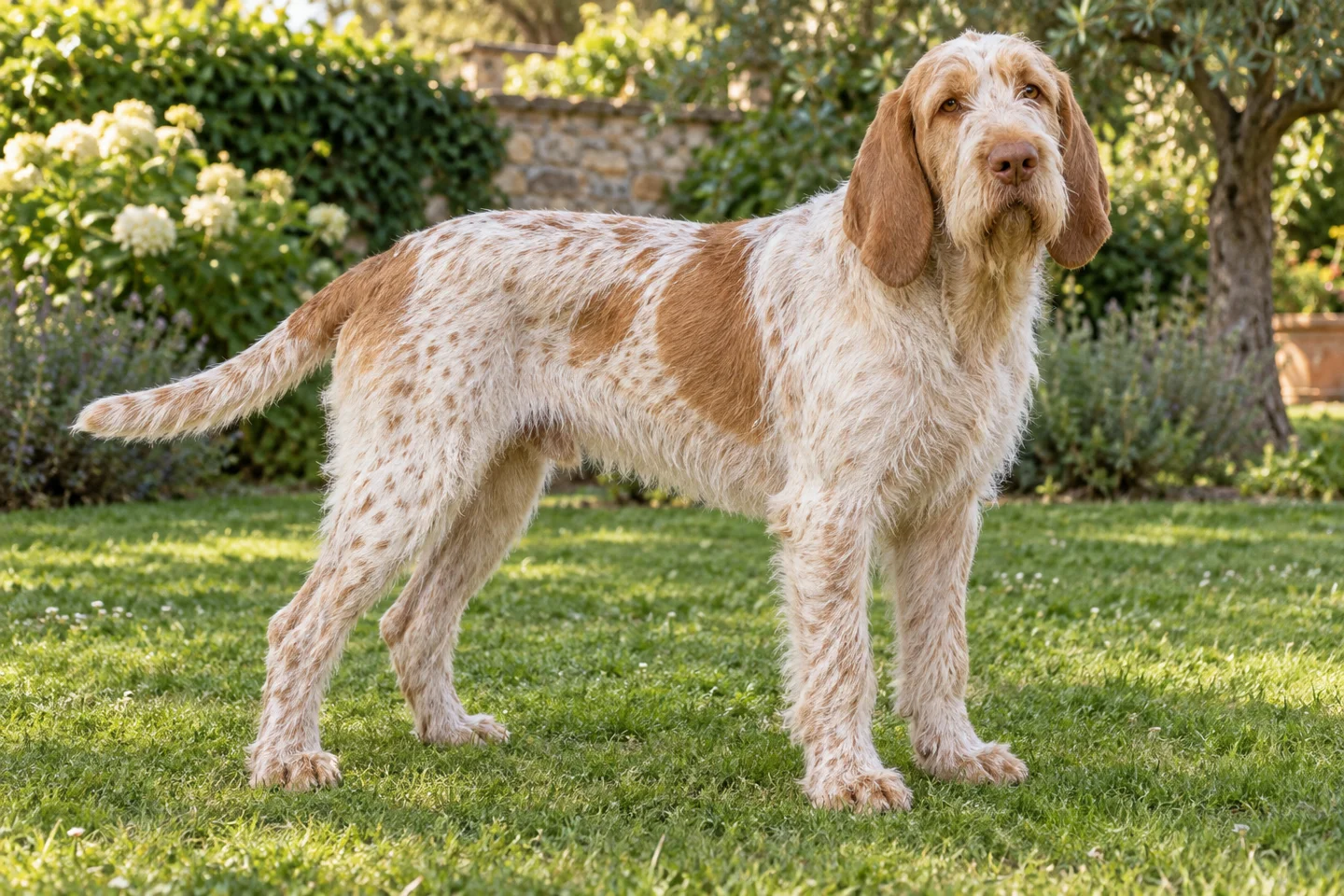
- Illustrated coat
- White with orange patches and speckling, natural ears and full tail
General information for owners. These articles have not been reviewed by a veterinarian. Medical decisions need your dog's history and an examination.
A bearded Italian gundog needs a working partnership
The Spinone Italiano is a sturdy Italian pointing dog whose harsh hair, beard, and expressive face are easy to recognize. A prospective home should look beyond that appealing outline to its working interests and ordinary care. Searching, retrieving, movement, company, and rest need a place in the week. A relaxed-looking adult still has learned routines and practical support behind its behavior. Ask what those arrangements involve before choosing a puppy because the breed seems calmer than another gundog. Relative descriptions cannot establish the activity, handling, or separation needs of a particular animal.
Meet adults in ordinary circumstances and discuss what happens around birds, visitors, valued objects, and necessary time apart. How does the dog settle after activity and accept care? A source should describe difficulties and suitability honestly, including homes that would not fit its family. Prepare secure space, transport, clinical care, and useful help before arrival. A puppy is developing, while an adult changing homes needs time to understand new expectations. The commitment should work during employment, illness, and later health restrictions, rather than depend entirely on an ambitious outdoor routine that the household can provide only on ideal weekends.
Italian identity and a name distinct from other wirehaired pointers
The FCI identifies Italy as the Spinone's origin and its role as a pointing dog. Italian Spinone is a common alternative order of the English name; Spinoni is a plural form. It is a separate breed from the Wirehaired Pointing Griffon and other rough-coated gundogs. Similar beard and hair texture do not justify assigning one breed's screening findings or care advice to another. Keep registered names and identification consistent across documents, particularly when importing or comparing records from different organizations.
Historical working purpose helps explain a functional body and cooperation on varied ground. It does not establish an exact ancestry recipe or guarantee that every modern animal is safe around wildlife. Ask how the source's present selection balances health, temperament, and structure, and what information is available from older relatives. A rescue may have useful behavior observations without complete lineage. Preserve both the evidence and its limits rather than invent a pedigree from an orange-speckled coat. The practical decision concerns this dog and the resources available to it, with a routine that can adapt when the animal or household needs change.
Size, orange markings, and characteristic harsh hair
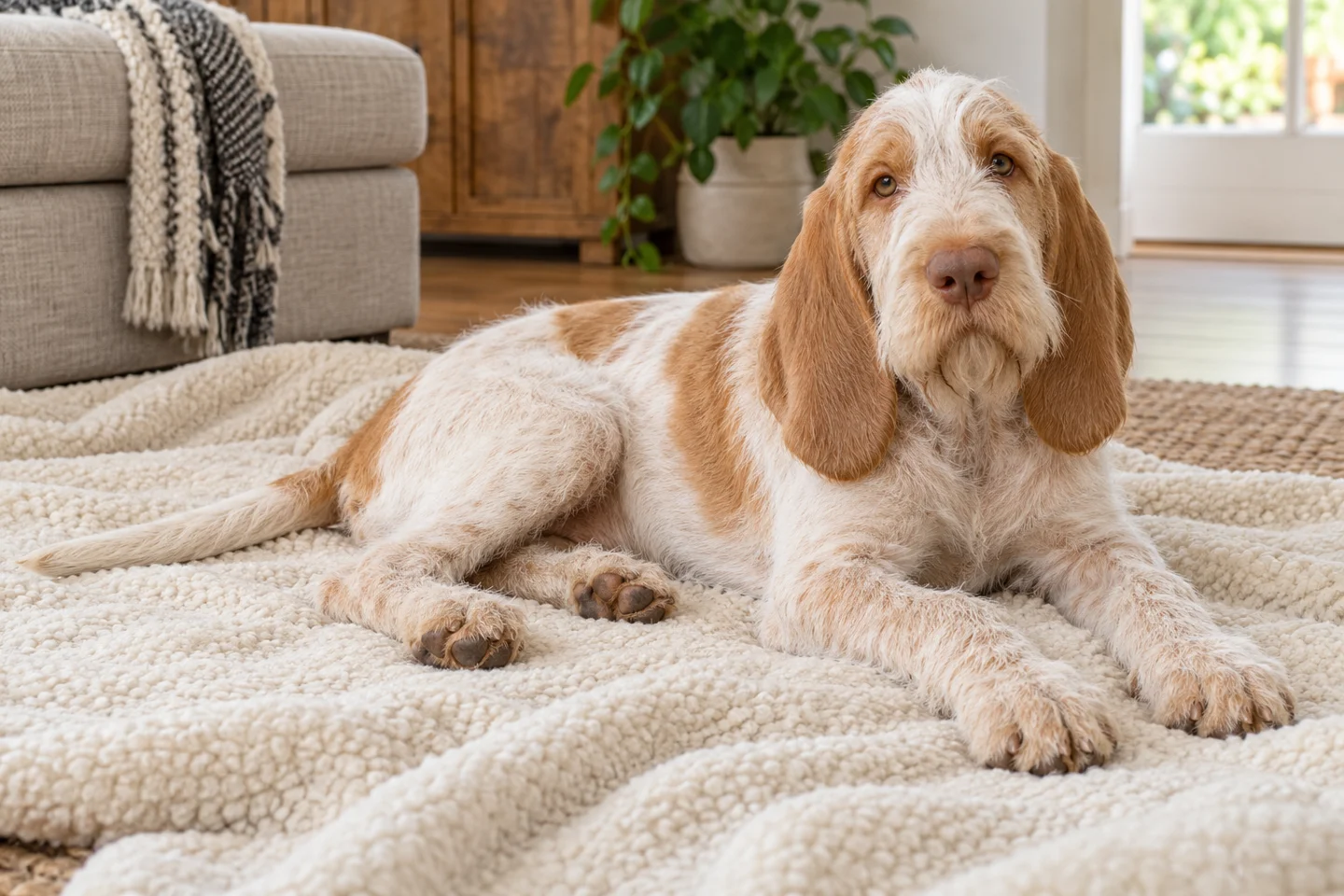
The FCI gives male height as 60–70 cm and weight as 32–37 kg, with females 58–65 cm and 28–30 kg. The sturdy body fits nearly into a square, with a distinctive head, natural hanging ears, and ochre-toned eyes. Harsh dense hair forms brows, moustaches, and beard without a silky feathered finish. Permitted colors include white, orange markings or roan, and brown combinations under the standard. The illustrations choose white with orange patches and speckling, appropriate non-black pigmentation, natural ears, and a full tail carried down or horizontally. They are labeled AI illustrations.
The standard describes a natural thick tail without fringes as well as its historical altered option. This guide depicts a full tail and recommends assessing the real animal's comfort rather than copying a picture through alteration. Watch walking, turning, and rising and ask about injury or reduced recovery. Feel condition beneath the coat with suitable guidance. Standard weights are descriptive, not a reason to push a puppy into rapid growth or make an adult heavier for a photograph. Equipment should fit the actual frame and be checked for restriction and rubbing beneath rough hair, with frequent rechecks during growth.
Temperament, attention, and time to settle
A dog that works with a person needs clear opportunities to participate and clear permission to rest. Reward voluntary check-ins while investigating and make endings to games predictable. Inside, provide a quiet place away from busy doors and repeated visual triggers. A household continually offering another retrieve or asking for another response can make calm difficult to practice. Observe the individual after activity rather than assume a general description of gentleness guarantees an effortless evening. Ask the source what helps its adults disengage and whether those routines fit the proposed home.
Manage novelty in comfortable steps. Visitors should avoid leaning over the dog or grabbing a beard to direct its face. Let it observe and choose contact at a useful distance. A newly arrived adult may benefit from familiar cues and a modest first schedule, while puppies need age-appropriate experiences balanced with sleep. Introduce short manageable absences gradually and observe the response. Another pet is a separate commitment whose effect on distress cannot be guaranteed. Practical independence develops from the individual's learning and support, rather than a test of how long an affectionate dog can endure separation before someone returns.
Training thoughtful retrieves and a reliable response
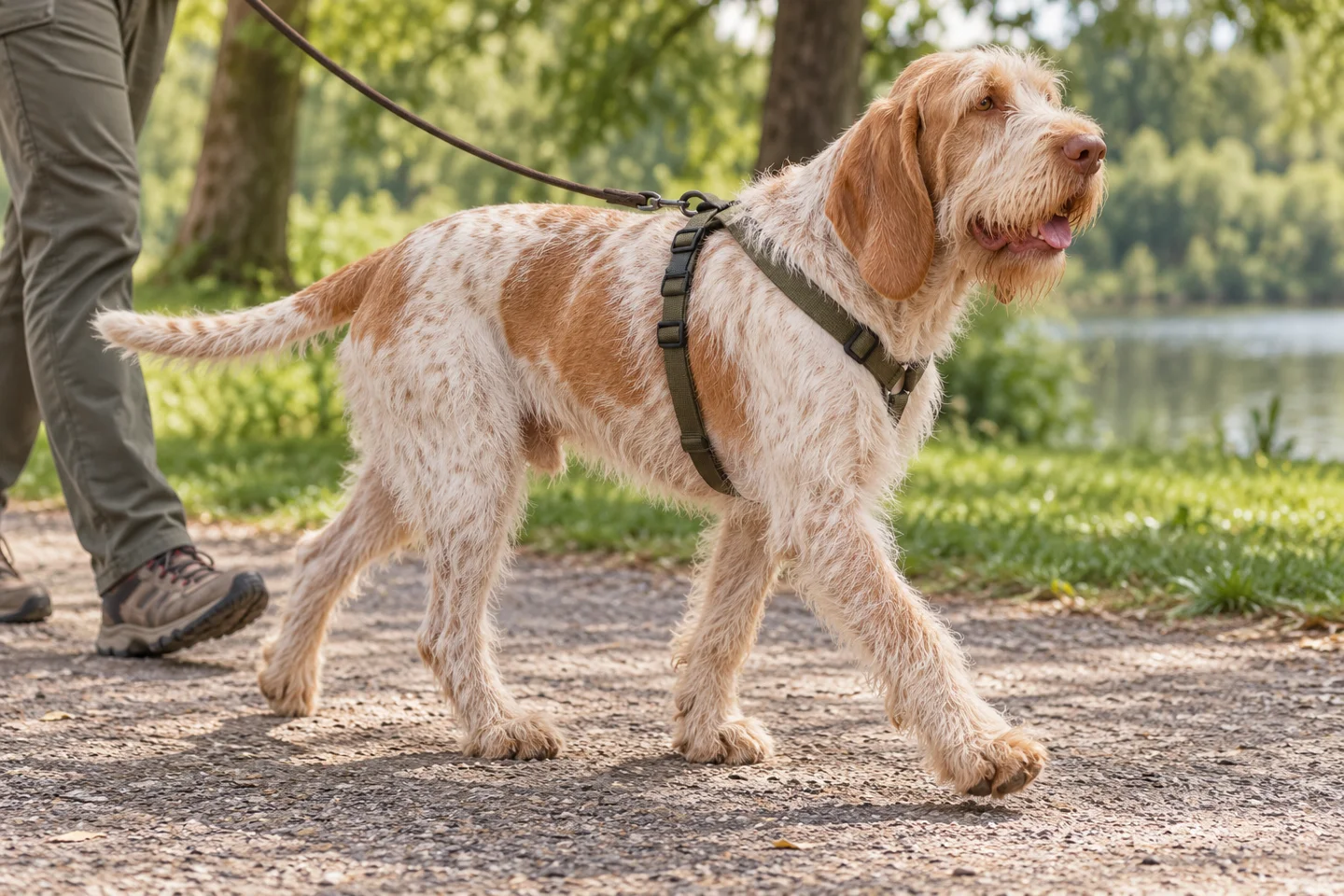
Build recall through successful practice in a quiet secure setting and increase distraction gradually. Reward returning and often allow another permitted investigation afterward. A suitable long line attached to a well-fitted harness can provide management where it can be handled without entanglement. Do not release near roads, livestock, or vulnerable wildlife to discover whether the dog's cooperative nature outweighs interest. A response learned indoors still needs development around outdoor distractions. Waiting at exits and a practiced turn with the handler are useful before an unexpected loose dog or movement makes the situation harder.
Teach returning and releasing as part of retrieval. Begin close by with a suitable safe item, exchange calmly, and stop before repeated throwing produces frantic arousal. Prevent access to dangerous objects rather than turn each recovery into a chase. If possession causes tension or guarding, revise the setup and obtain qualified guidance. Add comfortable handling of feet, mouth, ears, and coat to ordinary lessons. Seconds of rewarded cooperation are useful building blocks. A painful first mat or injury is a poor time to introduce the animal to sustained touch, unfamiliar equipment, or the expectation that it must remain still regardless of discomfort.
Exercise, terrain, and safe water opportunities
Provide varied movement, investigation, learning, and rest that suit age, health, fitness, and weather. A sturdy dog can build capacity gradually, but no fixed distance proves every Spinone has received appropriate care. Young animals need coordination and safe exploration rather than an adult endurance target. Review recovery later that day and the next morning. Persistent stiffness, unusual fatigue, or reduced willingness to move deserves veterinary assessment. Enthusiasm at the beginning of a game cannot establish that additional exertion is comfortable. Quiet days and adapted activities should be part of the routine instead of evidence that ownership has failed.
For water, assess quality, temperature, current, boat traffic, banks, permission, and an easy exit. Introduce access gradually with suitable supervision and flotation support when appropriate. Do not force a hesitant animal in because its background includes retrieving. Carry drinking water and stop before fatigue compromises recovery. Check feet and coat after brushy or wet ground and dry comfortably. Secure boundaries and vehicle transfers matter even on familiar routes. A sensible handler remains willing to shorten an outing when conditions or the dog's response changes, rather than require completion of a planned route after comfort has already deteriorated.
Aggression and reducing the pressure behind a warning
A gentle reputation does not rule out aggression involving pain, fear, restraint, or resources. Watch this individual's behavior during handling, sleep, meals, and unfamiliar greetings. Withdrawal, freezing, a fixed stare, stiffness, or growling means the interaction should change. Give space and stop the pressure rather than punish the warning while continuing to reach. A sudden change deserves a veterinary discussion, especially when touching an ear, foot, mouth, or skin area now causes a response. A concrete history of the preceding events helps a professional investigate more effectively than a motive guessed from one encounter.
A beard can hide what a dog has picked up, so prevention matters before anyone reaches toward its mouth. Keep dangerous objects inaccessible and teach a useful exchange during easy games with safe items. If the Spinone stiffens over a find, keep people away and seek instructions appropriate to the immediate danger. Do not turn recovery into a family contest. Give a behavior professional the sequence, including the object, distance, handling, and any injury. Tell temporary carers which situations have caused concern and how the household prevents them. A muzzle, if professionally recommended and comfortably introduced, is another management tool. It does not make forced removal or rough handling acceptable.
Children, other dogs, and household animals
Arrange children's contact so that the Spinone has an unobstructed way back to its bed. A child can invite a brief stroke along the body, then pause to see whether the dog seeks more. Adults must stop games involving the beard, hanging ears, or attempts to ride the dog. The substantial frame also matters when an excited youngster rushes to a doorway: separate arrivals can prevent a collision. Set up gates and comfortable resting space before a visit. When the supervising adult starts cooking, answers the door, or becomes occupied elsewhere, use that separation. Children should ask an adult for help with a dropped snack or stolen toy instead of reaching beneath the bearded mouth.
Introduce dog companions with separate handlers and room for parallel movement. Avoid beginning with a valued retrieve or shared food, and watch the ability to disengage before expecting play. Cats, birds, rabbits, and small pets need their own assessment and physical safeguards because movement can engage hunting interest. Acceptance of a familiar household animal cannot predict every outdoor encounter. Some combinations need lasting separation. Never release the dog to test whether affection or training prevents pursuit. Accurate previous observations are useful, while prevention protects animals when the background is incomplete or the response in a new context remains uncertain.
Grooming rough hair without a silky feathered outline
The Spinone's harsh coat needs maintenance despite its natural presentation. The AKC describes removing dead hair through appropriate hand stripping rather than creating a scissored finish. Ask a knowledgeable groomer to demonstrate care suited to this individual and explain when a clinical or comfort need changes the plan. A practical method should avoid painful pulling and unnecessary shaping into another breed. Check skin beneath the coat and around equipment, and inspect the beard after food and water. The rough leg hair and tail should not become silky decorative feathering that conceals the animal's functional outline.
Introduce tools, touch, and a stable non-slip position in short sessions. Tell the professional about sensitive areas, medical restrictions, and changes in tolerance. A painful mat or inflamed patch deserves appropriate assistance rather than a demand that the animal endure a long appointment to preserve appearance. Dry comfortably and keep bedding and equipment clean. A groomed outer surface cannot prove healthy skin below. Repeated itching, odor, new lesions, or hair loss needs assessment, with product and symptom history recorded so the clinician can distinguish causes rather than the household repeatedly trying new cosmetic remedies without a diagnosis.
Health screening: hips, elbows, eyes, and separate additional questions
The current AKC national-club recommendations identify hip, elbow, and ophthalmologist evaluations for the Spinone. The American club also discusses additional considerations including cerebellar ataxia, heart, and thyroid screening. Ask which current programme applies to the proposed parents and obtain actual identified reports. Different examinations answer different questions, so a phrase such as fully tested needs clarification. A CHIC number records completion and public availability under its protocol; it is not a blanket normal-health guarantee or proof that every optional assessment was performed.
Read the individual findings and ask how they informed the pairing. Include later diagnoses and older relatives where information is available, rather than only young successful adults. A routine puppy examination and a commercial DNA panel cannot replace every relevant parental clinical assessment. For an adult placement, gather the animal's treatment, injuries, medication, and unfinished follow-up first. Missing information should remain acknowledged. Medical planning should be based on evidence relevant to this breed and family, without inventing a reliable current prevalence or borrowing another rough-coated gundog's testing requirements because the appearance seems similar.
Cerebellar ataxia: linked markers and a named registration rule
Canine Genetic Testing describes its Italian Spinone cerebellar ataxia assay as targeting markers linked to the causal change because direct testing is technically difficult. Ask for the actual laboratory interpretation rather than translating a swab result into an unlimited guarantee. The Royal Kennel Club's breed page describes registration provisions effective 6 January 2025 for imported dogs and litters with overseas sires, with stated clear, carrier, and hereditary-clear conditions. Those are specific rules in a named system. They should not be represented as a worldwide mandate or proof that every registered puppy has been individually tested.
New imbalance, abnormal coordination, or weakness needs clinical assessment even when the family has reassuring paperwork. Do not select a diagnosis from the breed name or assume every unusual gait is this inherited condition. Describe timing and progression to the veterinarian and seek urgent help for severe or rapidly worsening signs. Preserve reports and treatment instructions for later care. Carrier interpretation and breeding decisions need informed discussion, including diversity, rather than an automatic conclusion that every carrier is clinically ill. The useful distinction is between a defined genetic question and the examination required to understand a symptom in this particular dog today.
Nutrition, mixes, and the cost of a practical commitment
Build the feeding plan around the Spinone's life stage and present condition, with the veterinary team's advice. Measure what goes into the bowl and account for food used to practise grooming or recall. Check the body beneath the rough hair instead of using the coat's outline as a weight assessment. Adjust deliberately when work changes; avoid adding supplements to an already balanced growth diet without professional guidance. For a Spinone cross, discuss whatever is genuinely known about both parents. The offspring may differ in coat upkeep, adult build, and response to moving animals. A rough beard cannot establish the parental breeds, and crossing supplies no promise of easier care or freedom from inherited illness.
Budget for grooming, routine and urgent care, appropriate insurance or emergency funds, training help, secure transport, equipment, and competent cover during absences. Ask a sitter how it will manage objects, doors, and coat care. Clarify ongoing source support and return arrangements in writing. An active home still needs workable quiet days, illness cover, and a plan for later mobility changes. Actual local estimates are more useful than a universal lifetime-price claim. The individual should be chosen because those ordinary resources fit its needs, rather than because an expressive bearded face seems to promise effortless family companionship.
dogsDating introductions without object competition
Describe the Spinone's actual walking habits on dogsDating, including stops to investigate and any limits affecting terrain or duration. Owners should not infer identical stamina from two gundog labels. Plan a public route with firm footing and several places to turn back; keep exact coordinates of the residence and the home address off the profile. On arrival, give each dog time to orient to the surroundings before moving along nearby paths. Neither handler needs to offer a retrieve or encourage wrestling to make the meeting worthwhile. If one dog repeatedly crowds the other's face or beard, widen the walking arrangement. Quiet shared exploration can establish whether the animals enjoy company without asking them to negotiate possession or close physical play immediately.
At the first bend, pause with enough separation to notice how each dog behaves when movement stops. Does one keep approaching while the other turns away, or can both resume investigating the verge? Widen the gap when either needs it and end an encounter that cannot remain comfortable. Agree on a simple departure signal so a handler can leave without debating the decision while holding an unsettled dog. Afterward, compare what actually happened at pauses and narrow points. A shorter second route with more room may suit the pair better. Ask permission before posting the other owner or dog, and check that a photograph does not identify a private residence.
Sources and editorial notes
Sources checked October 22, 2026. Breed measurements describe reference ranges, not a diagnosis or an individual dog's ideal weight. Images are AI-generated breed illustrations and do not document a particular dog or health condition.
- AVSAB: Humane Dog Training Position Statement
- VCA Animal Hospitals: Food aggression in puppies
- VCA Animal Hospitals: Common emergencies in dogs
- Orthopedic Foundation for Animals: CHIC health screening programs
- VCA Animal Hospitals: Aggression toward unfamiliar dogs, diagnosis
- VCA Animal Hospitals: Grooming and coat care for your dog
- VCA Animal Hospitals: Ear infections in dogs (otitis externa)
- AAHA: Feeding plans for healthy, appropriate weight cats and dogs
- VCA Animal Hospitals: Heat stroke in dogs
- AVSAB: Puppy Socialization Position Statement
- VCA Animal Hospitals: Dog behavior problems, aggression toward children
- Official breed standard: Spinone Italiano
- American Kennel Club: Spinone Italiano care and hip, elbow, and eye recommendations
- Spinone Club of America: clinical health concerns and additional screening discussion
- Canine Genetic Testing: Italian Spinone cerebellar ataxia linked-marker assay and inheritance
- Royal Kennel Club: Italian Spinone registration provisions for cerebellar ataxia, effective January 2025
Keep getting to know dogs.
Read another guide or return to your dogsDating community.
Explore breed guidesBack to dogsDating