Small Münsterländer
The Kleiner Münsterländer is a medium German versatile gundog, with brown-and-white or brown-roan hair and care needs shaped by searching, retrieving, cooperative work, and specific family health evidence.
How these guides are researched and reviewed
- Origin
- Germany
- FCI male height
- 54 cm, with ±2 cm allowance
- FCI female height
- 52 cm, with ±2 cm allowance
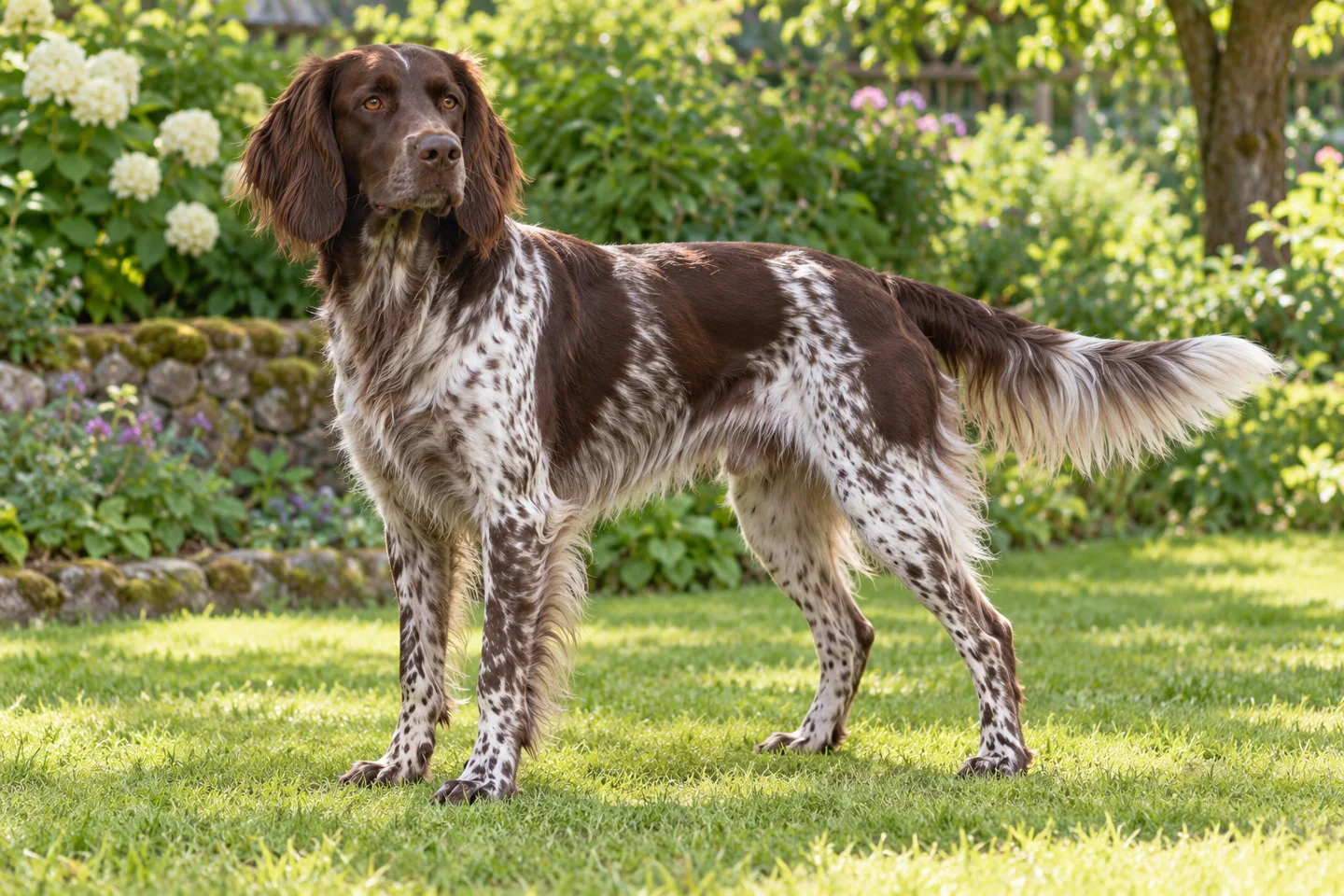
- Illustrated coat
- Brown roan with a brown head and natural flagged tail
General information for owners. These articles have not been reviewed by a veterinarian. Medical decisions need your dog's history and an examination.
Small Münsterländer is a medium working dog
The Small Münsterländer is a medium German pointing dog, also known as the Kleiner Münsterländer. Small distinguishes its name from another breed; it does not describe a toy companion or a miniature version of the Large Münsterländer. Its background includes searching, pointing, tracking, and retrieving on land and in water. Anyone considering one should discuss those interests before choosing a puppy because its brown-and-white coat looks comfortable beside a sofa. A suitable home needs meaningful activity, cooperative learning, company, safe management, and opportunities for uninterrupted rest.
Ask the source to describe its adults during an ordinary week. What happens around birds, a valued retrieve, visitors, or an appointment that takes the owner away? How do the dogs settle after work? These details help determine whether the household can provide the right routine. A working performance and affectionate family contact are both useful observations, but neither answers every question. Prepare secure space, transport, clinical care, and a gradual arrival schedule. A good placement includes someone willing to explain difficulties and offer support after collection, rather than assume an intelligent gundog will teach itself every skill a home needs.
Münsterland history, names, and registry precision
The FCI account documents development in Germany's Münsterland and the establishment of a breed association in 1912. The modern dog has its own recognized identity and standard. Small Münsterländer, Small Munsterlander, and Kleiner Münsterländer are naming variations that can appear across records and languages. Keep the original identification alongside translations so documents remain traceable. Do not treat the Large Münsterländer as simply a bigger interchangeable variety, or use that breed's screening list without checking whether it applies here. Similar geographic names can conceal important differences in selection and medical evidence.
Registry categories and available activities can change, so check the relevant organization's current information if competition or breeding matters to the household. Participation in a particular event should not be inferred from an old description copied into an advertisement. For a rescue with uncertain ancestry, preserve that uncertainty while giving accurate behavior observations. A long-haired brown-and-white dog cannot receive a confirmed pedigree from appearance alone. The owner's practical task remains the same: identify what the animal can comfortably do, supply safe opportunities, and arrange care that remains workable through ordinary employment and periods when an ambitious activity plan must be reduced.
Height, brown roan, and a natural flagged tail
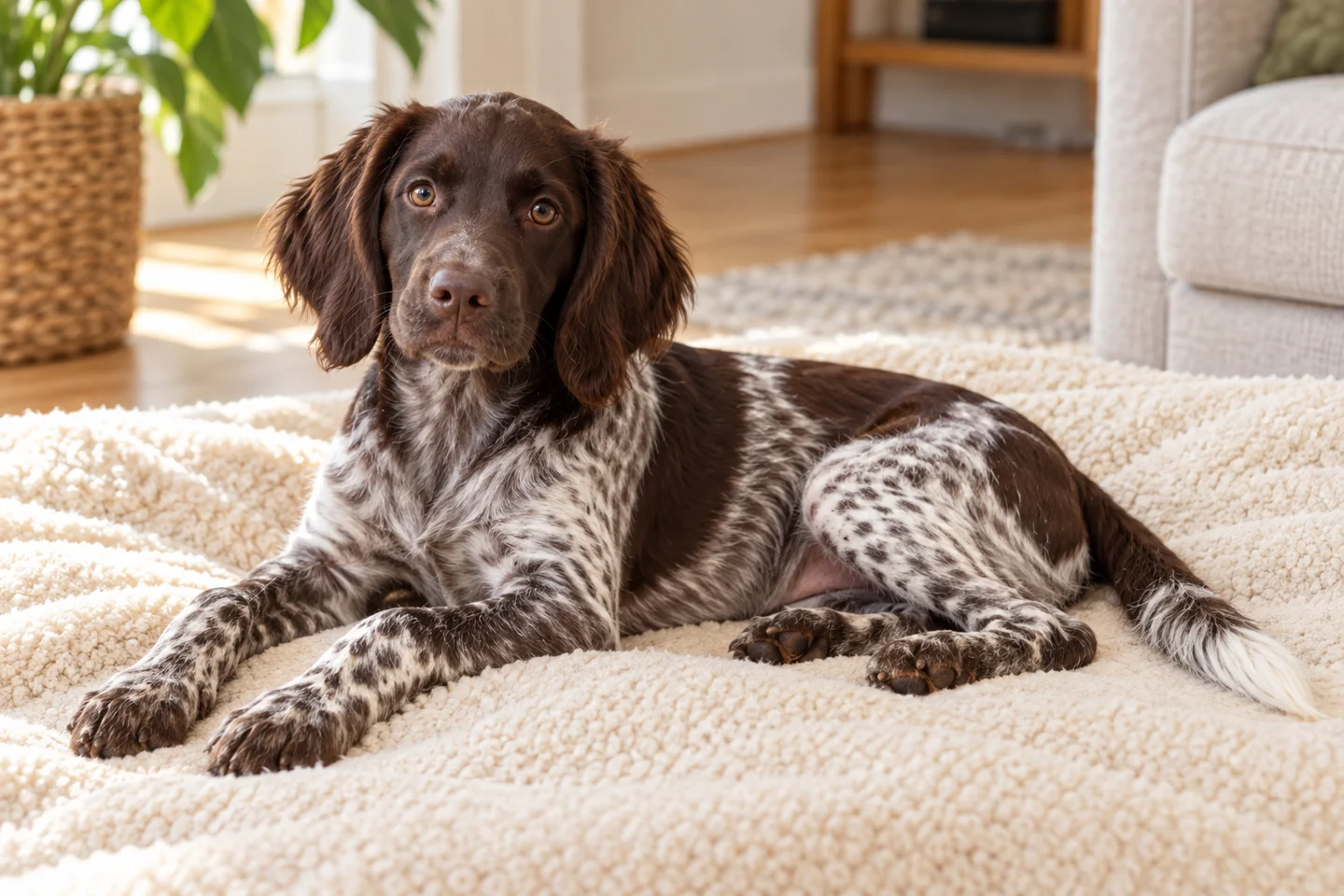
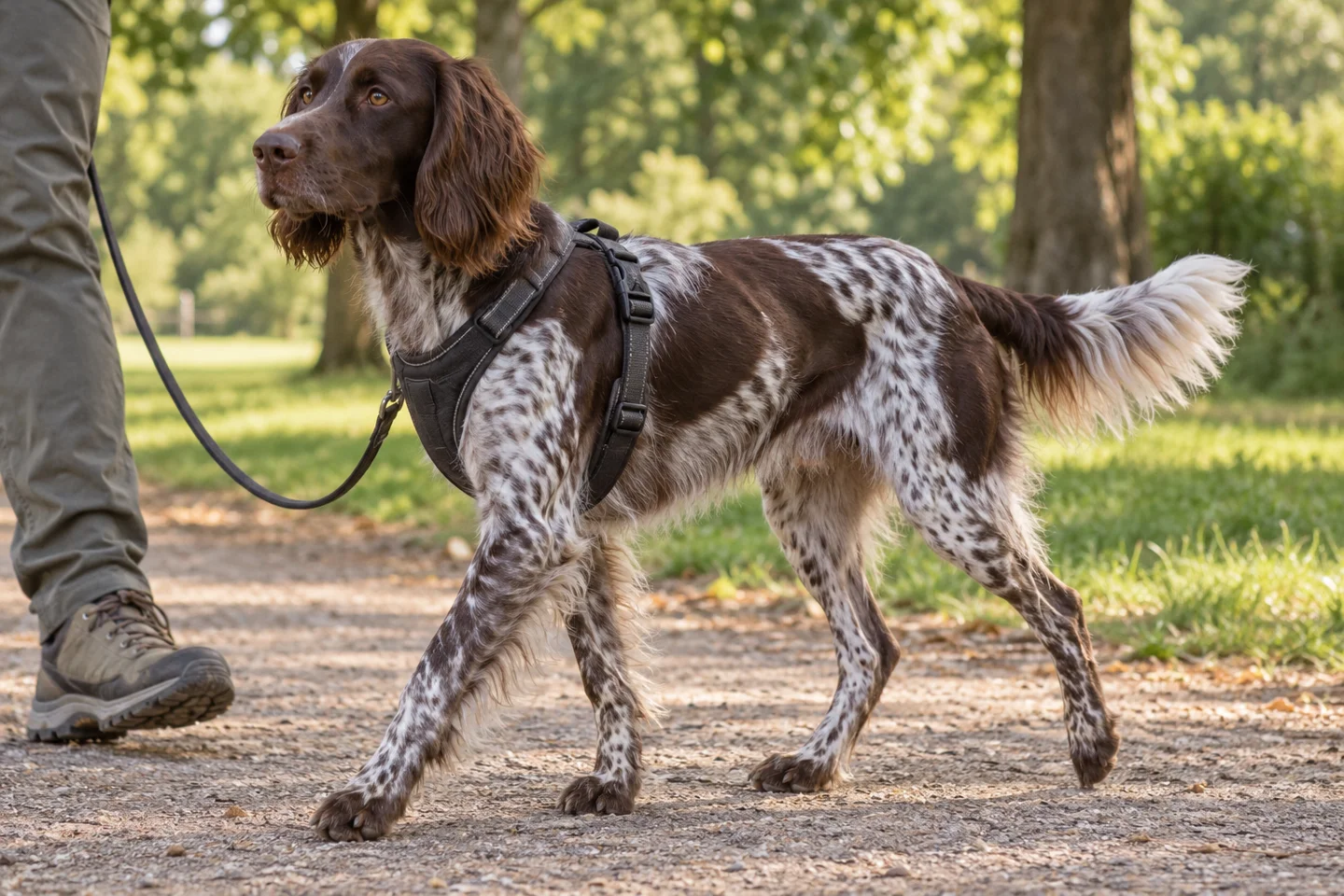
The FCI height reference is 54 cm for males and 52 cm for females, with a 2 cm allowance either way. The outline is moderately rectangular and athletic. A dense medium coat is straight or slightly wavy, with feathering on the legs, breeches behind, and a full flagged tail. Brown-white and brown roan patterns are recognized. The illustrations choose brown roan with a solid brown head, brown nose, natural hanging ears, and a white-tipped full tail. They are labeled AI illustrations, not photographs establishing a particular animal's identity or clinical condition.
Look at comfortable movement and condition rather than selecting solely for markings. Watch walking, turning, and rising and ask about any injury, restriction, or changed recovery. A standard height is not an instruction to accelerate a puppy's growth or a reason to add unneeded supplements. Equipment must fit the actual dog, including its chest and ability to back out when startled. Check beneath feathering for friction and recheck as growth changes proportions. The coat can look attractive while concealing a skin problem or a weight change, so gentle hands-on assessment and individual clinical advice remain part of ordinary care.
Temperament and a close working relationship
A versatile dog works with a person while making decisions about scent and terrain. At home, that partnership needs clear learning rather than constant correction for noticing interesting things. Reward checking in, returning attention, and changing tasks. Offer a permitted search and then practise a predictable transition into quiet time. Meet related adults where possible to see the routine behind their settled behavior. A dog's ability to perform outside does not establish that it can rest when household activity continues or manage a long absence without preparation.
Make novel experiences manageable. Let the animal observe unfamiliar people and places at a distance that allows recovery and voluntary engagement. Avoid a first week filled with parties and crowded dog areas. A new adult may need time to learn the home, while a puppy needs age-appropriate exposure balanced with sleep. Introduce short comfortable separations and arrange support when work exceeds the dog's current coping ability. Another pet cannot be promised to cure distress. The useful measure is how the individual responds and recovers, with expectations adjusted to that evidence rather than an appealing description of breed friendliness.
Training recall, retrieval, and reliable exchanges
Teach recall through achievable repetitions before expecting it around game. Reward returning and often release the animal back to a safe investigation. Use secure settings and an appropriate long line on a well-fitted harness while response skills develop. Handle the line carefully to avoid trapping legs, people, or vegetation. Never test reliability by releasing near roads, livestock, or vulnerable wildlife. A cooperative reputation does not remove competing interests, and a dog returning well in a kitchen has not yet demonstrated the same response beside a fresh scent trail.
Make retrieving thoughtful. Begin at short distance with a suitable safe object, reward delivery, and teach release through an exchange. End before repeated throwing produces frantic arousal. Prevent access to dangerous items rather than turn every recovery into a chase around the house. Guarding deserves a revised setup and qualified support. Add useful household skills such as waiting at exits, turning with the handler, and resting on a mat. Grooming and clinical handling should also be taught in small comfortable steps, so the first ear inspection or foot injury does not require the animal to tolerate a wholly unfamiliar procedure under pressure.
Exercise and practical water access
Provide varied activity suited to age, health, fitness, and weather. A mature fit dog can build capacity for sustained work, but no universal daily distance defines good care for every Small Münsterländer. Introduce new demands gradually, especially after illness or reduced activity. Young dogs need coordination, confidence, and safe exploration rather than a forced adult endurance plan. Watch comfort later in the day and the next morning. Persistent stiffness or reduced willingness warrants veterinary assessment. A burst of excitement when an object is thrown should not be treated as proof that recovery is complete or further exertion is useful.
For swimming, inspect water quality, temperature, current, banks, permission, and an easy exit. Introduce access gradually with suitable supervision and flotation support where appropriate. Do not force a hesitant dog into water or rely on a gundog label to prevent fatigue. Carry drinking water and stop repeated retrieves before recovery becomes difficult. Check feet and coat after wet or brushy routes and dry comfortably. Secure boundaries and deliberate vehicle transfers matter on land too. A good exercise plan includes a safe way to shorten the outing, rather than require the dog to complete a route after conditions or comfort have changed.
Aggression and bite prevention around objects and handling
No gundog label establishes freedom from aggression. Fear, pain, restraint, possession, or repeated unwanted contact can affect an individual. Watch for withdrawal, freezing, stiffness, and growling and remove the pressure. Do not punish warnings while continuing to approach a valued item or sensitive area. A sudden change in tolerance deserves veterinary assessment, especially when touching an ear, mouth, foot, or moving the body appears involved. Keep a concrete account of what occurred before and after an incident so the professional can investigate context rather than rely on a guessed motive.
Use management while obtaining help: protected rest, separate feeding where needed, safe storage of tempting items, and barriers during difficult visitor arrivals. Every adult should know the plan, and carers need an honest history of bites or close calls. A veterinarian and suitably qualified behavior professional can advise on persistent risk. Positively introduced basket-muzzle training may have a role, but it does not permit intrusive greetings or rough care. Improvement means relaxed manageable behavior and better choices. Silence achieved by suppressing warnings can leave the same discomfort in place while making it less visible to the people responsible for safety.
Children, other dogs, and small animals
Adults must supervise children's contact and stop hugging, pulling feathering, climbing, chasing, and disturbance of meals or sleep. Give the animal a calm area children cannot enter. Separate before energetic games become difficult to ignore, and teach a brief invitation to contact followed by a pause. A dog that leaves should be allowed to leave. A child's good intentions cannot replace adult attention or a safe layout. Ask about actual prior child experience, including ages and circumstances, while recognizing that a busy visit may differ from quiet familiar family contact.
Introduce another dog with separate handlers and room for parallel movement. Leave valued retrieving objects out of early meetings and observe the ability to disengage before expecting play. Birds, cats, rabbits, and other small pets need their own assessment and secure safeguards because moving animals can engage hunting interest. Comfort with one familiar household animal does not establish safety around every outdoor encounter. Some combinations require lasting separation. Never arrange a chase to test the dog's training or affection. Accurate prior reports are useful, while prevention and gradual controlled exposure protect animals when the background or likely response remains uncertain.
Grooming feathering and keeping care comfortable
Brush and comb gently through the medium coat, parting it so the skin can be checked. Pay attention behind ears, under straps, in the armpits, and through leg and tail feathering. Remove attached vegetation after outings before it tightens into a knot. Ask a knowledgeable groomer to demonstrate tools and maintenance for this individual rather than shape it into another breed. A painful mat needs suitable assistance, not a prolonged pulling session. Dry the animal and equipment comfortably after wet work, with clean bedding available for recovery.
Inspect the visible outer ears and obtain advice about odor, discharge, redness, pain, or persistent shaking. Avoid deep probing and leftover drops. Check feet, pads, and nails after rough ground and establish dental care with the veterinary team. Brief cooperative handling practice helps the animal participate instead of struggle. Tell a groomer about medical restrictions and changes in tolerance. If a previously comfortable inspection suddenly becomes difficult, consider discomfort before demanding more obedience. Care should provide an accurate view of the animal's condition, not simply a smooth surface that hides problems until a long appointment becomes unavoidable.
Health: compare the actual breeding programmes
The Small Munsterlander Club of America's buyer guidance encourages discussion of hip certification or PennHIP evaluation and its Genetic Health Project. Kleine Münsterländer Group North America's breeding steps include hip and ureter evaluation reports, working qualifications, and other documentation under its German-linked process. These are named programmes with their own rules. Ask which applies to a proposed litter and request actual parental reports. A checklist copied from another organization can miss a relevant condition or imply a requirement that the source has never claimed to follow.
Read findings separately. Orthopedic imaging, a urinary-tract evaluation, a pedigree, and a working test answer different questions. A blood sample archived for research is not automatically a current disease clearance, and a broad commercial panel should not replace a relevant clinical examination. Ask how known family findings affected the pairing and how later diagnoses are shared. A CHIC or other programme label should lead to the underlying records, not replace interpretation. For an adult with incomplete history, begin with its own examination and available treatment reports while keeping uncertainty about relatives visible.
Ureter evaluation and useful urinary observations
The inclusion of a ureter evaluation in the KlM-GNA process gives a specific question to ask about the planned parents. Obtain the named report and an explanation of what was assessed rather than accepting the phrase all genetic tests clear. The structures carrying urine and the clinical examination of them are not interchangeable with an identity swab. Do not assume normal daily behavior proves every relevant structure has been examined, or that a test listing establishes a current whole-population frequency of disease. The useful point is understanding the actual result and why the programme requests it.
Persistent leakage, repeated urinary difficulty, blood, or discomfort should be reported to a veterinarian rather than treated indefinitely as failed housetraining. Provide the timing, whether the change began in puppyhood or later, and any available records. Inability to pass urine is urgent. A clinician must investigate the patient and possible causes, with no assumption that a breed-specific concern explains every episode. Do not restrict water to disguise accidents or start medication from another owner's experience. If a diagnosis is made, give carers the same plan and keep the report available so later follow-up distinguishes established findings from a guessed inherited label.
Nutrition and growth for a working frame
Choose complete food appropriate to life stage, medical needs, and workload. Measure portions and account for rewards and enrichment food, particularly when several people train the dog. Review body condition with the clinic as activity changes. A young animal should not be pushed toward a finished adult outline through unnecessary supplements or excess feeding. Keep simple observations when appetite, stool quality, weight, or drinking changes. A clear account is more useful than repeatedly changing several foods and products at once while an unexplained problem continues.
Feed without competition and protect chews and meals from interference. Teach voluntary exchanges with suitable objects outside a confrontation, rather than routinely taking a bowl to test tolerance. Ask the veterinary team before relying on a restrictive diet or homemade feeding plan. A working label does not establish that a product suits this patient. When a diagnosis affects nutrition, follow individual instructions and make sure another carer can find them. The aim is a practical routine that supports comfortable growth and activity, with portions reviewed from the animal's condition rather than an assumption that every active gundog burns off whatever it receives.
Mixes, source support, and ownership costs
A Small Münsterländer mix may vary in size, coat, response to game, and ability to settle. Ask what is known about both parents and preserve uncertainty when ancestry is inferred. Brown roan markings or a pointing stance cannot confirm a particular cross. Crossing does not promise a moderate activity level or freedom from inherited disorders. Choose the individual because its observed needs and likely development fit a workable plan, rather than expecting only the most convenient features of two breed summaries. An adult rescue's behavior observations can be valuable even when a precise ancestry remains unavailable.
Budget for routine and urgent care, suitable insurance or emergency funds, training, grooming, secure equipment, transport, and competent cover during absences. Ask a sitter how it will manage doors, retrieving items, and wildlife distractions. Clarify ongoing help and return arrangements with the source. A household enthusiastic about outdoor weekends still needs a plan for ordinary workdays, illness, and later medical restrictions. Costs vary by location and patient, so obtain actual local estimates. The commitment should remain manageable after the initial excitement of a new working partner has passed and the household is meeting routine needs in less ideal circumstances.
Sources and editorial notes
Sources checked October 22, 2026. Breed measurements describe reference ranges, not a diagnosis or an individual dog's ideal weight. Images are AI-generated breed illustrations and do not document a particular dog or health condition.
- AVSAB: Humane Dog Training Position Statement
- VCA Animal Hospitals: Food aggression in puppies
- VCA Animal Hospitals: Common emergencies in dogs
- Orthopedic Foundation for Animals: CHIC health screening programs
- VCA Animal Hospitals: Aggression toward unfamiliar dogs, diagnosis
- VCA Animal Hospitals: Grooming and coat care for your dog
- VCA Animal Hospitals: Ear infections in dogs (otitis externa)
- AAHA: Feeding plans for healthy, appropriate weight cats and dogs
- VCA Animal Hospitals: Heat stroke in dogs
- AVSAB: Puppy Socialization Position Statement
- VCA Animal Hospitals: Dog behavior problems, aggression toward children
- Official breed standard: Small Münsterländer
- Small Munsterlander Club of America: interviewing a breeder and the Genetic Health Project
- Kleine Münsterländer Group North America: breeding approval steps including hip and ureter evaluations
- American Kennel Club: Small Munsterlander identity, coat care, and activities
Keep getting to know dogs.
Read another guide or return to your dogsDating community.
Explore breed guidesBack to dogsDating