Styrian Coarse-haired Hound
The Steirische Rauhhaarbracke is an Austrian tracking hound with rough red or fawn hair, whose placement should reflect its working purpose, individual condition, and practical field-care needs.
How these guides are researched and reviewed
- Origin
- Austria
- FCI male height
- 47–53 cm
- FCI female height
- 45–51 cm
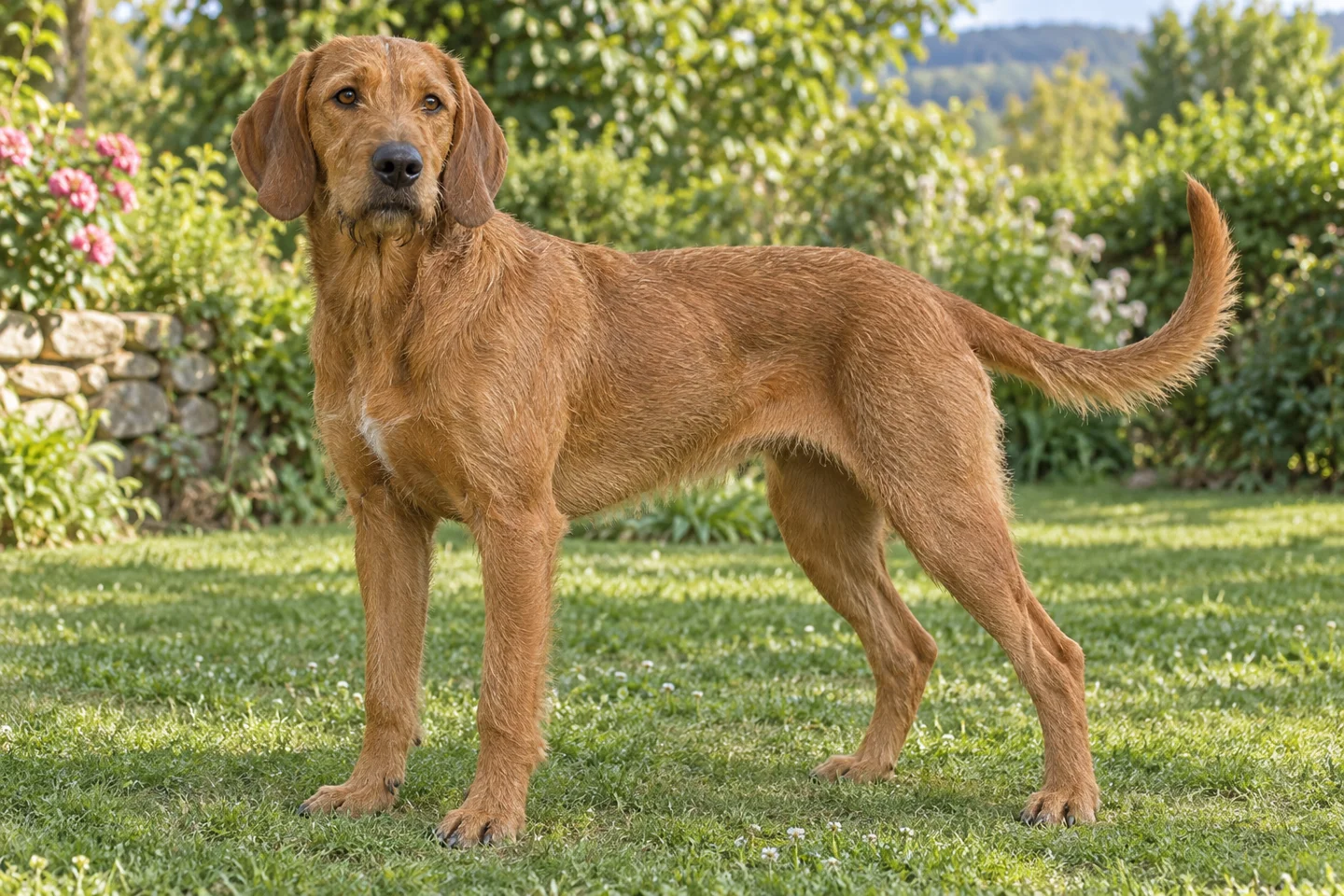
- Illustrated coat
- Red-fawn rough hair, modest moustache, natural ears and full tail
General information for owners. These articles have not been reviewed by a veterinarian. Medical decisions need your dog's history and an examination.
An Austrian tracking hound needs an appropriate placement
The Styrian Coarse-haired Hound is the Steirische Rauhhaarbracke, a medium Austrian scenthound whose work includes demanding tracking. Sweden's kennel club explicitly describes it as unsuitable for a purely companion role and emphasizes a serious working interest. That advice should be part of the first conversation with the breed association and source. An appealing rough red coat does not establish that occasional active weekends will meet the needs of the particular dog. A prospective owner needs a realistic account of daily company, learning, physical work, management, and recovery before committing.
Ask how the available animal's family is selected, how adults spend a normal week, and what practical support a new owner will receive. A puppy with working expectations needs a different plan from an adult retiring because of age or health. Discuss the actual individual rather than assume every placement can follow the same schedule. Prepare secure accommodation, transport, clinical care, and experienced help. The commitment should remain workable during ordinary employment, bad weather, and human illness. A source willing to explain unsuitable homes and difficult behavior provides more useful guidance than one whose description consists entirely of stamina and devotion.
Peintinger’s history and the modern breed name
The FCI account credits Carl Peintinger with beginning selection in 1870 using a Hanoverian Scenthound bitch and a rough-haired Istrian hound male. Peintinger Bracke is another name encountered in breed material. The documented foundation helps explain a particular working history, but it is not an instruction to recreate the breed through an informal cross or predict a puppy as a simple mixture of two modern summaries. The present Styrian Hound has its own standard, records, and selection decisions, which should be understood through the relevant organizations.
Keep it distinct from other Austrian hounds and rough-coated tracking dogs. Similar color or purpose does not make medical information interchangeable. Ask which registry holds the actual pedigree and how identification links to examinations and working results. Preserve original records with readable explanations when a dog moves countries. A rescue can have useful observations without a complete lineage; retain uncertainty instead of assigning ancestry from a coarse coat. The practical ownership question concerns the dog available now and whether its needs fit a sustainable routine, rather than whether a persuasive historical story makes an unfamiliar breed seem unusually self-sufficient.
Size, matte rough hair, and a full sickle tail
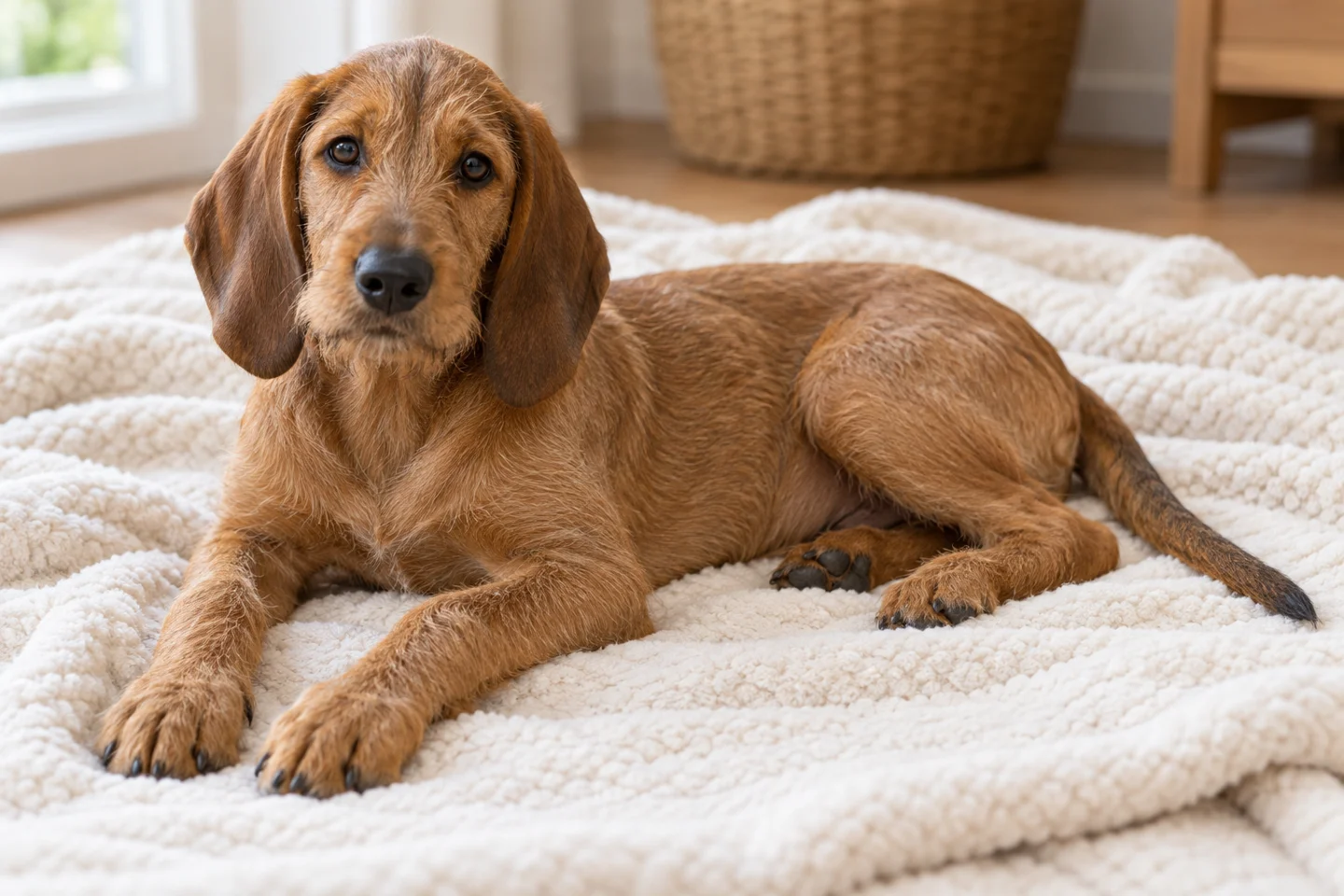
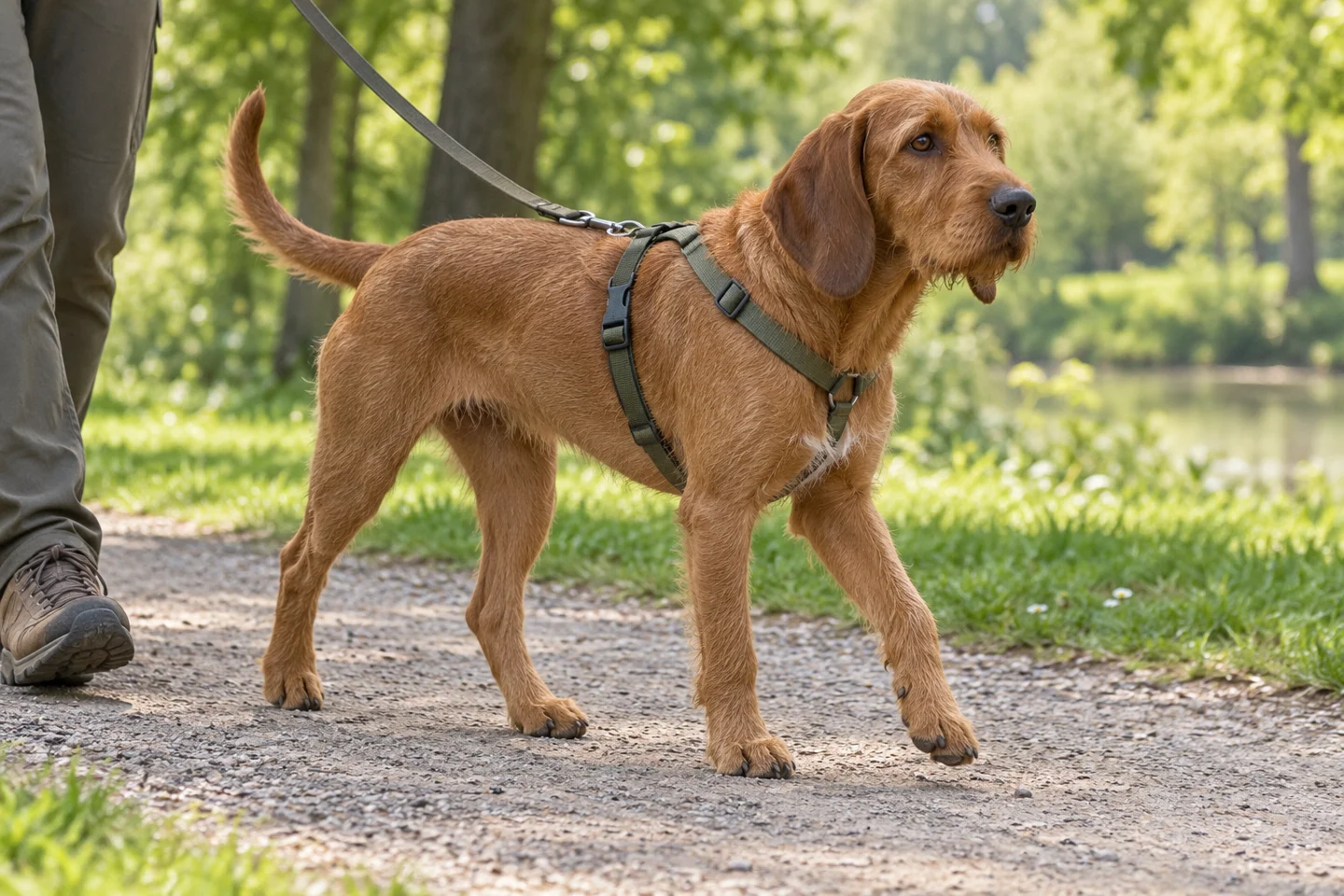
The FCI height ranges are 47–53 cm for males and 45–51 cm for females. The medium muscular outline carries harsh matte rough hair, shorter on the head and forming a moustache. Red and fawn are recognized, with a small white chest mark permitted. The illustrations choose red-fawn, a black nose, brown eyes, natural flat hanging ears, and a full tail raised in a modest sickle shape without curling. Tail hair forms a brush rather than a long plume. Each image is labeled an AI illustration rather than a photograph verifying a specific dog.
A real animal's movement and comfort deserve direct assessment. Watch walking, turning, rising, and rest and ask about past injuries or changes in tolerance. A coat described as rough should not be made excessively long or woolly to increase its visual appeal. Fit equipment to the actual chest and neck and inspect beneath straps. Puppies need appropriate nutrition and safe exploration rather than pressure to acquire an adult working frame early. Standard dimensions describe type, while clinical examination and condition determine care. An apparently accurate outline cannot explain a limp or prove that a dog can comfortably meet a proposed workload.
Voice, persistence, and the ability to recover
Vocal tracking and persistence are relevant to a placement discussion. Ask when the individual gives voice, how long excitement lasts, and what allows a change of activity. A scent response differs from repeated fence alarm or distress during absence. Describe the proposed housing and neighbors honestly, then plan around the actual triggers. Reduce rehearsals where possible and teach an achievable alternative. Repeated shouting over the dog's voice can add arousal without explaining a response. A working reputation should not make every loud event seem inevitable or prevent an owner investigating a problem that differs from normal work.
Provide undisturbed rest and predictable transitions after activity. A dog repeatedly asked to monitor windows, doors, and visitors may struggle to practice quiet even after substantial exercise. A new adult can benefit from familiar cues and a modest initial schedule, while a puppy needs appropriate experiences balanced with sleep. Introduce short comfortable absences gradually and arrange reliable support when work exceeds current coping ability. Another pet cannot be promised as a treatment for distress. Observe recovery and comfort directly rather than judging success solely by silence or an assumption that an experienced working dog will adapt automatically to an unfamiliar household.
Training around scent without an unsafe reliability test
Give recall a clear meaning on a quiet lead walk before asking for it around attractive scent. Say the cue once, mark the turn toward the handler, and deliver a reward worth returning for. When circumstances permit, resuming investigation afterward can show the hound that coming back does not always end its enjoyable activity. A secure field or carefully handled long line allows practice without betting safety on an unproven response. Work on turns and following the handler as well as the final arrival. If concentration collapses, make the exercise easier rather than repeat the cue across a larger distance. Road edges and wildlife encounters are situations for prevention, not opportunities to discover the limits of training.
Teach waiting at exits, moving with the handler, and a rehearsed turn away from activity. Appropriate scent tasks should have clear beginnings and endings, with difficulty adjusted to the learner. Practise exchanges for safe objects and prevent hazardous scavenging opportunities. If possession produces stiffness or guarding, obtain qualified guidance rather than physically confronting the animal. Cooperative care is equally useful: brief inspections of feet, ears, mouth, and skin should be familiar before a problem requires prolonged touch. Reward participation in small steps so everyday handling helps reveal the dog's condition instead of becoming another source of pressure.
Exercise and terrain need more than an endurance reputation
Plan activity with the source and experienced working guidance, matching age, condition, health, and fitness. Capacity develops gradually and changes after illness, travel, or reduced work. A young dog needs coordination and suitable exploration rather than a forced adult distance. Watch movement later that day and the next morning. Persistent stiffness, reduced stride, or unusual fatigue deserves veterinary assessment. An absorbed hound may remain willing to follow scent when rest is appropriate, so the handler must make decisions about recovery. Completing a long route is not useful evidence of good care if the animal is uncomfortable afterward.
Choose routes with permission and account for terrain, roads, livestock, wildlife, and weather. Carry clean drinking water and arrange rest, shelter, or shade appropriate to conditions. A harsh coat is not unlimited protection against temperature or injury. Inspect feet and skin after difficult ground and dry the dog and equipment comfortably after wet work. Secure vehicle transfers and boundaries remain important even on familiar outings. A sustainable plan includes quieter days and clinical restrictions without abandoning meaningful engagement. It should also include a simple way to finish early when a route or the dog's response differs from expectations.
Aggression and preventing pressure during care
A serious working appearance does not explain every aggressive response. Pain, fear, restraint, possession, or a trapped greeting can affect an individual hound. Notice withdrawal, freezing, stiffness, a fixed stare, or growling and change the situation. Give space rather than punish the warning while continuing the approach. A sudden reaction to ear lifting, foot handling, or movement deserves a veterinary discussion. Describe actual events and recovery so a professional can investigate context. A vague judgment about toughness can hide the difference between a dog needing better training and one trying to avoid a painful procedure.
Use protected meals, undisturbed rest, safe object storage, and barriers for difficult arrivals while arranging help. All adults and carers should follow the same plan and receive an honest history of bites or close calls. Persistent risk warrants veterinary and suitably qualified behavior support. Positively introduced basket-muzzle training may assist where appropriate, but it does not permit forced greetings or rough care. Improvement should be measured through comfortable manageable behavior and successful choices at sensible distances. Silence achieved under restraint can leave the original discomfort unresolved, making an apparently quiet interaction a poor measure of genuine progress.
Children, other dogs, and vulnerable animals
A household with children needs a clear division between the hound's quiet areas and energetic play. Put meals down where a child cannot approach the bowl, and arrange a resting place that remains undisturbed during visits. A supervising adult should stop the interaction when a child reaches for ears, climbs onto the animal, or follows it after it retreats. Teach children to wait for the handler's invitation and allow the dog to choose whether to approach. The young person walking a familiar pet may still be unable to control an adult scenthound suddenly absorbed by a trail. Choose responsibilities according to actual handling ability, terrain, and distractions, with adults retaining responsibility for safety.
Introduce dogs with separate handlers and room for parallel movement. Observe the ability to disengage before expecting play or sharing valued objects. Familiar canine company does not establish comfort with every size and play style. Cats, poultry, rabbits, and other small pets require their own assessment and secure safeguards because movement can engage hunting behavior. Acceptance of one household animal cannot predict every outdoor situation. Some combinations need lasting separation. Never allow a chase as a test of affection or training. Truthful previous observations help planning, while prevention protects animals when history or the likely response remains uncertain.
Grooming rough hair and inspecting exposed areas
Maintain the coarse coat gently with appropriate tools and inspect the skin beneath the surface. It should not need an elaborate show-like finish, but practical care still includes friction areas, feet, and material attached after outings. Ask a knowledgeable groomer or source to demonstrate maintenance for the individual. A longer beard should not be manufactured from a short natural moustache, and painful tangles need assistance rather than prolonged pulling. Bathe when necessary with suitable products and dry comfortably. Persistent itch, thinning hair, or a new lesion calls for assessment rather than an assumption that working hair prevents skin problems.
Look at the visible outer ears for redness, discharge, odor, or sensitivity and seek advice about persistent shaking. Do not probe the canal or apply leftover drops to an unexplained episode. Maintain nails, pads, and mouth care through brief cooperative routines. Keep tools and bedding clean and check equipment for rubbing. If a familiar care step suddenly becomes difficult, investigate discomfort before demanding more tolerance. A dog eager to work may still have a painful foot or ear. Accurate inspection and appropriate clinical help are more useful than measuring health solely through willingness to resume an interesting task.
Health: a hip form is evidence of a process, not a whole panel
The Austrian Brackenverein publishes a hip-radiograph form specifically for the Styrian Hound alongside breeding documents. That provides a primary route for understanding formal assessment. Ask the source for actual parental reports and the current rules governing its planned pairing. The presence of a downloadable form does not establish a universal worldwide requirement, a particular acceptable grade, or a current disease frequency. Keep clinical findings separate from pedigree and working records so each can be read according to its purpose. A brief video of sound movement cannot replace the examination a source claims to have performed.
Sweden's kennel club says its small local population prevents a confident overall health assessment. That limit should remain visible rather than become a claim that the breed has no problems. Ask about diagnosed family conditions, surgery, lameness, recurrent treatment, and reasons older relatives died when known. A veterinarian can help interpret relevant findings without borrowing another hound's testing panel. For an adult placement, collect its own medication, injuries, restrictions, and unfinished follow-up first. Honest missing information is more useful than certainty invented from rarity, while a documented finding gives the new home something concrete to discuss and act on.
Field health and a plan for remote injury
Working on difficult ground makes ordinary inspection and response preparation useful. Agriculture Victoria's working-dog guidance identifies penetrating grass seeds among practical hazards. Check feet, skin, and visible ear areas after vegetation exposure and seek help for suspected embedded material rather than dig into tissue. Sudden persistent foot licking, swelling, pain, or head shaking after an outing gives the veterinarian context without identifying a diagnosis by itself. A small surface mark cannot prove an injury is superficial, and continued enthusiasm does not establish that the animal can safely keep working.
Before remote routes, know how to reach clinical help and transport a dog unable to walk. Keep identification and contacts current, and ensure another adult understands the plan. Major bleeding, collapse, severe breathing difficulty, or rapid deterioration needs urgent veterinary contact. Do not use human pain medicine or an improvised remedy while deciding whether to return. After diagnosis, follow the actual rehabilitation and return-to-activity instructions. A similar-looking injury in another hound cannot set this patient's schedule. Record the eventual findings so later treatment and family information distinguish a confirmed condition from a suspicion formed during a stressful incident outdoors.
Nutrition and maintaining a functional condition
Feed complete nutrition appropriate to life stage, medical needs, and workload. Measure portions and account for food used in training and searching tasks. Review condition with the veterinary team when seasonal work changes. A growing dog needs balanced development rather than excess calories or supplements intended to produce an adult athletic frame quickly. Keep a simple record when appetite, drinking, stools, or weight changes. Repeatedly switching several foods without understanding a persistent problem can make the history harder to interpret and delay useful clinical advice.
Provide a quiet feeding place without competition and protect meals and chews from interference. Teach voluntary exchanges with appropriate objects outside a confrontation. Discuss homemade or restrictive diets and supplements before relying on them, especially during growth or established illness. A product labeled for hunting dogs does not automatically suit this individual. Give carers measured amounts and any patient-specific instructions. Nutrition should support comfortable activity and recovery, with condition assessed from the animal rather than a fixed belief that every persistent working hound will burn off whatever it receives. Persistent digestive or appetite changes deserve a clinical conversation.
Mixes, source support, and ownership costs
A Styrian Hound mix may vary in frame, coat, voice, pursuit interest, and the ability to settle. Ask what is known about both parents and preserve uncertainty where ancestry is inferred. A rough red coat cannot confirm a particular cross. Crossing does not guarantee reduced workload or freedom from inherited disease, and an appealing name should not bypass the suitability discussion appropriate to a working animal. Judge the individual and its likely development with the source rather than expect only the easiest features of two breed summaries to appear together.
Budget for routine and urgent care, suitable insurance or emergency funds, transport, secure equipment, training support, and competent cover during absences. Ask a carer how it will manage scent distractions and gates before relying on one during an emergency. Clarify ongoing source help and return arrangements in writing. Obtain actual local estimates instead of a universal lifetime-price claim. An active home still needs a plan for workdays, human illness, bad weather, and later mobility restrictions. The commitment must remain practical after the novelty of a less familiar Austrian hound has become ordinary daily responsibility.
dogsDating walks should permit a quiet first assessment
On dogsDating, describe the Styrian hound's interest in scent and its ordinary pace rather than offering an endurance challenge. Another owner needs to know if the dog calls, pauses for long investigations, or becomes difficult to interrupt around particular wildlife. Propose a neutral public route where the two handlers can start apart and walk in the same direction. Do not publish exact coordinates of the residence or its address; use an approximate district in the profile. Keep the initial circuit simple enough to shorten. Neither dog should be released to discover whether scent work will distract it from an uncomfortable greeting. Calm movement beside a compatible companion offers useful information without adding pursuit or object competition.
During the outing, notice whether the hound can return to investigating its surroundings after acknowledging the companion. Sustained fixation, efforts to hide behind the handler, or repeated interference with the other dog's movement means the arrangement needs to change. Take a wider line or leave before a manageable walk becomes a difficult encounter. Afterwards, compare specific observations with the other owner rather than concluding that all hounds or all unfamiliar dogs will behave the same way. Record the useful practical details for another invitation. Before publishing a photograph, remove views identifying the home or revealing someone else's personal information. A short uneventful walk can be worth repeating without adding a demand for wrestling or shared retrieving.
Sources and editorial notes
Sources checked October 22, 2026. Breed measurements describe reference ranges, not a diagnosis or an individual dog's ideal weight. Images are AI-generated breed illustrations and do not document a particular dog or health condition.
- AVSAB: Humane Dog Training Position Statement
- VCA Animal Hospitals: Food aggression in puppies
- VCA Animal Hospitals: Common emergencies in dogs
- Orthopedic Foundation for Animals: CHIC health screening programs
- VCA Animal Hospitals: Aggression toward unfamiliar dogs, diagnosis
- VCA Animal Hospitals: Grooming and coat care for your dog
- VCA Animal Hospitals: Ear infections in dogs (otitis externa)
- AAHA: Feeding plans for healthy, appropriate weight cats and dogs
- VCA Animal Hospitals: Heat stroke in dogs
- AVSAB: Puppy Socialization Position Statement
- VCA Animal Hospitals: Dog behavior problems, aggression toward children
- Official breed standard: Styrian Coarse-haired Hound
- Austrian Brackenverein: Styrian Hound working portrait and intended use
- Austrian Brackenverein: breed-specific hip-radiograph forms and breeding documents
- Swedish Kennel Club: Styrian Hound suitability and limits of local health evidence
- Agriculture Victoria: inspection, grass-seed injuries, and routine working-dog care
Keep getting to know dogs.
Read another guide or return to your dogsDating community.
Explore breed guidesBack to dogsDating