Teddy Roosevelt Terrier
A low-set American hunting terrier with a rectangular build, a smooth coat, and health questions that require more than a comparison with its Rat Terrier relatives.
How these guides are researched and reviewed
- Origin
- United States
- Adult standard size
- AKC 8–14 inches, weight proportional
- Illustrated coat
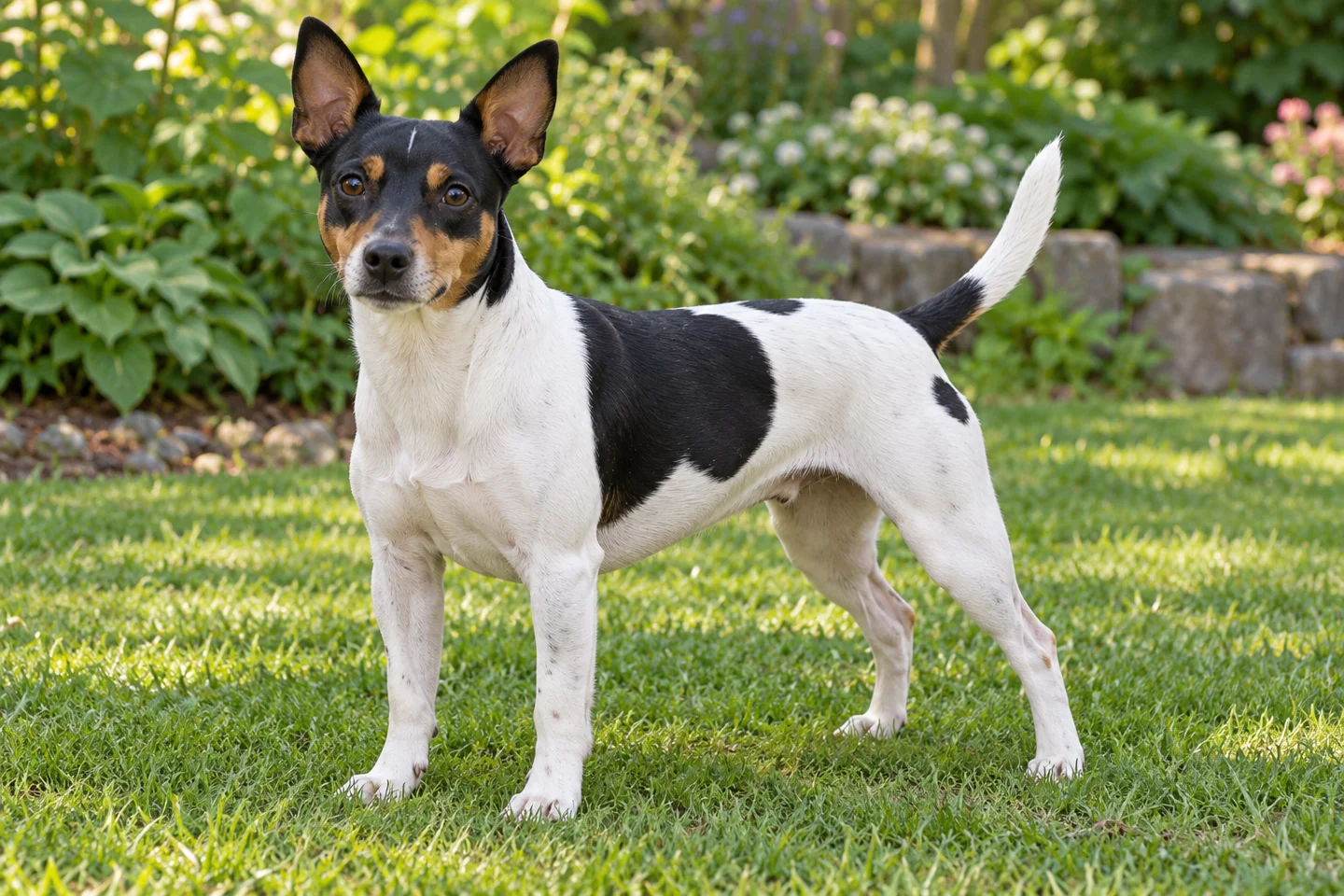
- White, black, and tan smooth coat
General information for owners. These articles have not been reviewed by a veterinarian. Medical decisions need your dog's history and an examination.
Low legs, adult size, and a complete tail
The current AKC standard gives a height of at least 8 inches and no more than 14 inches. The intended height-to-length ratio is approximately 7 to 10. The legs are genuinely short, with the distance from elbow to ground about a third of total height. A moderately curved forearm belongs in the description, while the dog should remain balanced and capable of movement. Exaggerated deformity is not a feature to seek.
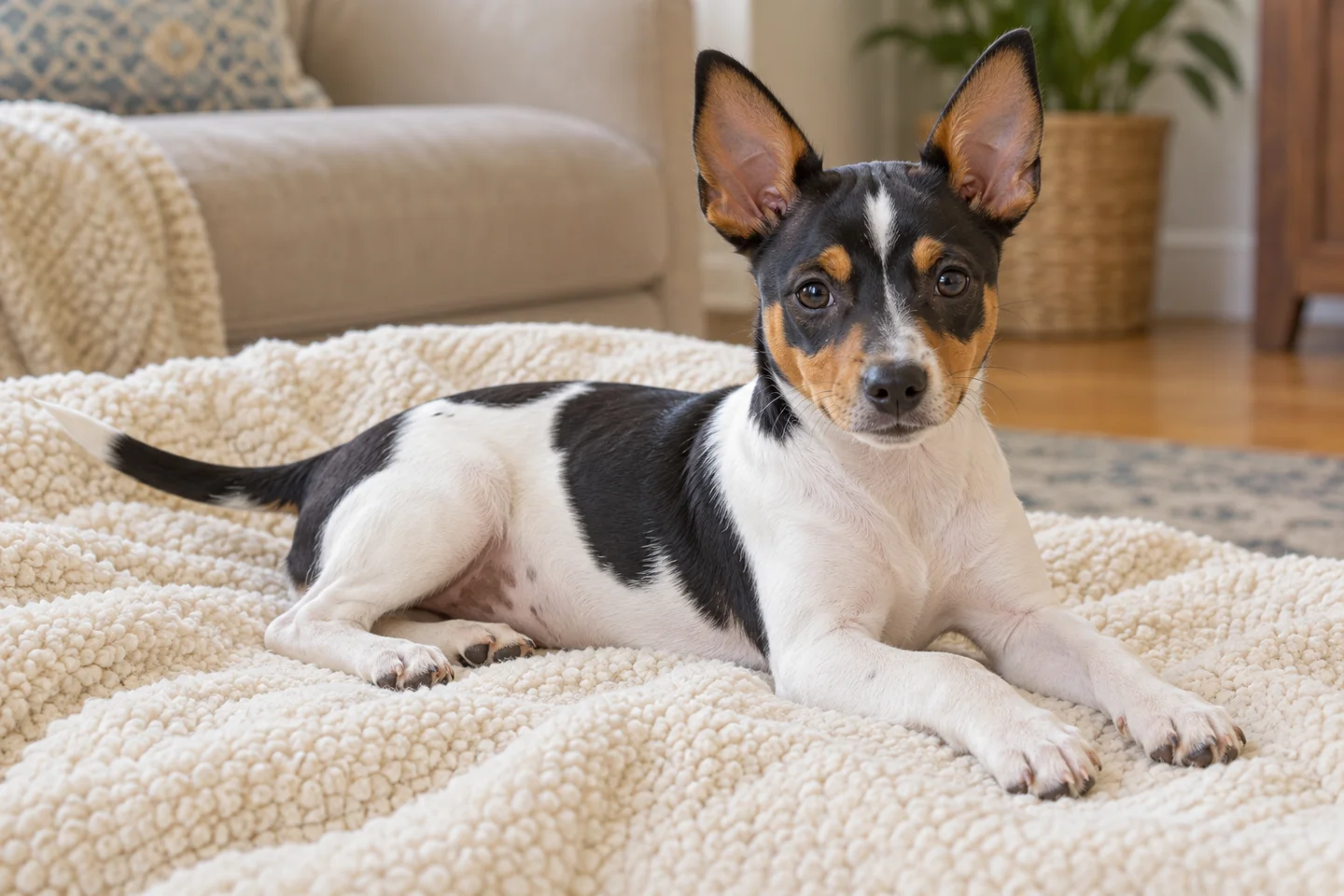
The coat is short, dense, and smooth to medium-hard, with permitted bicolor or tricolor patterns that include white. Our illustrations select white, black, and tan. Natural ear carriage can vary within the standard; the chosen images show matching upright ears. A full natural tail and naturally short tails are both described, alongside docked tails in the document. The illustrations use a complete tapered tail, avoiding an assumption that alteration is needed for companionship.
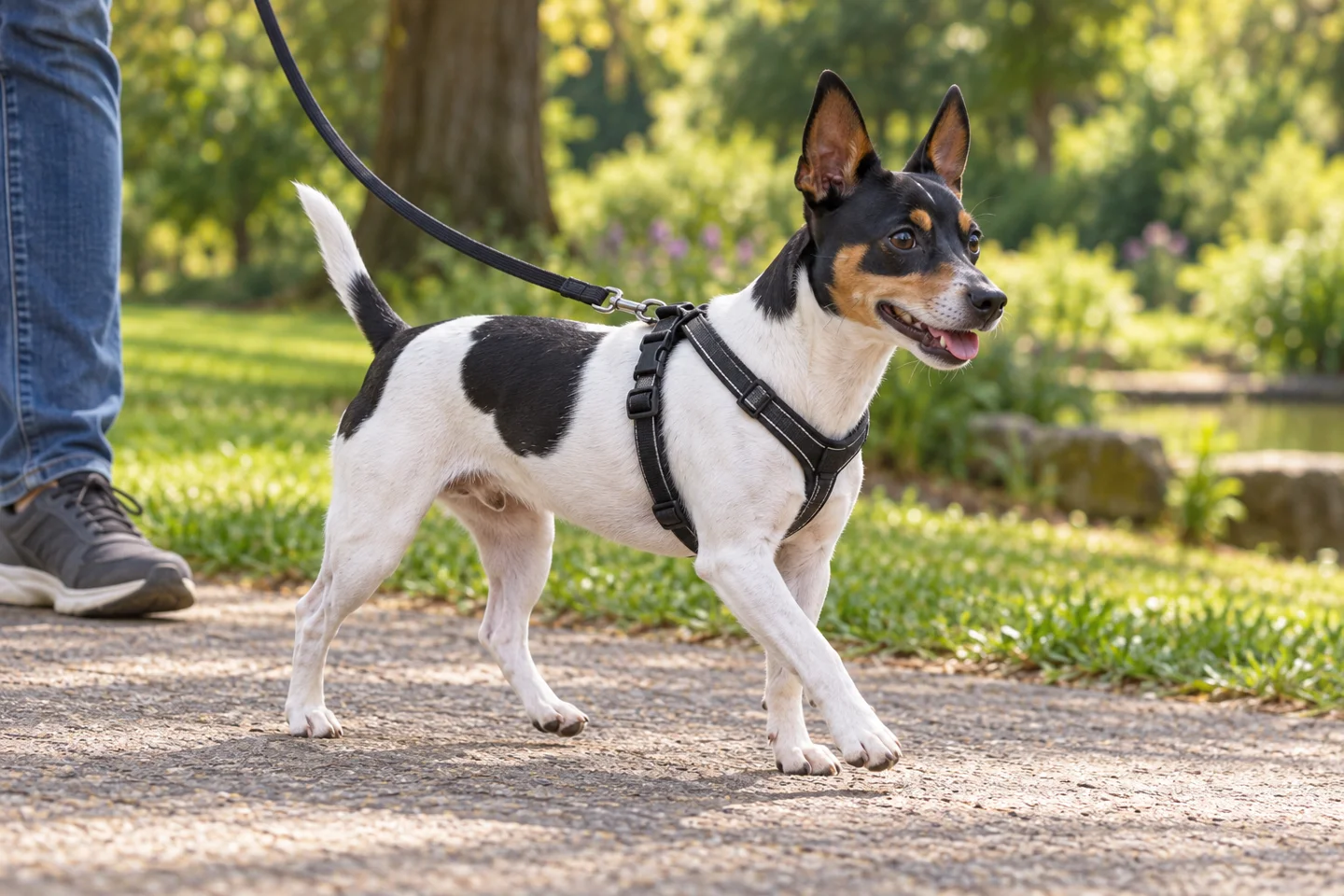
A short-legged body still needs appropriate condition and equipment. Measure the chest and check where a harness lies behind the elbows. Coat and color cannot tell an owner whether a strap rubs. Recheck during growth and after weight changes. Artwork is labeled AI-generated illustration and cannot establish the health, ancestry, or exact conformation of an actual dog. Decisions should follow the individual and its records.
Garden access at a terrier's level
Inspect the bottom of gates, gaps beneath fencing, and access behind sheds. A low dog may find openings that another household dog never used. Prevent access to stored chemicals, sharp equipment, and unsafe holes. Containment should account for digging and investigation rather than rely on the hope that a familiar garden will remain interesting enough to prevent escape. Identify who checks each gate before the dog is released.
An appropriate digging area can be introduced through rewards and supervision if the household can provide one. It does not mean the terrier automatically understands where digging is allowed. Make the permitted area useful and block access to dangerous alternatives. Simple searches can also occupy the nose without allowing uncontrolled pursuit. The task should be easy enough to understand before the owner adds difficulty.
Vehicle and door handovers deserve practice. Secure equipment before opening access, and agree which person controls the dog. A small terrier can disappear between feet while people exchange bags. Identification and current microchip details remain sensible even when the boundary plan is good. They provide another practical layer rather than an excuse to tolerate repeated escapes and hope somebody returns the animal.
Training for found objects and quick decisions
Teach a release and exchange using safe objects in calm situations. Reward the dog for letting go, and sometimes return the object when appropriate. Begin before a dangerous stolen item makes the lesson urgent. Prevent access to rubbish and laundry so the household is not continually improvising. A terrier that repeatedly finds interesting objects is also learning from each discovery and the attention that follows.
Useful lessons include a mat during cooking, waiting at a door, following a turn, and coming back in a secure space. Reward small successful responses and add distractions gradually. The owner can give access to safe exploration as part of the reward when the location permits. Repeating a cue over an absorbing trail does not teach the same thing as practicing where the dog can still notice the person.
Choose reward-based help if the pattern is difficult to change. Ask the professional what behavior is being reinforced, which management prevents rehearsal, and how the exercise becomes easier if the dog struggles. A physical contest over a stolen object can increase concern about approaching hands. The plan should improve cooperation rather than depend on winning a struggle whenever the dog makes a quick decision.
Exercise without treating short legs as a limitation on curiosity
Provide real walks and opportunities to investigate while adapting the workload to the individual. Short stature does not make the dog content with no activity, but it also does not establish fitness for sudden strenuous work. A puppy, a conditioned adult, and an older dog with mobility changes need different plans. Build effort gradually and notice recovery after rest as well as enthusiasm when the lead appears.
Vary activities. Simple searches, suitable training, and controlled movement can provide work without repeated hard jumping. Ask an appropriate instructor about an organized activity and the preparation required. The aim is a task the dog can perform comfortably, not proof that it can keep up with larger animals. If movement changes, shorten the plan and seek advice before insisting on completion.
Check surfaces and the underside after outdoor activity. Low height can bring the chest and belly close to vegetation and debris. In warm conditions, choose cooler periods and inspect paving; a small smooth-coated dog can still overheat. Provide water and watch the response. At home, make rest a recognizable part of the day so the terrier does not need to keep presenting a toy to discover what happens next.
Household sound, visitors, and time alone
Ask what the dog barks at rather than accepting one broad description of vocal behavior. Activity at the gate, a passing animal, or an owner's departure can have different causes. Record the trigger and recovery and adjust the setup accordingly. Screening a repeated view may help one situation while doing little for distress during an absence. A useful plan follows the pattern, not the assumption that all terriers make the same noise for the same reason.
Teach a comfortable place to wait while visitors enter. Reward that routine before expecting it during a lively arrival. Guests can allow the dog to approach without immediately lifting or handling it. A small dog does not need to accept surprise contact just because a person finds it easy to pick up. Explain the arrangement before someone reaches toward the collar or face.
Practice manageable absences and observe whether the dog settles. Persistent pacing, repeated distress vocalization, or attempts to reach an exit need attention. Another pet is not an automatic treatment. Arrange support and seek appropriate advice rather than simply increasing exercise until the dog is too tired to show its response. The household needs a reliable weekday plan as well as an enjoyable weekend routine.
Children, cats, and smaller animals
Children should interact through adult-managed activities and leave meals and sleep undisturbed. A low dog is easy to reach, which can make repeated unwanted contact common unless adults intervene. No pulling ears, carrying while running, or retrieving objects from the mouth should occur. Give the dog a private resting area and use separation when the adult cannot continue watching closely.
Running games can become difficult if the terrier follows clothing or feet. Change the activity before excitement escalates and teach an easy alternative in a quieter moment. A visiting group may require different arrangements from the familiar household child. Broad claims that a breed is good with children cannot answer whether this dog is comfortable with that group, noise level, and type of contact.
Securely protect rabbits, rodents, and poultry from a hunting terrier. Calm behavior toward an enclosed animal does not establish what happens if it runs. Cats need individual assessment and escape routes. With other dogs, inspect resource pressure as well as play: beds, food preparation, doorways, and attention from people. If one repeatedly blocks or follows the other, change the arrangement before conflict develops.
Grooming and the comfort check
The short coat needs gentle brushing and inspection rather than elaborate styling. Check under the harness and along the underside after outdoor activity. Persistent itching, odor, or an inflamed area should be assessed by a veterinarian. A smooth coat may make a problem visible sooner, but it does not tell the owner which treatment is appropriate. Keep a note of products used and when the change began.
Introduce ear observation without putting tools into the canal. Repeated shaking, discharge, pain, or a new odor deserves advice. A naturally upright ear cannot guarantee freedom from disease. Ask whether the individual needs cleaning and have the method demonstrated. Reusing another dog's medication can delay the right diagnosis or make the situation worse.
Nails and teeth belong in the routine even when the dog appears naturally tidy. Use a canine toothpaste and brief rewarded practice. If nail care suddenly becomes difficult, inspect for injury and discuss pain with the clinic. A groomer or veterinary professional should know about handling concerns before a visit. Small size should not make forceful completion the default answer to every care task.
Health: short-legged anatomy and a specific DNA distinction
The American Teddy Roosevelt Terrier Club discusses primary lens luxation, CDDY-associated disc disease, degenerative myelopathy markers, cardiac examinations, and patella assessment. Ask the source which current assessments were completed for the parents and obtain the actual results. The club's discussion of several topics should not be condensed into a vague claim that one commercial panel clears everything.
UC Davis distinguishes CDDY from CDPA, two FGF4-related findings that should not be treated as interchangeable. Its explanation links CDDY with disc degeneration and a risk of herniation. Ask for the exact test and interpretation rather than assuming that every short-legged dog has the same result or outcome. A genetic risk finding is not the same as a clinical episode in the pet.
If the dog develops sudden back pain, weakness, or difficulty moving normally, contact the veterinary team promptly. Do not wait for a known DNA result to become relevant or decide that a favorable result rules out every spinal problem. Follow the clinic's transport and activity instructions. The household's job is to report the change and prevent further unsafe activity while professional assessment is arranged.
PLL also deserves a named report and an eye-care discussion. A painful-looking eye or sudden visual change needs assessment regardless of ancestry paperwork. For other records, distinguish a clinical examination from a laboratory finding and ask what each establishes. Keep confirmed diagnoses and treatment notes with the animal through changes of home or clinic. Clear documentation supports decisions without inventing disease rates from a small collection of owner stories.
Feeding, mixes, and the real cost of care
Use a measured complete diet appropriate to life stage and include training rewards. A short-legged dog can carry excess weight even while remaining lively. Ask the clinic how to assess ribs and waist, and review intake when activity changes. Supplements should have an individual purpose agreed with the veterinarian. Persistent appetite, thirst, or weight changes need investigation rather than repeated changes of brand without understanding the cause.
A Teddy Roosevelt Terrier mix may have different proportions, coat, and behavior. Ask whether the parentage is documented and which registry identity is meant. A short-legged tricolor appearance cannot prove a particular cross, and a crossbreed name cannot guarantee improved health. An adult's observed life with people and animals is useful evidence for placement even when ancestry remains uncertain. A puppy needs expectations that can adapt as it develops.
Obtain local costs for preventive care, dentistry, training, secure transport, boarding, and unexpected treatment. Ask a backup carer to practice the gate and equipment routine before urgent travel. Read insurance conditions and clarify continuing support with the source. An inexpensive initial fee cannot establish an inexpensive lifetime arrangement. The practical commitment includes reliable people and daily time as well as money.
A dogsDating walk for a purposeful small terrier
Describe this Teddy's preferred pace and response to toys on dogsDating. Explain whether it becomes absorbed by ground scent or follows running companions intensely. Ask how the other dog handles a partner that pauses or leaves. Similar enthusiasm does not establish compatible play, and a shared walk can be the full purpose of a first meeting without testing every possible interaction.
Choose a public route with visibility and space to turn. Begin with independent investigation rather than a close gate greeting. Leave toys out if they could create competition, and watch whether each dog can disengage. Persistent pursuit, tension, or attempts to escape calls for a simpler setup or an early ending. A calm departure preserves useful information and avoids turning uncertainty into a conflict.
Keep exact user coordinates private. Approximate discovery and a chosen public landmark can arrange the walk without revealing a residence or private field. Afterward, compare what helped the dogs settle and which distance remained comfortable. That record can guide another meeting or a decision to choose a different partner. The digital match creates an opportunity for discussion while the dogs' actual responses determine the next step.
Sources and editorial notes
Sources checked October 22, 2026. Breed measurements describe reference ranges, not a diagnosis or an individual dog's ideal weight. Images are AI-generated breed illustrations and do not document a particular dog or health condition.
- AVSAB: Humane Dog Training Position Statement
- VCA Animal Hospitals: Food aggression in puppies
- Orthopedic Foundation for Animals: CHIC health screening programs
- VCA Animal Hospitals: Aggression toward unfamiliar dogs, diagnosis
- VCA Animal Hospitals: Grooming and coat care for your dog
- VCA Animal Hospitals: Ear infections in dogs (otitis externa)
- AAHA: Feeding plans for healthy, appropriate weight cats and dogs
- VCA Animal Hospitals: Heat stroke in dogs
- AVSAB: Puppy Socialization Position Statement
- VCA Animal Hospitals: Dog behavior problems, aggression toward children
- American Teddy Roosevelt Terrier Club: Health overview
- UC Davis Veterinary Genetics Laboratory: CDDY, IVDD risk, and CDPA
- American Kennel Club: Teddy Roosevelt Terrier history
- Teddy Roosevelt Terrier: official breed standard
Keep getting to know dogs.
Read another guide or return to your dogsDating community.
Explore breed guidesBack to dogsDating