Treeing Walker Coonhound
An American tracking and treeing hound whose carrying voice, persistent nose, and need for secure exercise shape life beyond its tricolor coat.
How these guides are researched and reviewed
- Origin
- United States
- Adult standard size
- AKC males 22–27 inches; females 20–25
- Illustrated coat
- White, black, and tan short coat
General information for owners. These articles have not been reviewed by a veterinarian. Medical decisions need your dog's history and an examination.
The dog at the end of a promising trail
The Treeing Walker Coonhound is an American scenthound developed for tracking and treeing raccoons. The word Walker belongs to its name and history; it does not describe a dog content with any amount or style of walking an owner happens to offer. The AKC standard describes an active, enduring hunting dog. A household choosing one should enjoy the process of providing purposeful activity and managing a nose that may remain occupied after the person wants to go home.
Treeing work involves remaining engaged when quarry enters a tree, with voice helping a handler locate the dog. A pet owner need not recreate that work with live animals. It does help explain why persistence and sound should be discussed before placement. A person expecting silent off-lead strolling beside wildlife needs a realistic alternative plan. The hound's willingness to rest indoors cannot establish what will happen when a trail becomes compelling.
Ask about the actual family and individual. A dog accustomed to hunting, a puppy raised in a home, and an adult with incomplete records may need different transitions. Find out about travel, overnight housing, handling, and experience with other animals. Those details are more useful than a broad promise that every coonhound is easy-going. A real care plan begins with what the dog knows and what the proposed household can provide.
Size and the recognizable tricolor outline
The AKC standard gives male shoulder heights of 22 to 27 inches and female heights of 20 to 25 inches. Weight should suit height and overall balance. These adult figures are not instructions to make a puppy gain quickly. Ask the veterinarian to follow growth and body condition. A working outline should remain functional rather than become heavy simply because a buyer prefers a larger-looking animal.
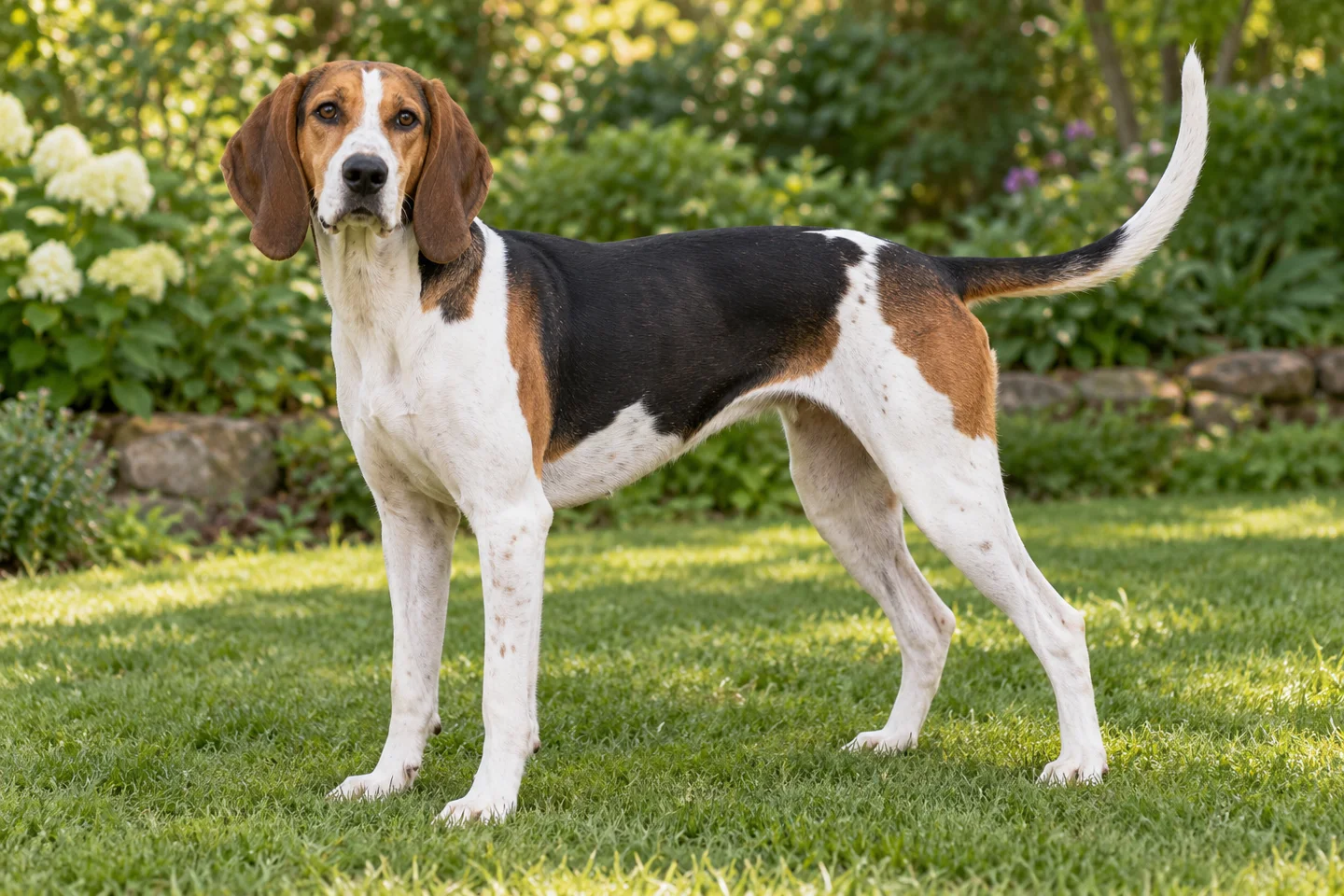
The coat is short, smooth, and glossy. Our illustrations use the familiar white, black, and tan combination with a black saddle and tan facial areas. The ears hang from a moderately low setting and reach toward the nose, the muzzle is fairly square, and the eyes are dark. The complete tapering tail is carried according to activity without becoming a tightly curled spitz tail.
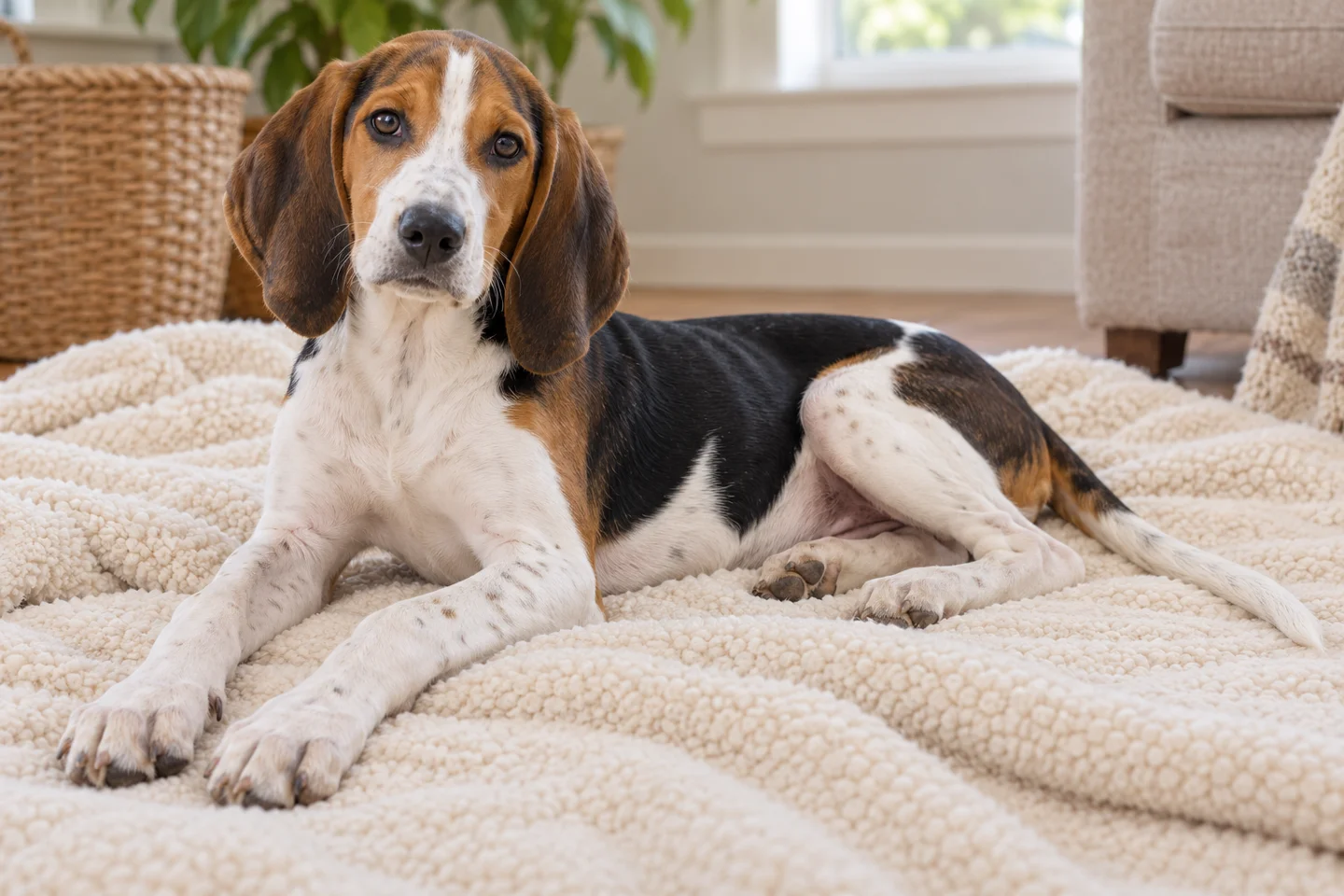
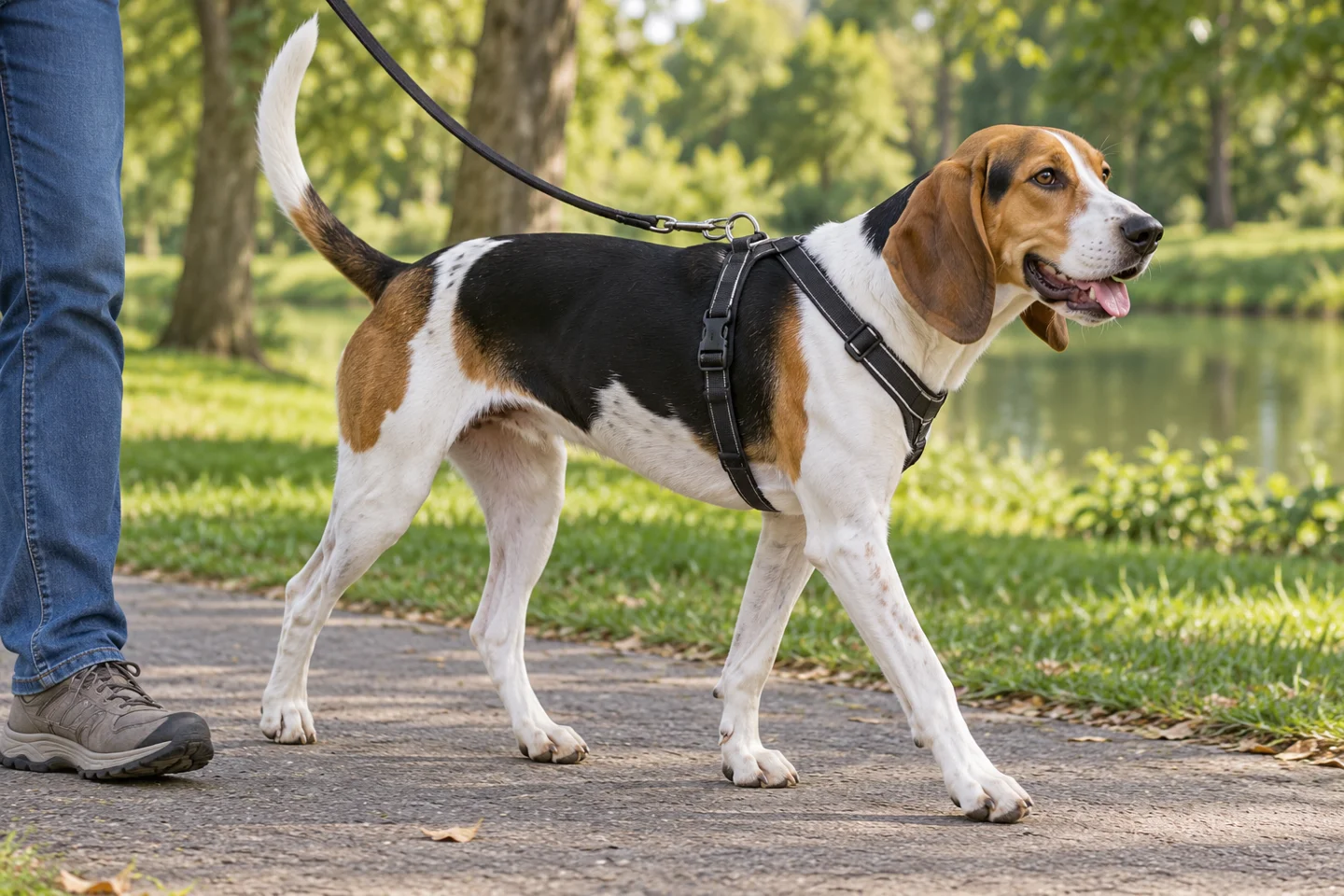
A puppy has developing proportions and should not be given an adult's head or musculature in an illustration. All three images here are labeled AI-generated illustrations. They cannot prove ancestry, working success, or clinical findings. Equipment should fit the actual dog, with room for shoulder movement and checks behind the elbows. Reassess through adolescence and after weight changes rather than trusting a familiar size label.
A practical agreement about the voice
Before adoption, ask for examples of the dog's vocal behavior. Does it call when it sees another dog, finds animal scent, waits for food, or loses sight of a person? How quickly does it recover? A neighbor may hear only noise, but the owner needs that context to choose a response. A hunting description does not exempt the household from housing rules or responsibility for repeated disturbance.
Look at the environment the dog will use while people are busy. A view of wildlife through a fence can create repeated opportunities for escalation. Changing that access and teaching another routine may help more than shouting from the door. Distress during an absence requires a different plan. Observe short departures and seek appropriate support if pacing, persistent calling, or escape attempts develop.
Give rest a recognizable place in the schedule. After an outing, provide water, a comfortable bed, and a quiet transition. Constantly restarting play can make the dog's day feel unfinished. A newly arrived adult may need time before its usual pattern becomes clear. Gather observations across weeks and settings instead of treating the first exhausted evening as a complete description of temperament.
Training for scent, thresholds, and recovery
Begin where the dog can notice the handler. Reward looking back, following a turn, and moving a few steps together. Safe access to sniffing can sometimes follow as part of the reward. This makes cooperation relevant to the outing rather than only a command to stop every interesting activity. If the hound is already absorbed, create an easier situation before repeating a cue many times.
A secure recall session can include an easy return, a worthwhile reward, and permission to investigate again. Practice attaching the lead without always finishing the outing as well. That gives the hound several reasons to approach rather than teaching that a hand near the collar predicts immediate loss of access. Outside secure space, use suitable management. A return from ordinary sniffing supplies limited evidence about the much harder situation of an animal running nearby.
Threshold routines also matter. Attach equipment before opening vehicle access and agree who is responsible during a handover. Teach waiting at doors separately from a demanding trip. Identification and accurate microchip contacts provide another layer, but repeated escapes mean the setup needs changing. A reward-based professional can help build the routine without relying on physical contests or the handler's ability to catch up.
Exercise that does more than add distance
Condition the individual before strenuous activity. The standard's endurance description cannot establish fitness after a quiet month or during puppy development. Increase workload gradually and watch recovery after rest. A dog may continue tracking while uncomfortable, so inspect gait and willingness to rise later. New changes deserve advice before the next demanding outing rather than encouragement to push through them.
Offer varied exploration and simple searches where live pursuit is inappropriate. A task can begin with a familiar object or part of the measured ration in a safe area. Check for litter, chemicals, and other animals before starting. An organized scent activity may be useful with suitable instruction. Mental work adds variety while ordinary movement, toileting, social contact, and comfortable rest remain necessary.
Plan for weather and surfaces. Carry water and use cooler periods in heat. A short coat does not prevent overheating or protect pads from hot ground. Check feet after rough terrain and allow recovery. The handler should be willing to shorten a route when conditions or the dog's response change. Finishing a planned distance is a poor substitute for a schedule the body can manage comfortably.
Socialization without a compulsory wrestling match
A puppy needs manageable experience of people, vehicles, sounds, surfaces, and appropriate dogs. Coordinate infection precautions with veterinary guidance while arranging useful exposure. Look for investigation and recovery after a surprise. Repeated freezing or attempts to leave mean the difficulty should be reduced. A crowded outing is not automatically better learning because it includes more encounters.
Let people pass without touching. Visitors can follow the owner's plan and allow a voluntary approach. A dog held still for petting provides less information about comfort than one with a route away. Adult hounds may need gradual introduction to unfamiliar domestic settings too. A shared corridor, lift, or grooming table can be new even if the dog has spent years confidently working outdoors.
Choose canine partners for predictable movement and the ability to disengage. A calm parallel walk may be a better first lesson than immediate rough play. Watch what happens when one dog pauses or leaves. If the partner keeps pursuing, its handler should interrupt. Useful social experience builds manageable expectations; it should not require the hound to tolerate every unwanted close approach.
Aggression and the situation around a warning
A coonhound reaching the kitchen after a demanding outing may want water, food, and undisturbed rest. Arrange those needs without letting children gather around the bowl or another dog compete for access. If the hound begins freezing or growling as somebody approaches, stop using that approach as a test. Move people away, provide separation, and ask for an individual assessment. Hunting persistence does not explain every conflict that happens after the work is over.
Consider the exact task when handling becomes difficult. Pulling a sore foot through a towel, reaching beneath an ear flap, and moving a dog from a bed are different events. Record which movement preceded the response and whether it is new. Ask the veterinary team to investigate discomfort while a qualified behavior professional helps with safer cooperation. Until then, change the routine so nobody needs to repeat the risky touch casually.
A sitter should receive a usable handover, not a vague warning that the dog can be moody. State the situation, the response, and any contact or injury, then demonstrate the barriers and cues currently used. Agree what the sitter should do if a problem develops and whom to contact. Where a muzzle belongs in the professional plan, teach its use beforehand. It cannot make an unprepared carer able to perform every procedure or turn forced interaction into a comfortable experience.
Children and the long-eared hound
Children should understand that hanging ears are sensitive body parts, not handles. No pulling, head hugging, or following into a bed should occur. Arrange contact while an adult observes both participants and stop when the dog withdraws. A medium-large hound can knock over a small child unintentionally, so choose enough space and a predictable activity instead of relying on friendly intent alone.
Protect meals and sleep. A retreat should remain private even when friends visit. Fast noisy games may create a different experience from quiet contact with the familiar household child. Separate when adults cannot supervise or the dog becomes too excited to respond. Being somewhere nearby while occupied with another task does not mean the interaction is being watched closely enough.
Let children participate in tasks that require planning rather than restraint. They can prepare a search while an adult keeps the dog elsewhere, help clean equipment away from the animal, or record a care instruction. An adult decides who handles the lead and which encounters are manageable. If the hound picks up a child's object, the child should stop following and call for help. A chase around furniture makes retrieval harder and can add conflict to what began as ordinary curiosity.
Dogs, cats, and the pursuit question
A hound's history alongside other dogs gives limited information about sharing a kitchen or bed area. Introduce a new household companion with controlled space, then watch daily access carefully. Can either dog pass through a doorway, approach water, or settle without being followed? Provide separate meals and resting options while that pattern becomes clear. If one repeatedly controls the other's movement, change the arrangement instead of waiting for a visible fight to confirm that pressure exists.
Cats need individual assessment and escape routes. Calm behavior with one familiar cat cannot establish the response to an unfamiliar animal running outside. Securely protect rabbits, rodents, and poultry. A quiet look through cage bars provides limited information and should not become permission for an uncontrolled encounter. No small animal should be used to discover whether the dog can resist pursuit.
Around wildlife and livestock, retain appropriate control and follow local rules. The owner can respect the breed's work without allowing roaming that harms other animals or puts the dog near traffic. If effortless off-lead access among animals is central to the proposed lifestyle, discuss that expectation before placement. Safe alternatives are easier to establish early than after an escape reveals the planning gap.
Grooming and post-outing inspection
Make the end of a woodland outing a predictable inspection rather than an occasional struggle when something is already wrong. Let the hound stand on a stable surface and check one region at a time. Look beneath the harness, along the chest, and between the toes. Reward participation and take breaks. Ordinary mud can be cleaned gently, while a painful area, embedded object, or damaged nail needs the clinic's advice.
The hanging ear flap deserves its own calm check. Look for a change from the dog's usual appearance and response, including discharge, redness, repeated shaking, or discomfort. Avoid probing the canal. If the veterinarian recommends cleaning, learn the product, amount, and technique for this patient. A bottle left from a previous problem should not become the automatic response to every new ear symptom, because treatment depends on what is causing it.
Brushing the short coat can also reveal strap rubbing or a skin change that was hidden during an active day. Note when it began and whether equipment or washing products changed. Persistent itch or odor needs investigation. Keep dental care and nail maintenance on the calendar even when the coat looks effortless. An owner who notices a new objection to one part of that routine should investigate the reason rather than make the next session longer and firmer.
Health screening: a particular list for this coonhound
The AKC hound-group recommendations identify hip evaluation, ophthalmologist examination, and thyroid evaluation for the Treeing Walker Coonhound. Request the actual parental findings and confirm the current program. Do not replace this list with the absence of recommendations for another coonhound breed. Closely related names and similar working roles do not make screening summaries interchangeable.
Hip information should identify the dog and the assessment, not merely state that it runs freely. An enthusiastic demonstration at a visit cannot show what an official evaluation reports. Ask how the finding informs the proposed pairing and whether close relatives have confirmed mobility diagnoses. A result supports a particular decision without promising that the puppy can never develop an orthopedic problem.
For the eye assessment, check who performed it and when, rather than accepting a photograph of bright-looking eyes as evidence. The thyroid entry also needs a named evaluation and findings. An owner concerned about a pet's energy, condition, or coat should bring the wider history to the veterinarian, including medication and recent workload. These observations can help identify a useful investigation without diagnosing thyroid disease from one nonspecific change. A broad DNA screen cannot silently perform the clinical assessments named by the program.
Maintain records through changes of household and clinic. Previous injury, surgery, medication, and unresolved follow-up can matter when a hound starts a new activity routine. Safe video of an intermittent movement change may help, but avoid repeatedly recreating hard work to prove a problem. Clinical assessment of the current patient remains distinct from pedigree information and cannot be replaced by a general claim of working-dog toughness.
Feeding, mixes, costs, and dependable support
Choose a complete life-stage food and make the ration visible to everyone involved. One container for the day's training allowance can prevent several people each adding what seems like a small extra meal. Ask the clinic how the ribs and waist should feel on this individual. Review the ration after an injury or a quieter period rather than continuing an old hunting-day amount by habit. Changes in thirst, appetite, or condition still need assessment; they are not simply instructions to buy a richer food.
A dog offered as a Treeing Walker cross needs evidence behind the claimed parentage. The familiar saddle and tan face occur in other backgrounds too. If the other parent is known, ask about its medical findings and everyday responses, rather than expecting the cross name to supply those answers. With an adult of uncertain ancestry, practical observations can guide a home without a complete pedigree. A puppy's eventual voice, frame, and pursuit interest remain partly uncertain even where some ancestry is documented.
Discuss the cost of the routine you intend to maintain. Will a boarding provider accept a vocal hound, demonstrate secure transfers, and follow any handling restrictions? Can a substitute walker use the equipment and turn away from wildlife safely? Price those services locally alongside veterinary and dental care, transport, and unexpected treatment. Check exclusions before assuming an insurance policy will cover a known problem. The source should also explain how later advice and a possible return work. Reliable support matters when circumstances change, not only while the household is choosing an appealing puppy.
A dogsDating walk that allows investigation
On dogsDating, explain the hound's actual pace, voice, and response to other dogs. Ask whether the prospective partner is comfortable with scent pauses and can disengage when play stops. Two active dogs may still want different outings. Agree that shared walking can be the entire first meeting without adding toys or free running.
Select a broad public route and begin with enough separation for independent exploration. Avoid a close gate greeting where leads cross and retreat becomes awkward. Watch whether both dogs recover after looking at each other. Persistent pursuit, stiffness, or avoidance calls for an easier setup or a calm ending. An early departure can provide useful information without waiting until either animal is overwhelmed.
Keep exact user coordinates private. Approximate discovery and an agreed public landmark can arrange the outing without revealing a residence or a regular private exercise site. Compare observations about pace, distance, and recovery afterward. Those details can guide another meeting or a different partner. The owners' match provides an opportunity for discussion while the actual dogs determine whether closer contact is appropriate.
Sources and editorial notes
Sources checked October 22, 2026. Breed measurements describe reference ranges, not a diagnosis or an individual dog's ideal weight. Images are AI-generated breed illustrations and do not document a particular dog or health condition.
- AVSAB: Humane Dog Training Position Statement
- VCA Animal Hospitals: Food aggression in puppies
- Orthopedic Foundation for Animals: CHIC health screening programs
- VCA Animal Hospitals: Aggression toward unfamiliar dogs, diagnosis
- VCA Animal Hospitals: Grooming and coat care for your dog
- VCA Animal Hospitals: Ear infections in dogs (otitis externa)
- AAHA: Feeding plans for healthy, appropriate weight cats and dogs
- VCA Animal Hospitals: Heat stroke in dogs
- AVSAB: Puppy Socialization Position Statement
- VCA Animal Hospitals: Dog behavior problems, aggression toward children
- American Kennel Club: hound health testing requirements
- Treeing Walker Coonhound: official breed standard
Keep getting to know dogs.
Read another guide or return to your dogsDating community.
Explore breed guidesBack to dogsDating