Tyrolean Hound
An Austrian mountain scenthound with a dense coat, a persistent hunting interest, and a need for secure activity and accurately described breeding evidence.
How these guides are researched and reviewed
- Origin
- Austria
- Adult standard size
- Males 44–50 cm; females 42–48 cm
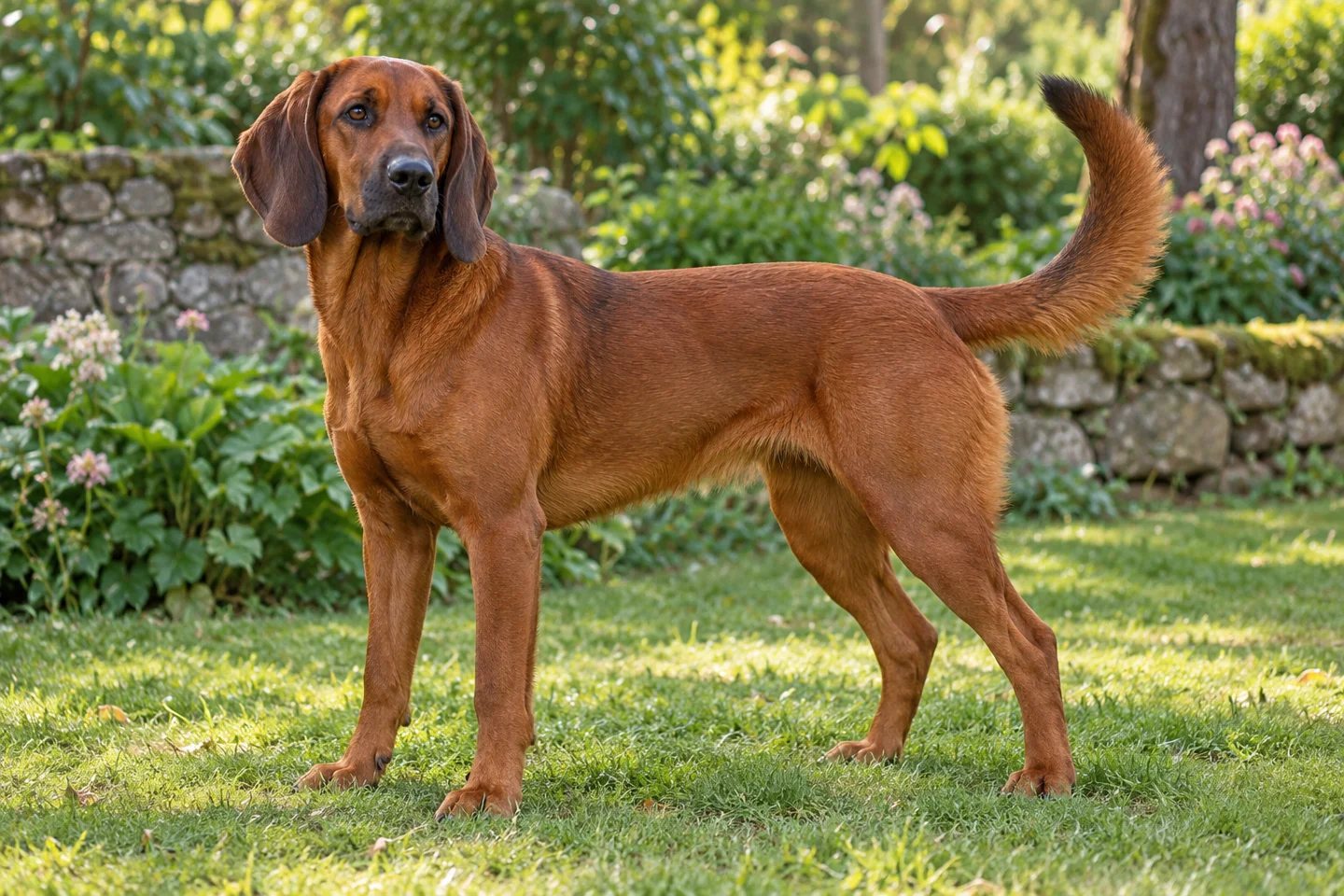
- Illustrated coat
- Solid deer-red dense coat
General information for owners. These articles have not been reviewed by a veterinarian. Medical decisions need your dog's history and an examination.
An Austrian working hound beyond the red coat
The Tyrolean Hound, or Tiroler Bracke, is an Austrian scenthound developed for hunting work in mountainous country. Its practical identity matters more to a prospective owner than a photograph of a handsome red dog. A household should be ready to provide movement, investigation, and safe control around animals. The breed's working history cannot certify that every puppy will adapt without teaching to whatever routine a family already follows.
The FCI standard places it among scenthounds and describes independent hunting and tracking roles. The dog may become absorbed in information a person cannot perceive. An owner needs to enjoy at least some of that investigative pace while teaching a shared route. Constantly pulling the hound away from every interesting patch can create frustration without building useful cooperation. Equally, unrestricted roaming is not an acceptable substitute for a planned outing.
Ask the source what the individual has experienced. A dog raised around hunting activity may need gradual preparation for shared corridors, household appliances, or quiet absences. A puppy already living indoors still needs continued social experience and handling lessons. The useful questions concern actual routines and responses. A broad claim that the breed is naturally sensible offers little guidance about the first car journey or an unexpected visitor.
Adult height and the selected red variety
The FCI lists male shoulder heights of 44 to 50 centimeters and female heights of 42 to 48 centimeters. These are adult standard ranges. They do not supply a single compulsory weight or a target for rapid puppy growth. Ask the veterinary team to assess frame and condition as development continues. A hound should remain functional rather than be fed toward a heavier outline because a buyer equates substance with quality.
The coat is dense and double, with a coarse undercoat and fuller hair on the hindquarters and tail. The standard permits red and black-and-tan coloring, with specified white markings possible. Our illustrations select deer-red without white, which does not require adding markings to make the dog complete. The ears hang naturally, the nose is black, and the eyes are dark brown. The full tail remains visible with its dense brush.
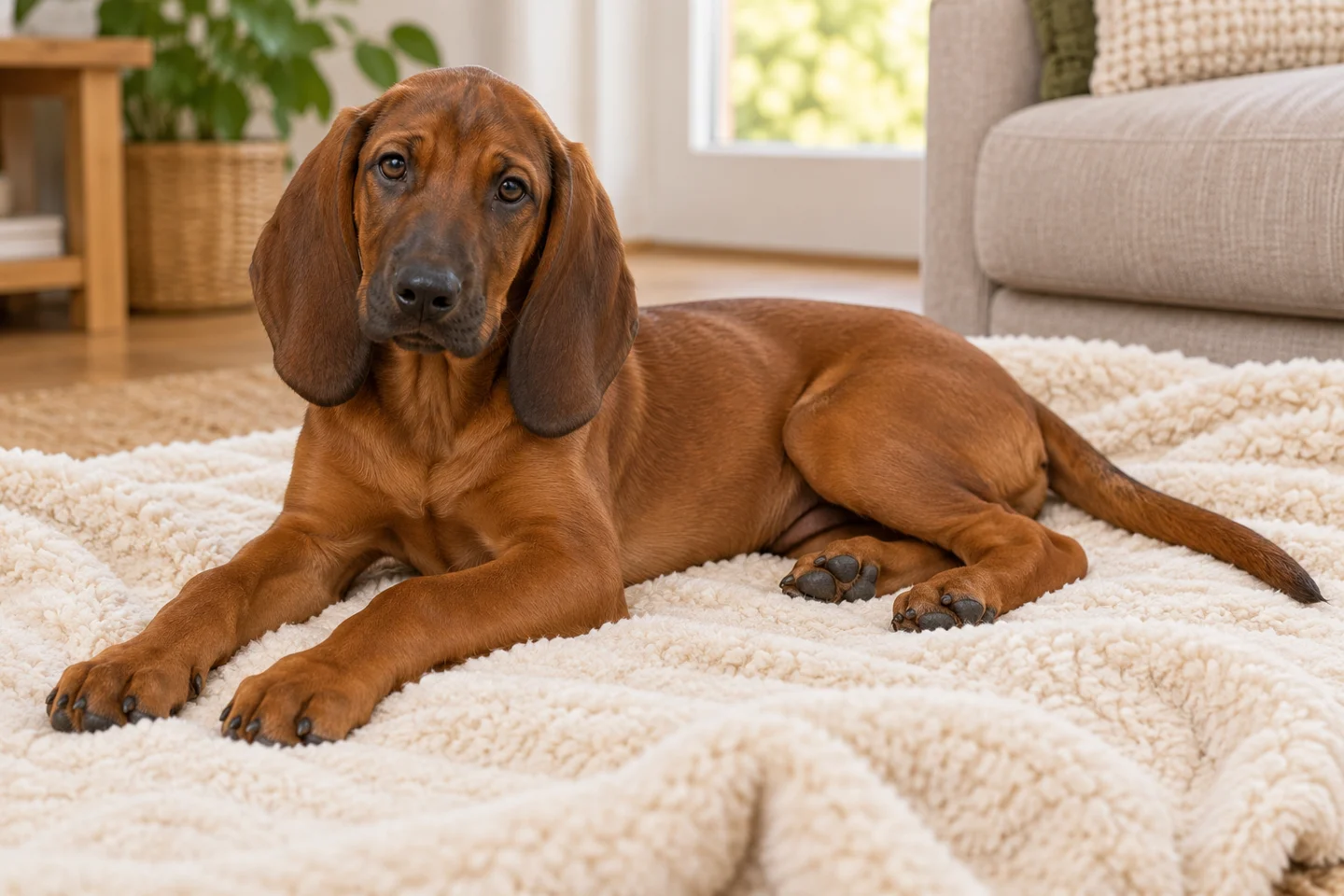
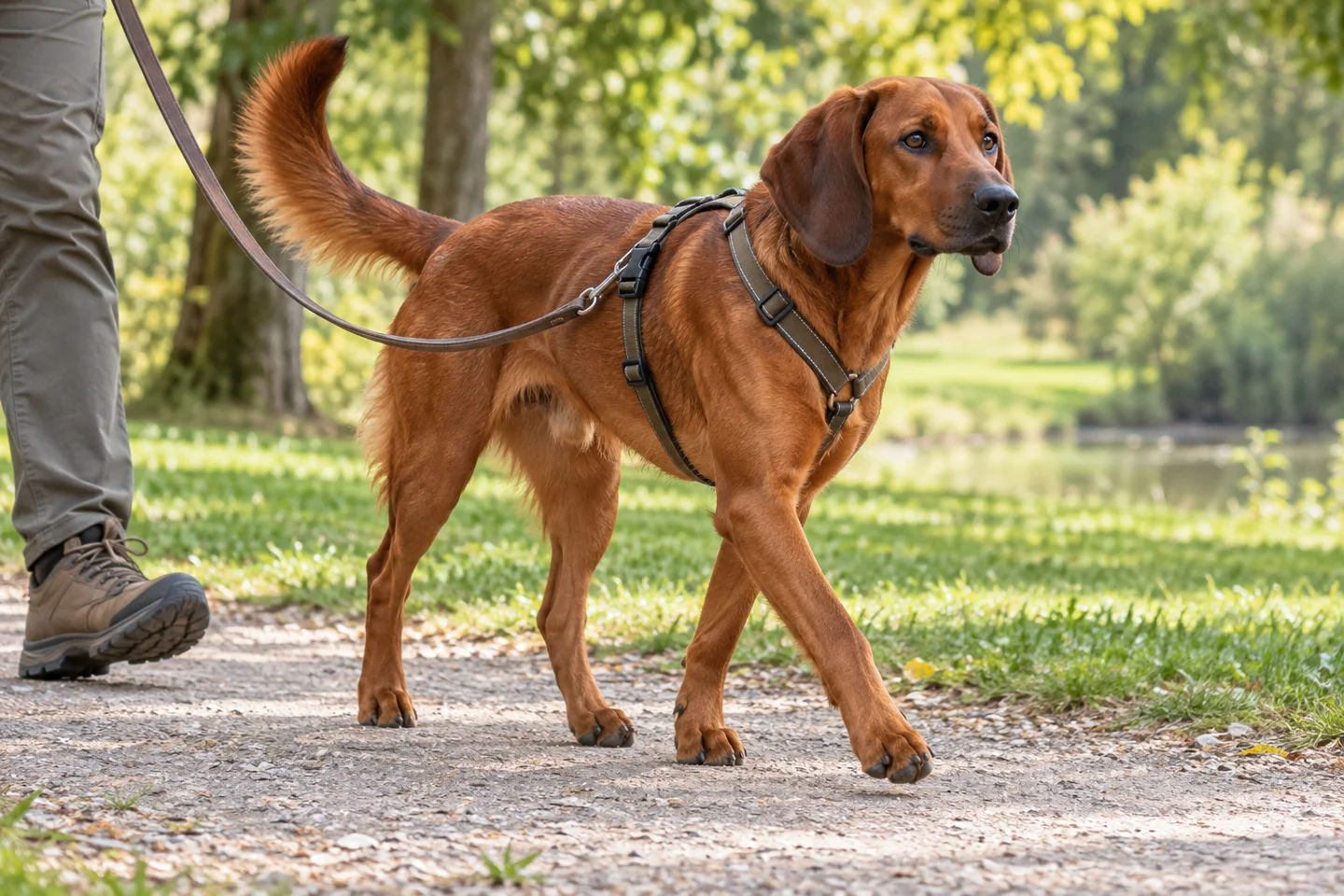
A puppy's coat and body are still developing and should look younger than the adult. All three images are labeled AI-generated illustrations. They cannot establish a pedigree, hunting result, or clinical finding. Measure equipment on the actual dog and check behind the elbows and under the neck after movement. A short-looking coat may still conceal pressure beneath a strap if nobody examines the skin.
A route chosen for the nose and the handler
Practice attention where the hound can still notice the person. Reward a brief look back, a turn, or a few steps together. Sometimes allow further safe investigation afterward so cooperation becomes part of the outing rather than the end of every interesting opportunity. When the dog is already fixed on a trail, simplify the setting before repeating a word many times.
Choose paths with room to turn and a clear view of approaching people and animals. A narrow trail can make a difficult encounter harder because distance cannot be adjusted easily. Teach the movement needed for a quiet turn in a simpler place first. The handler should not discover beside livestock that its only strategy is to pull harder while the dog accelerates.
Recall practice belongs in secure settings before greater distraction is added. Reward arrival and sometimes release the dog again where safe. A long line may support managed practice, with care around trees, legs, and other users. A successful session without wildlife cannot establish reliability when an animal runs. Containment and appropriate control remain practical responsibilities rather than evidence that training has failed.
Exercise, mountain imagery, and actual fitness
A mountain-working background does not make an individual ready for a sudden difficult hike. Build conditioning according to age, health, and recent activity. A growing puppy, a dog returning after illness, and a fit adult need different demands. Ask the veterinarian about the proposed routine and watch recovery after rest. Enthusiasm for the next scent cannot prove comfortable joints or sound feet.
Introduce terrain gradually. Check the surface and the dog's movement, and be willing to turn back before fatigue changes footing or judgment. Take water and choose conditions the dog can manage. After rough ground, inspect pads, nails, and the spaces between toes. The return home includes recovery and inspection, not only an expectation that the dog will sleep until the next trip.
Simple scent searches and varied ordinary walks can provide useful activity where demanding work is unsuitable. Make a task easy enough to understand before increasing difficulty. Inspect search areas for litter and chemicals. Organized instruction may help, but it should explain safe progression rather than promise that the breed needs the hardest possible challenge. Quiet rest and social contact remain part of a complete routine.
The voice, the boundary, and time apart
Ask when this dog vocalizes and what follows. Tracking voice, alerting at a fence, and distress during an absence may sound similar to someone outside the home but need different investigation. Note trigger, duration, and recovery. Housing rules and neighbors' tolerance belong in the placement discussion. A working description does not exempt an owner from responsibility for repeated disturbance.
Inspect what the hound watches while people are occupied. A boundary beside a wildlife route or a busy path may provide repeated rehearsals of rushing and calling. Change access or the viewpoint where appropriate and teach a different routine. A large garden alone does not guarantee an appropriate day. What matters is the behavior practiced there and whether the dog can rest comfortably.
Observe manageable absences from the beginning. Quiet resting differs from repeated pacing, calling, or attempts to reach an exit. Persistent distress needs adjusted arrangements and suitable help, not an automatic prescription for another dog or harder exercise. Arrange a capable backup carer who understands equipment and gate routines. The weekday plan should be as realistic as the weekend activity the owner hopes to share.
Training for domestic cooperation
Teach a mat during cooking, a wait while a door opens, a comfortable stand, and release of safe objects. Reward small successful actions in quiet conditions. Then add one distraction rather than changing the whole setting at once. A hound that succeeds indoors may need an easier task outside. The owner's timetable should not replace evidence that the current step is understood.
Store rubbish and unsafe objects securely while exchanges are taught. Begin with low-value safe items, reward release, and sometimes return the object. Do not use a dangerous theft as the first lesson. If guarding already occurs, obtain qualified support with a controlled plan. Repeated forced removal may make approaching hands predict loss and complicate the cooperation the owner wants.
A reward-based professional should explain how fear or excitement changes the setup. Necessary handling can be introduced in brief parts: one foot touched, an ear observed, or a moment of standing still. Tell the veterinary team about problems before an appointment. Sudden resistance also needs consideration of pain. Stronger restraint may complete one attempt while making later care harder and leaving discomfort unresolved.
Aggression and the circumstances that matter
A hound that has begun objecting to a particular situation needs the situation changed before another test occurs. For example, if it threatens when somebody steps past its bed, move the bed to a quieter place and prevent close passage while advice is arranged. If it objects when a paw is dried, tell the veterinarian which foot and movement were involved. The account should identify the event rather than explain everything through an assumption about hunting temperament.
Plan how food and found objects are handled on a busy day. Feed away from the household's main route and keep another animal from hovering nearby. Teach an exchange using an ordinary safe item when the dog is relaxed, with professional help if guarding has already developed. Do not make a high-value theft the first lesson or ask a child to retrieve it. Removing access to rubbish can prevent many of these rushed encounters before they start.
When arranging boarding or a walker, explain the current limitations before the person takes the dog. Describe any bite contact and injury factually, and agree which tasks the carer should avoid or seek help with. A successful meeting outdoors does not establish tolerance of restraint indoors. Additional equipment may be useful within an individual professional plan, but the carer still needs space, clear procedures, and an emergency contact rather than a promise that the dog will understand good intentions.
Children, rest, and a dog that can leave
Children should not pull ears, hug the head, or follow a dog into its bed. Arrange shared activity while an adult can observe both participants and protect withdrawal. A medium hound can knock over a small child while turning or becoming excited. Use enough space and a predictable adult-controlled task rather than assuming good intentions prevent accidental harm.
Protect food and sleep, including during visits from friends. A group running and shouting creates a different situation from quiet contact with one familiar child. Separate when the dog becomes overwhelmed or adults cannot continue watching. Being nearby while cooking or answering the door is not the same as active supervision. A private retreat should remain genuinely free of interference.
Give a child tasks that do not depend on physically controlling the hound: preparing an easy search while it waits elsewhere, collecting clean supplies, or noting a care instruction for the adult. Walking near roads and handling conflict remain adult decisions. If the dog obtains a child's object, the child should step away and call for help. This prevents an anxious chase around the room from becoming the household's repeated retrieval method.
Other dogs and animals that may trigger pursuit
Assess dog relationships individually and observe more than outdoor play. Meals, beds, doorways, and access to people can create pressure at home. Separate resources initially and provide alternative resting places. If one dog repeatedly blocks or follows another, change the arrangement early. A workable relationship allows privacy rather than demanding constant togetherness until conflict settles the issue.
Cats need careful individual assessment and escape routes. Calm behavior with a familiar household cat cannot certify safety with an unfamiliar animal running outside. Securely protect rabbits, rodents, and poultry. A quiet look through a barrier gives limited information and should not become permission for an uncontrolled encounter. No animal should be used to test the hound's restraint by allowing a chase.
Retain appropriate control around wildlife and livestock and follow local rules. An owner can appreciate hunting ancestry without permitting roaming that risks other animals or roads. If unrestricted off-lead walking among animals is essential to the proposed home, discuss that expectation before placement. Safe alternatives are easier to build early than after an escape reveals a gap in management.
Grooming and the dense red coat
The dense coat can hold debris even when its red surface looks clean. After rough ground, check the belly, the back of the legs, and the brushed tail as well as the equipment-contact areas. Teach the inspection when little needs removing, so a necessary check does not always begin with discomfort. Use gentle tools and stop to seek advice if the skin is painful or a foreign object is embedded.
Ear symptoms should be described with their timing. A dog shaking its head after an outing, resisting touch on one side, or developing discharge gives the clinic different information from a general statement that its ears are dirty. Look without inserting tools, and ask for a cleaning demonstration if one is recommended. The product used for another animal may be unsuitable for this problem; a familiar-looking symptom does not establish the same cause.
Nail and mouth care need appointments in the routine rather than assumptions about natural wear and a healthy-looking coat. Start with short, rewarded practice and note any change in tolerance. A persistent skin odor or itch also needs assessment instead of stronger repeated washing. Bring the names of products already applied. A clear account of what changed can prevent the next professional from having to reconstruct the problem from incomplete recollection.
Health: read the current German club rule accurately
Klub Tirolerbracke Deutschland's current published breeding page makes hip assessment a specific part of its program. It excludes breeding dogs with HD grades D and E and allows an HD-C dog only with an HD-A partner. It specifies assessment of radiographs by an HD evaluator. This is a particular club's rule, not a universal claim about every Tyrolean Hound in every country. Confirm the current version for a proposed pairing.
Ask for the actual parental reports and the applicable approval, rather than accepting a claim that the dogs climb hills comfortably. A working demonstration cannot show the findings of an official assessment. An older linked document should be read with its date intact and should not silently replace the current web requirements. The source should explain which rules applied to this litter and which evidence supports compliance.
The existence of hip rules does not establish a disease rate or predict every outcome. Ask about confirmed diagnoses in close relatives and how later information is shared. A genetic package cannot replace a radiographic assessment. Likewise, favorable parental findings cannot explain away the pet's new limp, altered recovery, or reluctance to rise. Those changes need evaluation of the current patient.
Keep previous injuries, medication, and unresolved follow-up in the clinical record. For an adopted working adult, that history can affect the proposed activity plan. Safe video may help with an intermittent change, but avoid repeatedly recreating hard work to prove it. The veterinarian can choose the relevant examination and tests. Missing evidence should remain acknowledged rather than filled with invented assurances about a mountain breed's natural health.
Feeding, mixes, and a practical support network
Use a measured complete food appropriate to life stage and include training rewards from every person involved. Workload may vary by season or injury, so review intake when the routine changes. Ask the clinic to demonstrate condition assessment. Persistent appetite, thirst, or weight changes deserve investigation rather than an automatic richer ration. Supplements should have an individual reason supported by the care plan.
For a possible Tyrolean cross, ask first which parentage is documented and which parts are inferred. A deer-red dog with hanging ears may resemble this guide without sharing the claimed family tree. Consider the present animal’s size, coat maintenance, responses to other animals, and available medical history. Those observations can support an adult placement while ancestry remains uncertain. A name for the cross cannot promise that a puppy will grow into a particular hunting partner or avoid inherited illness.
Price the services that would make this household workable before choosing a puppy. For example, a boarding provider should explain how a hunting dog is unloaded, moved between areas, and kept secure while gates open. A substitute walker should rehearse the actual handover rather than meet the dog only when an illness makes help urgent. Check local veterinary and training charges and read the exclusions in any insurance policy. Ask the source who offers continuing advice and what happens if the placement cannot continue. Those practical answers matter long after the initial fee has been paid.
A dogsDating meeting that leaves room to investigate
Describe the Tyrolean Hound's actual pace, voice, and interest in scent on dogsDating. Ask whether the prospective partner enjoys pauses and can disengage when play ends. Similar activity levels do not establish identical social preferences. A first meeting can aim only for shared walking without adding toys, close wrestling, or free running.
Choose a public path with visibility and room for either handler to turn. Begin with independent exploration at a comfortable separation rather than a tight gate greeting. Watch recovery after the dogs notice each other. Persistent fixation, pursuit, or avoidance means the arrangement needs more room or an early calm ending. Waiting until exhaustion offers less useful information than a short manageable encounter.
Keep exact user coordinates private. Approximate discovery and an agreed public landmark can arrange the walk without revealing a residence or private hunting route. Compare what helped afterward, including distance and pace. Use those observations to choose another meeting or a different companion. The digital match supports discussion while the actual dogs determine whether closer contact would be appropriate.
Sources and editorial notes
Sources checked October 22, 2026. Breed measurements describe reference ranges, not a diagnosis or an individual dog's ideal weight. Images are AI-generated breed illustrations and do not document a particular dog or health condition.
- AVSAB: Humane Dog Training Position Statement
- VCA Animal Hospitals: Food aggression in puppies
- Orthopedic Foundation for Animals: CHIC health screening programs
- VCA Animal Hospitals: Aggression toward unfamiliar dogs, diagnosis
- VCA Animal Hospitals: Grooming and coat care for your dog
- VCA Animal Hospitals: Ear infections in dogs (otitis externa)
- AAHA: Feeding plans for healthy, appropriate weight cats and dogs
- VCA Animal Hospitals: Heat stroke in dogs
- AVSAB: Puppy Socialization Position Statement
- VCA Animal Hospitals: Dog behavior problems, aggression toward children
- Klub Tirolerbracke Deutschland: Published breeding requirements
- Tyrolean Hound: official breed standard
Keep getting to know dogs.
Read another guide or return to your dogsDating community.
Explore breed guidesBack to dogsDating