Valencian Terrier
A small Spanish terrier provisionally recognized by FCI, with natural-tail illustrations, practical pursuit management and explicit limits around breed-specific health evidence.
How these guides are researched and reviewed

- Origin
- Comunidad Valenciana, Spain
- Male height
- 30–40 cm; ideal 36 cm
- Female height
- 29–38 cm; ideal 33 cm
- Adult weight reference
- 4–8 kg, both sexes
General information for owners. These articles have not been reviewed by a veterinarian. Medical decisions need your dog's history and an examination.
The Valencian Terrier and its current recognition
The Valencian Terrier is a small Spanish terrier also called Gos Rater Valencià or Ratonero Valenciano. Its FCI nomenclature page lists provisional recognition, accepted in June 2022. Provisional status is a registry category; it does not make an individual animal an unfinished dog or establish that every dog advertised under the name has documented ancestry. Ask which registry issued the pedigree and check the actual identity.
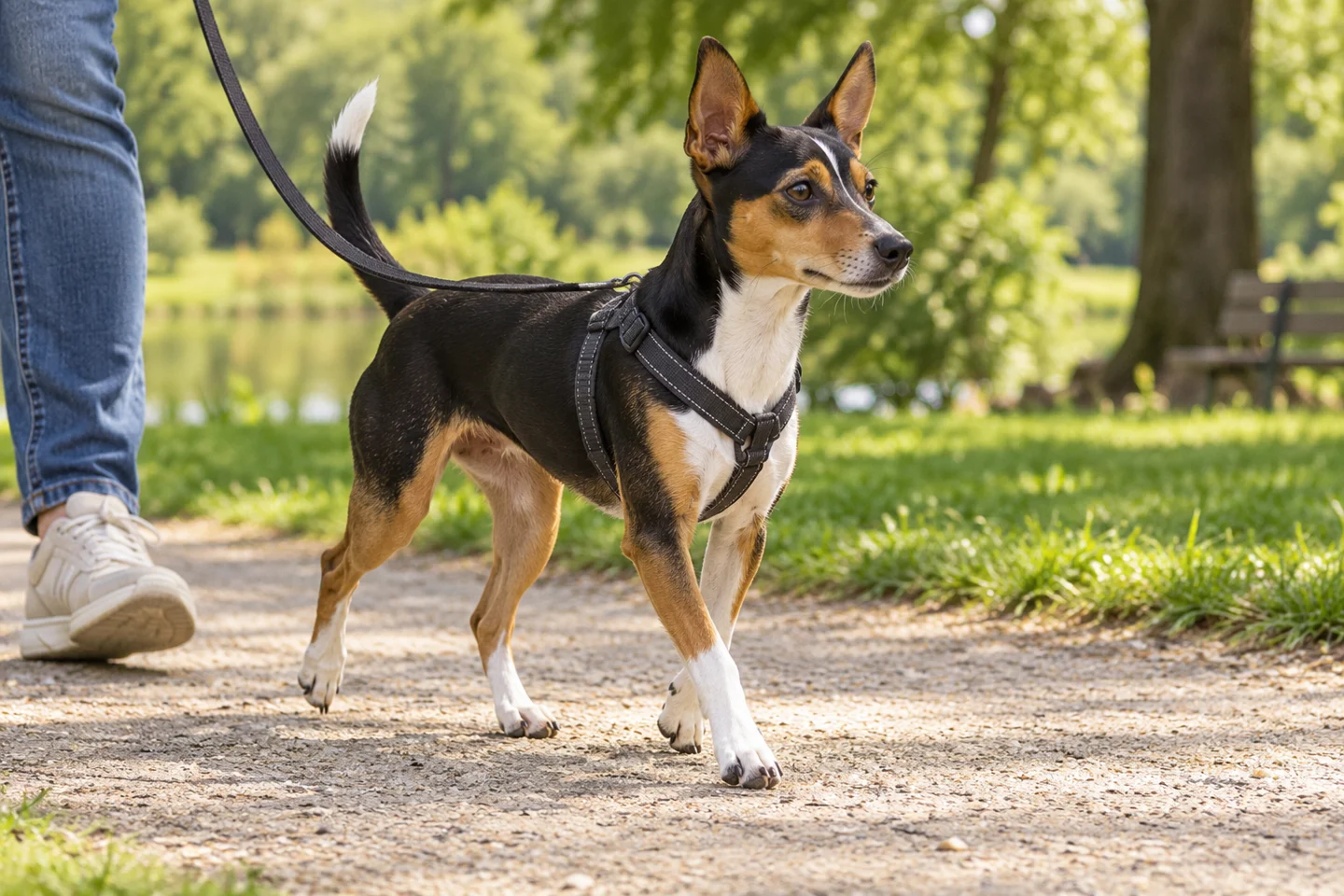
The breed is separate from the Ratonero Bodeguero Andaluz and from the various British terriers that can resemble it. White, black, and tan coloring alone cannot identify the pedigree of a rescue. Describe uncertain background honestly and assess care through the dog's observed needs. The selected illustrations show a tricolour example with naturally upright ears and a complete tail. They are appearance references, not documentary photographs of parents, proof of medical testing, or evidence that a puppy will behave in a particular way.
Valencian working context and the ordinary home
The FCI account places documented development in the Valencian Community during the later nineteenth century, describing vermin work and life around farms and fields. Such history explains why an owner should consider movement, searching, and secure access. It does not justify exposing wildlife to pursuit or promising that every puppy will be an equally effective hunter. A companion can investigate safely through walks and planned searches.
Ask what the breeder's adults do when they are not being presented to visitors. Can they sleep while people move nearby, travel without distress, and cooperate with examination? If an adult comes from a working setting, discuss its experience of household equipment and time alone. The dog may need teaching about those situations without lacking intelligence or suitability in principle. Match the actual transition to the home rather than imagining a rural history provides every urban skill. A thoughtful placement considers daily surroundings, available space, and the owner's ability to manage a quick small dog.
Adult measurements without an unofficial tiny category
The FCI gives male heights of 30–40 cm, with 36 cm ideal, and female heights of 29–38 cm, with 33 cm ideal. The stated weight interval is 4–8 kg for both sexes. These references should be interpreted alongside the dog's frame and condition. They are not instructions to restrict a growing puppy to a preferred minimum or to overfeed a smaller individual toward the top of the range.
Ask the veterinary team to demonstrate checking condition and follow development over time. A slim young terrier's eagerness for food cannot determine the ration by itself. Choose equipment to fit the particular animal and recheck during growth. A small gap near a gate or beneath a car can be significant for a dog of this size. Before arrival, inspect the home from that perspective. Plan secure travel restraint and a comfortable resting place that will still suit the adult. Small size makes some arrangements easier, but it does not remove the responsibility to prevent escape or injury.
Natural ears, a full tail, and the selected coat
The standard describes upright triangular ears and a short coat. It allows several color patterns, including the selected black-and-tan with white markings. A natural full tail is described, and the document acknowledges tailless dogs as well as the historical practice of docking. The illustrations deliberately select a full tail rather than treating surgical shortening as necessary to identify the breed.
A puppy's ears and body proportions develop with maturity. Avoid manipulating them to reproduce a posed adult image, and ask the breeder about normal development in the family. Coat pattern should not dominate selection or become a substitute for medical and behavioral information. A seller who repeatedly answers practical questions with rare-color claims is leaving those questions unanswered. For an adopted dog, resemblance may inform a description while uncertainty remains. Photographs can help identify the individual if it is lost, so retain clear current views without publishing private documents or a visible household address.
Training for a quick dog at an open doorway
Begin an entrance routine with two physical safeguards: the exterior secured and the dog behind an internal barrier. Practice waiting while the door moves slightly, reward, and increase the task gradually. This gives the animal a chance to learn before a real delivery brings movement and excitement. Ask every adult in the household to follow the same procedure rather than relying on whoever happens to be quickest at catching it.
Teach moving toward the handler and returning from a short safe distance. Small rewards can support many repetitions, and permission to inspect a suitable smell can provide another useful outcome. Found objects deserve separate practice through exchange with harmless items. Do not routinely chase the terrier and force its mouth open. If guarding or swallowing objects already occurs, prevent access to hazards and seek qualified help. A dog that can be picked up still benefits from learned cooperation. Training should make everyday situations clearer instead of repeatedly ending them through physical control.
Exercise with attention to boundaries and recovery
Plan walks, manageable searches, and suitable play across the week. An active small terrier needs opportunities beyond a brief trip outside to toilet. At the same time, a puppy should not be required to complete an adult endurance schedule. Introduce duration and terrain gradually, observing sleep, appetite, movement, and recovery. Older dogs can continue enjoying investigation while their routes become shorter or easier.
Inspect an enclosure before allowing freedom. Check latches, gaps, objects that could aid climbing, and access to neighboring animals. A tracker can help locate a lost dog but does not prevent a road injury. Outdoors, carry water and consider hot ground, shade, and weather changes. Spanish origin cannot establish immunity to heat illness. After rough terrain, examine feet and equipment contact areas. A persistent limp or repeated discomfort needs assessment rather than more exercise to improve toughness. The best routine is one the household can maintain during working days and poor weather, not only during an unusually energetic weekend.

Alertness, barking, and a calmer household arrangement
Notice what the dog is responding to before deciding all barking is inevitable. A low window facing a path can produce repeated excitement throughout the day. Change the view or access while rewarding the dog for turning away and settling elsewhere. Rehearsing the reaction continually makes the quieter response harder to practice. Avoid shouting from another room as the main intervention.
Introduce time alone in small comfortable stages and observe what happens. Pacing, vocalizing, and inability to rest provide information that a damaged object alone cannot supply. Persistent distress calls for veterinary and qualified behavior advice. Another dog may create an additional relationship to manage without treating the original difficulty. Arrange cover before a long absence becomes unavoidable, and practice with the person who will provide it. A carer needs the actual entrance routine, walking equipment, feeding instructions, and emergency contact. A friendly breed description does not make those practical preparations optional.
Socialization that does not require constant touching
Give a puppy manageable experiences with people, surfaces, sounds, transport, and other animals. A person can stand quietly at a distance while the puppy observes and receives rewards. Greeting is optional. Prevent people leaning over, lifting, or cornering the animal because it is small and appealing. The ability to retreat helps keep the lesson within a useful level of difficulty.
Practice passing dogs without contact as well as meeting an appropriate partner. If the puppy repeatedly hides, freezes, or cannot recover afterward, lower the demands and obtain help with progression. An adult entering a new home needs the same assessment of what it has actually experienced. A farm-raised terrier may know equipment and animals that a city dog does not, while crowded pavements may be new. Teach the situations this dog will face. Physical presence at a long event is not by itself evidence of successful learning; look for comfortable engagement and the ability to resume ordinary behavior afterward.
Children and the problem of being easy to lift
Young children should not carry the terrier during play. A sudden wriggle, awkward grip, or fall can injure the dog and create fear around handling. Adults can demonstrate necessary supported lifting and keep ordinary interactions at floor level. Let the animal approach voluntarily and stop when it moves away. A child following it into a bed needs adult redirection.
Protect food, chews, sleep, and found objects from interference. Children should call an adult when the dog has something concerning rather than reach into the mouth. Suitable shared activities can include preparing a simple search while the dog waits elsewhere, then watching the adult manage it. Visiting children require supervision even if the dog is comfortable with familiar family members. Plan separation before a party or running game becomes difficult. If close adult attention is unavailable, use a dependable barrier. A safe family arrangement depends on what adults consistently maintain, rather than a promise that a small affectionate breed will tolerate every kind of contact.
Aggression and the need to take small warnings seriously
A growl or snap should be investigated rather than treated as comic terrier behavior. Identify the situation: handling, a resource, an unfamiliar visitor, or an approaching animal may each require a different plan. Create space and prevent another exposure while assessing what happened. Record the sequence and the dog's available escape options instead of testing the reaction again.
New sensitivity to touch or movement warrants veterinary attention. Recurring defensive responses also need qualified reward-based support and practical management while teaching progresses. Avoid scruffing or punishment intended to prove authority; the source of the concern may remain while warnings become less visible. A muzzle, when appropriate, needs comfortable conditioning and a specific purpose. It cannot make forced contact acceptable. After a bite, obtain suitable medical care and review how another person could gain access to the same situation. Neither small teeth nor a history of affectionate behavior removes the need for a reliable prevention arrangement.
Dogs, cats, and a vermin-hunting background
Choose dog meetings with room for each animal to move away. A larger dog repeatedly knocking the terrier over is a reason to interrupt regardless of whether the owners describe the interaction as play. Look for voluntary pauses, changes of role, and comfortable disengagement. A brief initial meeting should not become a test of how much pressure one dog will tolerate.
Cats need protected access to food, litter, and resting places without crossing the terrier's immediate space. Prevent chasing during introductions, and keep the arrangement effective during ordinary chores. Small mammals and birds require secure accommodation and a separate plan whenever it is opened. The hunting background supplies a reason for careful management, while the individual's behavior still needs observation. Peace with one animal cannot establish safety with every new species or sudden movement. If reliable separation would fail during absences, reconsider the home before adopting instead of hoping intelligence or affection toward people will remove the problem.
Grooming the very short coat and checking outdoor contact
Use gentle brushing and inspection to examine skin, feet, nails, and places touched by equipment. A short coat makes some changes visible but does not eliminate parasites, small wounds, or friction. After exploring vegetation, check for debris without digging into skin. Repeated licking, swelling, or a persistent limp deserves advice even if the dog remains eager to walk.
Introduce nail maintenance and tooth brushing through brief cooperative sessions. Let the dog stand on a stable nonslip surface and reward manageable contact. Upright ears still need observation for pain, discharge, and head shaking. Their shape does not exclude ear disease. Avoid deep tools and leftover drops when a new problem appears. If the terrier suddenly resists care around one area, stop and consider discomfort before increasing restraint. Routine grooming should help notice change early, while persistent findings need a clinical explanation rather than an assumption that all skin problems are a breed trait.
Health evidence: what the standard does not establish
The FCI standard supplies identity and physical reference points, not a complete medical screening program. The verified sources used here do not establish a universal Valencian Terrier health-testing panel or reliable breed-wide disease frequencies. That limitation should remain explicit. It cannot prove freedom from inherited disease, and it does not justify copying every test listed for a different small terrier.
Ask which current national breeding rules apply to a proposed litter and request identifiable parental records. Have the veterinary team explain what a particular examination or laboratory result answers. A routine puppy appointment differs from specialist screening; a long commercial DNA list may include variants whose relevance to this population has not been demonstrated. Discuss medical problems in relatives and how later findings are communicated to owners. For a rescue without family records, prioritize the individual's examination, symptom history, current medicines, and continuity of care. An uncertain background is manageable information when stated honestly, rather than hidden behind a general claim of robustness.
Health observations that make a consultation more useful
Keep notes about a change in ordinary activity: when it began, whether it is intermittent, and what happens before and after it. A safe video of an unusual movement can help show a clinician something that does not occur during the appointment. Do not provoke an episode or delay urgent care to obtain footage. The same outward sign can have several causes, so an online comparison cannot establish the diagnosis.
Prepare out-of-hours contact and secure transport before an emergency. Serious breathing difficulty, collapse, major injury, or suspected poisoning requires prompt professional direction. Provide substance or packaging details when known, without delaying help. Human medicines and another animal's prescription are unsafe substitutes for examination. Store dangerous products away from the dog's reach, including in bags left on the floor after travel. A temporary carer needs access to medical information and authority arrangements. Small size can make a dog easier to transport, but it does not make an unexplained deterioration less important.
Feeding, mixes, and the cost of a workable routine
Measure the regular ration and include rewards and food from other household members. Choose a complete diet appropriate to life stage and seek guidance when condition or medical needs change. A dog's enthusiasm for extra food is not proof of insufficient intake. Persistent thirst, appetite, digestive, or weight changes need assessment. Homemade feeding requires proper formulation rather than a collection of ingredients advertised for coat quality.
A Valencian Terrier mix may vary in proportions, coat, voice, and pursuit. Ask which ancestry is documented and avoid promises that a named cross is easier to train or free from inherited risk. Relevant parental information remains useful for a planned litter. Obtain local costs for veterinary care, secure equipment, training, transport, and competent cover during absences. Practice a handover so another person can manage doors and walks. Suitability includes whether the household can maintain safe investigation, patient teaching, and protected rest during an ordinary inconvenient week.
dogsDating: describe the walk rather than promise instant friendship
A useful Valencian Terrier dogsDating profile explains preferred partners, pace, and any need for extra room. Mention known difficulty with large exuberant dogs or wildlife distractions. Keep exact home coordinates private and do not publish the household address. Use an approximate locality to select a public starting landmark where each handler can prepare without an immediate close encounter.
Agree on a route and an uncomplicated way to pause or finish. Start with enough space for both dogs to notice each other and return to ordinary investigation. Close greeting is optional. Repeated blocking, fixation, or attempts to retreat mean the arrangement should change promptly. Avoid shared food or toys that draw unfamiliar animals into a small area. Afterwards, compare specific observations rather than simply calling the encounter a success or failure. Either person can decline another outing, and walking comfortably at a distance can remain a worthwhile relationship without progressing to play.
Sources and editorial notes
Sources checked October 22, 2026. Breed measurements describe reference ranges, not a diagnosis or an individual dog's ideal weight. Images are AI-generated breed illustrations and do not document a particular dog or health condition.
- AVSAB: Humane Dog Training Position Statement
- VCA Animal Hospitals: Food aggression in puppies
- VCA Animal Hospitals: Common emergencies in dogs
- Orthopedic Foundation for Animals: CHIC health screening programs
- VCA Animal Hospitals: Aggression toward unfamiliar dogs, diagnosis
- VCA Animal Hospitals: Grooming and coat care for your dog
- VCA Animal Hospitals: Ear infections in dogs (otitis externa)
- AAHA: Feeding plans for healthy, appropriate weight cats and dogs
- VCA Animal Hospitals: Heat stroke in dogs
- AVSAB: Puppy Socialization Position Statement
- VCA Animal Hospitals: Dog behavior problems, aggression toward children
- FCI Valencian Terrier standard 370: identity, natural tail, size and coat
- FCI Valencian Terrier nomenclature: provisional recognition status
Keep getting to know dogs.
Read another guide or return to your dogsDating community.
Explore breed guidesBack to dogsDating