Vizsla
The short-haired Hungarian pointer, with full-tail illustrations, practical household learning and distinct guidance on screening and inflammatory polymyopathy.
How these guides are researched and reviewed
- Origin
- Hungary
- Adult male height
- 58–64 cm
- Adult female height
- 54–60 cm
- Coat
- Short russet gold; separate from Wirehaired Vizsla
General information for owners. These articles have not been reviewed by a veterinarian. Medical decisions need your dog's history and an examination.
The short-haired Vizsla and the separate wirehaired breed
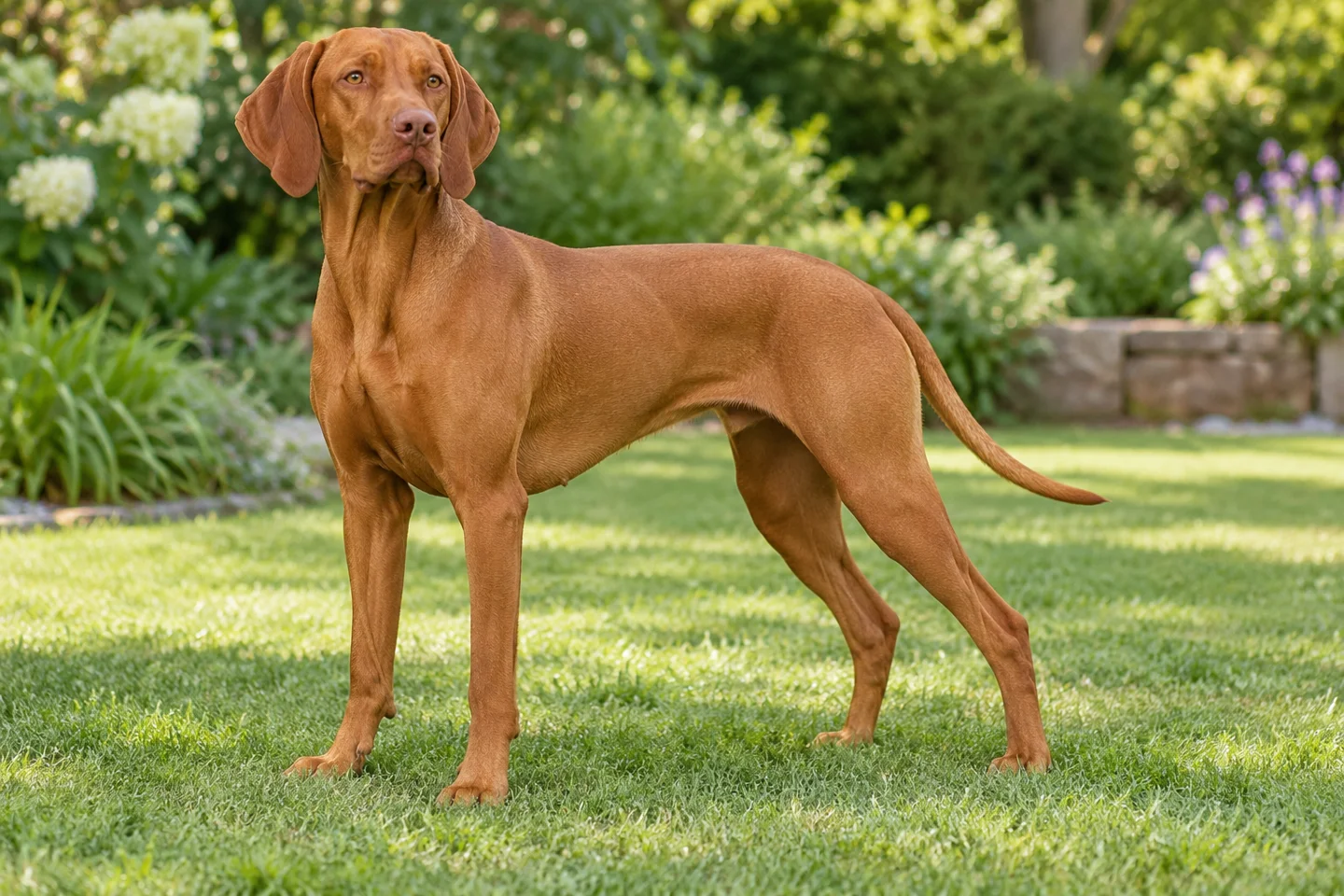
The Vizsla in this guide is the short-haired Hungarian pointer, called Rövidszőrű Magyar Vizsla in the FCI standard. The Wirehaired Vizsla has a separate standard and article. A russet-gold coat alone does not make those two names interchangeable. Ask the breeder which identity appears on the registration and which coat the litter is expected to develop.
The illustrations select a short, close russet-gold coat without a beard, natural hanging ears, and a full undocked tail. They represent appearance rather than real parentage or medical evidence. Meet the actual dogs and look beyond the coat's color. How do they move after rest, accept equipment, and settle while a visitor talks? Those observations are useful when assessing household life. A puppy still has to learn the routines expected of an adult, even when its relatives work successfully with people. An adult rescue likewise needs its own assessment rather than a list of promises attached to the breed name.
Hungarian pointing-dog history and suitable modern outlets
The FCI account places the breed in Hungary and describes development as a versatile gundog. That history gives context for close work with a handler, investigation, and interest in birds and other movement. It does not require companion owners to hunt or allow access to wildlife. Safe searches, suitable controlled activity, and ordinary walks can provide meaningful engagement without recreating every historical task.
Ask what the parents do between working or sporting events. A household needs an animal able to learn rest and necessary care, not simply one that enjoys continuous activity. Discuss your weekly schedule and the conditions in which the puppy will grow up. A source who can describe handling, recovery, and daily routines supplies more useful information than one offering only a working title. In adoption, find out which skills are established and which must be taught. Familiarity with fields and vehicles may coexist with little experience of a crowded entrance or time apart from the usual person.
Adult heights and a condition assessment that suits the frame
The FCI height range is 58–64 cm for males and 54–60 cm for females. That standard emphasizes balance rather than increasing height for its own sake, and does not establish a fixed adult weight interval. Do not borrow a number from a larger pointer and feed toward it. Have the veterinary team demonstrate assessment of ribs, waist, muscle, and growth in the individual dog.
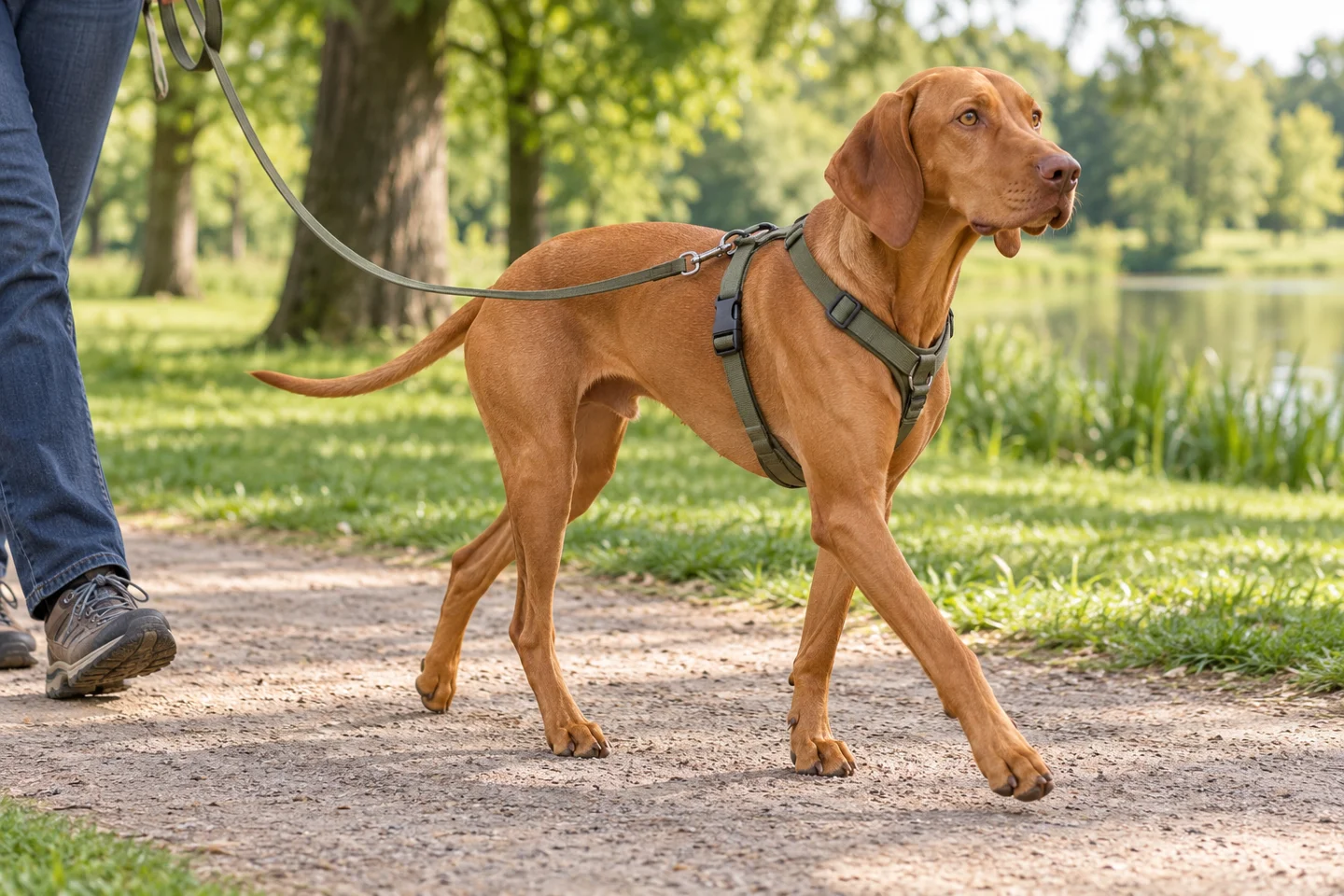
Plan equipment and space for adulthood. The animal needs suitable travel restraint and enough room to change position comfortably. Teach loading before a journey is urgent, with stable footing and manageable steps. A ramp or other support may become useful after injury or with age, so introducing one while the dog is well can simplify later care. Recheck harness fit during growth. A backward movement should not free the dog, while normal walking should remain comfortable. Changes in willingness to turn, rise, or enter the car deserve attention even when the animal still wants to explore outside.
Russet gold, short hair, and normal puppy development
The standard describes a short coat in russet-gold and related sandy-gold shades, with nose and other pigmentation harmonizing with it. The selected illustration avoids a black nose, a long coat, or an invented shaggy beard. A puppy's proportions and softness change with maturity. One early image cannot supply an exact forecast of adult appearance or function.
Color should not outweigh evidence about the animal's care and family. Ask for identifiable records and inspect movement and handling in ordinary conditions. A photograph cannot show every skin change, hear an abnormal recovery pattern, or establish how the dog feels about a stranger touching its feet. For a rescue, appearance may suggest possible ancestry without resolving it. Describe that uncertainty and make decisions from observed needs. Keep current identification photographs and check microchip contact details after ownership transfer. When sharing pictures publicly, remove visible addresses and documents that locate the household unnecessarily.
Training with useful consequences for cooperation
Start by teaching attention and comfortable movement together where distractions are manageable. Reward promptly, and sometimes use access to a safe smell as the outcome. That makes cooperation part of the outing rather than a repeated interruption of everything the dog finds interesting. A return cue can lead back to exploration sometimes, so it does not predict the end of every enjoyable moment.
Practice a pause at doors with physical safety already arranged. Teach exchanging harmless objects before a dangerous item appears. Avoid collar jerks, scruffing, and routine forced removal from the mouth. If the dog is already guarding or swallowing objects, change access and obtain qualified guidance. Difficulty with a task calls for a review of distraction, fatigue, understanding, and discomfort. A dog described as responsive still needs clear teaching at the actual level required. Choose an instructor who can explain how success is arranged and how demands are reduced when the animal struggles.
Exercise without making perpetual excitement the goal
The household needs a repeatable week of activity, investigation, and recovery. Walks, controlled searches, and suitable play can be combined without constantly increasing speed or distance. Restlessness is not automatically proof of insufficient exercise. Consider environmental excitement, discomfort, and difficulty settling when the dog remains alert long after activity has ended.
Adapt movement to age and fitness. Puppies need developmental care and rest rather than an adult running target, while older dogs may need gentler routes. Build demanding terrain gradually and check recovery later. Carry water and consider temperature, ground conditions, and how to leave early if necessary. A dog eager to continue can still need the handler to stop. Check feet and areas beneath equipment after rough activity. Persistent soreness or a changed stride deserves clinical advice. Where running is appropriate, inspect the enclosure for this dog rather than assuming a park or hired field has no gaps, hazards, or incompatible users.
Attachment, rest, and a workable absence plan
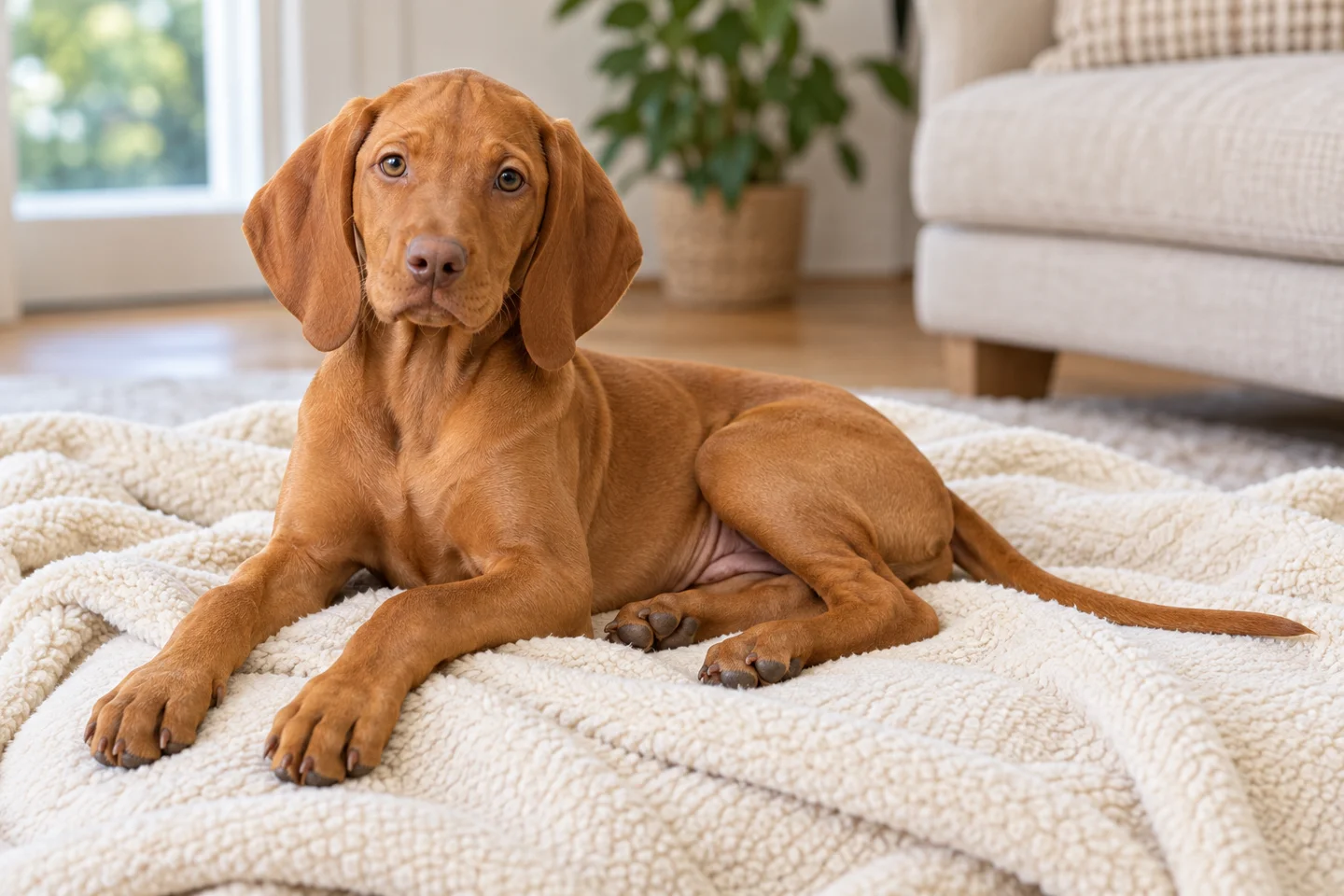
A dog that enjoys being near people still needs to learn comfortable periods without constant access to one person. Begin with a protected resting area outside the busiest household route. Practice brief calm time while someone performs an ordinary task nearby, then make changes gradually. Position matters: a bed beside every arrival and departure can keep the animal continually engaged.
Observe short absences rather than judging only by damage afterward. Note pacing, vocalizing, eating, and recovery. Persistent distress warrants veterinary and qualified behavioral support, with a plan adjusted to the individual. Adding another dog is a separate compatibility decision and may not solve the problem. Arrange a trusted carer and rehearse walks, feeding, and equipment before an unavoidable absence. The actual weekly schedule belongs in the placement discussion. A reputation for closeness to people cannot replace practical cover when work, illness, or travel changes the usual routine.
Socialization that includes handling and observation
A puppy can watch unfamiliar people and movement from a comfortable distance while receiving rewards. It does not need to greet everyone or accept every hand. Ask visitors to wait for voluntary interest and preserve an easy route away. Increase difficulty through achievable steps instead of taking the animal directly into the busiest available gathering.
Handling is its own learning task. Brief paw contact, ear inspection, equipment fastening, and standing on a nonslip surface should be introduced before a painful injury makes care urgent. Adult rescues need a similar review of what is familiar. Experience in one home does not establish confidence with lifts, children, or traffic elsewhere. If the dog repeatedly freezes, retreats, or remains unsettled after an outing, simplify the next session and obtain help with progression. Quiet recovery and normal sleep are useful observations. Merely remaining physically present through an event does not establish that the dog learned to cope comfortably.
Children and a dog moving through a busy room
Plan where the dog will be during running games and hurried arrivals. A medium-sized young dog can knock over a child without threatening intent, and a child should not have to manage that momentum alone. Adults handle leads near roads and exterior doors. Separate before excitement becomes hard to interrupt rather than waiting for somebody to fall.
During calmer contact, let the dog approach and help children pause after brief touch. Protect sleep, meals, chews, and a place to leave the interaction. Prevent climbing, neck hugging, and following into the bed. Objects in the mouth are an adult responsibility, addressed through a safe exchange arrangement. Visiting children may behave differently from household members and need their own supervision. If adult attention must shift elsewhere, use reliable separation. A general reputation for affection cannot establish tolerance for every kind of handling or every group of visitors. The household's practical boundaries are part of deciding whether this individual is suitable.
Aggression and the significance of the immediate trigger
A warning during grooming, a reaction to another dog near food, and a snap after painful touch require different questions. First prevent another exposure to the situation, then record what preceded the response. Include who approached, the contact or resource involved, and whether the dog could leave. Do not recreate the incident to prove that the warning was serious.
A veterinarian should consider illness or discomfort where relevant, especially after a sudden change. Recurring defensive behavior needs qualified reward-based support and dependable management while teaching progresses. Punishment may make a growl less visible without resolving the cause. When a basket muzzle is recommended, condition it gradually and use it within the specific plan. It cannot turn forced social contact into an appropriate exercise. After a bite, seek suitable medical care and review the access failure before another person or animal encounters the same circumstances. Breed descriptions cannot certify the next interaction; the prevention plan must fit the actual dog.
Grooming a short coat and maintaining cooperative care
Gentle brushing should include inspection of skin, feet, nails, and areas under equipment. A short coat reduces hair management without removing the need to look for rubbing, debris, parasites, or wounds. After outdoor activity, check between toes carefully without digging into tissue. Persistent licking, swelling, or discomfort deserves advice rather than a guess based on an online photograph.
Observe the hanging ears for discharge, odor, pain, and repeated shaking. Cleaning and medication should follow veterinary guidance for the individual problem. Deep tools and leftover drops are poor substitutes for examination. Introduce tooth brushing and nail care in brief rewarded stages on a stable surface. If handling becomes newly difficult in one area, pause and investigate a physical explanation before increasing restraint. A cooperative routine helps necessary care remain manageable and provides opportunities to notice change, while the clinician determines the cause of persistent findings.
Health: hips, eyes, and thyroid have different evidence
The current AKC national-club recommendations for the Vizsla include hip, ophthalmologist, and thyroid evaluations. Ask for the actual parental reports and discuss the findings with a veterinarian. An unspecified claim of health testing does not identify which assessment occurred, and a routine puppy check differs from those parental evaluations.
Ask a breeder how later diagnoses in relatives are recorded and whether owners are informed. A favorable screen cannot exclude every condition that could appear after breeding or explain every new symptom in your dog. Family information, screening, and clinical investigation each supply different evidence. For an adult rescue, obtain the available treatment history, current medication, and an account of changes in movement or behavior. Preserve those records when changing practices. The practical goal is informed care for the individual rather than treating a certificate as a lifetime guarantee or a commercial panel's length as proof that all relevant questions have been answered.
Inflammatory polymyopathy and difficulty swallowing
Vizsla Health's veterinary information describes Vizsla idiopathic inflammatory polymyopathy, often abbreviated VIP. Signs can include difficulty swallowing, regurgitation, excessive salivation, and loss of muscle, particularly around the head. Those signs require veterinary investigation. They should not be dismissed as fussy eating or diagnosed by an owner solely because the dog belongs to this breed.
Describe what happens around meals and water: whether the dog struggles to take food, swallows repeatedly, or brings material back afterward. A safe recording may help the clinician, but do not delay care or provoke a distressing episode. The veterinary discussion emphasizes differential diagnoses and the need to distinguish other muscle or neuromuscular diseases. Owners should not select immunosuppressive treatment or a feeding technique from another dog's account. Ask the clinician about immediate safety, nutrition, and further investigation. The breed-specific possibility provides useful context, while diagnosis and management remain tasks for the veterinary team assessing the actual animal.
Immune-mediated illness and avoiding a single-cause story
The Hungarian Vizsla Club monitors immune-mediated conditions and links breed-health reporting. The presence of a disease category in that discussion does not supply a reliable probability for every puppy. Nor does a list of affected dogs identify one universal trigger or justify stopping routine care without veterinary advice. Keep claims tied to the evidence and the particular diagnosis.
If your dog develops persistent skin, joint, or other unexplained signs, give the clinician a clear history of onset, medicines, diet, and previous treatment. Avoid changing several things at once through online advice, since that can make a response harder to interpret. Ask how a confirmed diagnosis may inform family communication and choose whether to contribute to the relevant health-reporting process. Respect privacy when discussing relatives. A breeder's openness about verified findings can be useful without turning every anecdote into inherited certainty. Follow the individual care plan and review it when symptoms or medication change rather than assembling permanent restrictions from unrelated cases.
Food, mixes, and ownership costs over the whole week
Measure the ration and account for training food, then review it against condition and actual activity. Choose a complete diet suited to life stage and discuss medical feeding changes with the veterinary team. Persistent digestive trouble, altered thirst, or unexplained weight change requires assessment. Homemade alternatives need proper formulation, and supplements should have an identified purpose rather than a claim that every active dog needs them.
A Vizsla mix can vary in size, coat, pursuit, and ability to settle. Ask which backgrounds are documented and avoid promises that a named cross is automatically easier or free of inherited risk. Relevant parental assessment still matters in a planned litter. Obtain local costs for veterinary care, suitable equipment, training, transport, and trusted cover. Include time for teaching and daily investigation as well as exercise. Another person should practice the door and walking routines before illness or travel leaves them responsible. Suitability depends on a sustainable ordinary schedule, not simply enthusiasm for a striking golden dog.
dogsDating and a walk that can remain parallel
Describe the Vizsla's actual meeting experience on dogsDating, including preferred pace and situations where more distance helps. Keep exact home coordinates private and do not disclose the household address publicly. Use an approximate locality to agree on a public start where both handlers can prepare separately. Avoid a first encounter at a narrow entrance or directly beside open car doors.
Agree on an initial gap and a way to request more space. Let the dogs notice each other while continuing controlled movement. A greeting is optional, and a calm walk apart can supply useful information. Repeated fixation, blocking, or attempts to leave should change the plan promptly. Keep shared resources out of the initial encounter and avoid releasing the dogs simply to discover what happens. Afterwards, compare specific observations and decide whether another outing would help both animals. Either person may decline, without pressure to show that affectionate gundogs should automatically enjoy close play with every new partner.
Sources and editorial notes
Sources checked October 22, 2026. Breed measurements describe reference ranges, not a diagnosis or an individual dog's ideal weight. Images are AI-generated breed illustrations and do not document a particular dog or health condition.
- AVSAB: Humane Dog Training Position Statement
- VCA Animal Hospitals: Food aggression in puppies
- VCA Animal Hospitals: Common emergencies in dogs
- Orthopedic Foundation for Animals: CHIC health screening programs
- VCA Animal Hospitals: Aggression toward unfamiliar dogs, diagnosis
- VCA Animal Hospitals: Grooming and coat care for your dog
- VCA Animal Hospitals: Ear infections in dogs (otitis externa)
- AAHA: Feeding plans for healthy, appropriate weight cats and dogs
- VCA Animal Hospitals: Heat stroke in dogs
- AVSAB: Puppy Socialization Position Statement
- VCA Animal Hospitals: Dog behavior problems, aggression toward children
- FCI Hungarian Short-Haired Pointer standard 57: identity, coat and adult heights
- American Kennel Club: current Vizsla national-club health-testing recommendations
- Vizsla Health veterinary information: inflammatory polymyopathy signs and diagnostic distinctions
- Hungarian Vizsla Club: monitored immune-mediated illnesses and breed-health reporting
Keep getting to know dogs.
Read another guide or return to your dogsDating community.
Explore breed guidesBack to dogsDating