Welsh Springer Spaniel
A distinct red-and-white Welsh spaniel, with moderate feathering, practical household guidance and differentiated screening, glaucoma and seizure questions.
How these guides are researched and reviewed
- Origin
- Great Britain; Wales
- Male height reference
- Approximately 48 cm
- Female height reference
- Approximately 46 cm
- Coat
- Straight red and white with moderate feathering
General information for owners. These articles have not been reviewed by a veterinarian. Medical decisions need your dog's history and an examination.
A red-and-white Welsh spaniel with its own identity
The Welsh Springer Spaniel is a distinct breed, rather than a red-and-white variety of the English Springer Spaniel. It also differs from the larger red-and-white Irish setter. Check the full name on registration and medical documents before comparing size or inherited-health information. A similar color combination does not make another breed's screening program automatically relevant.
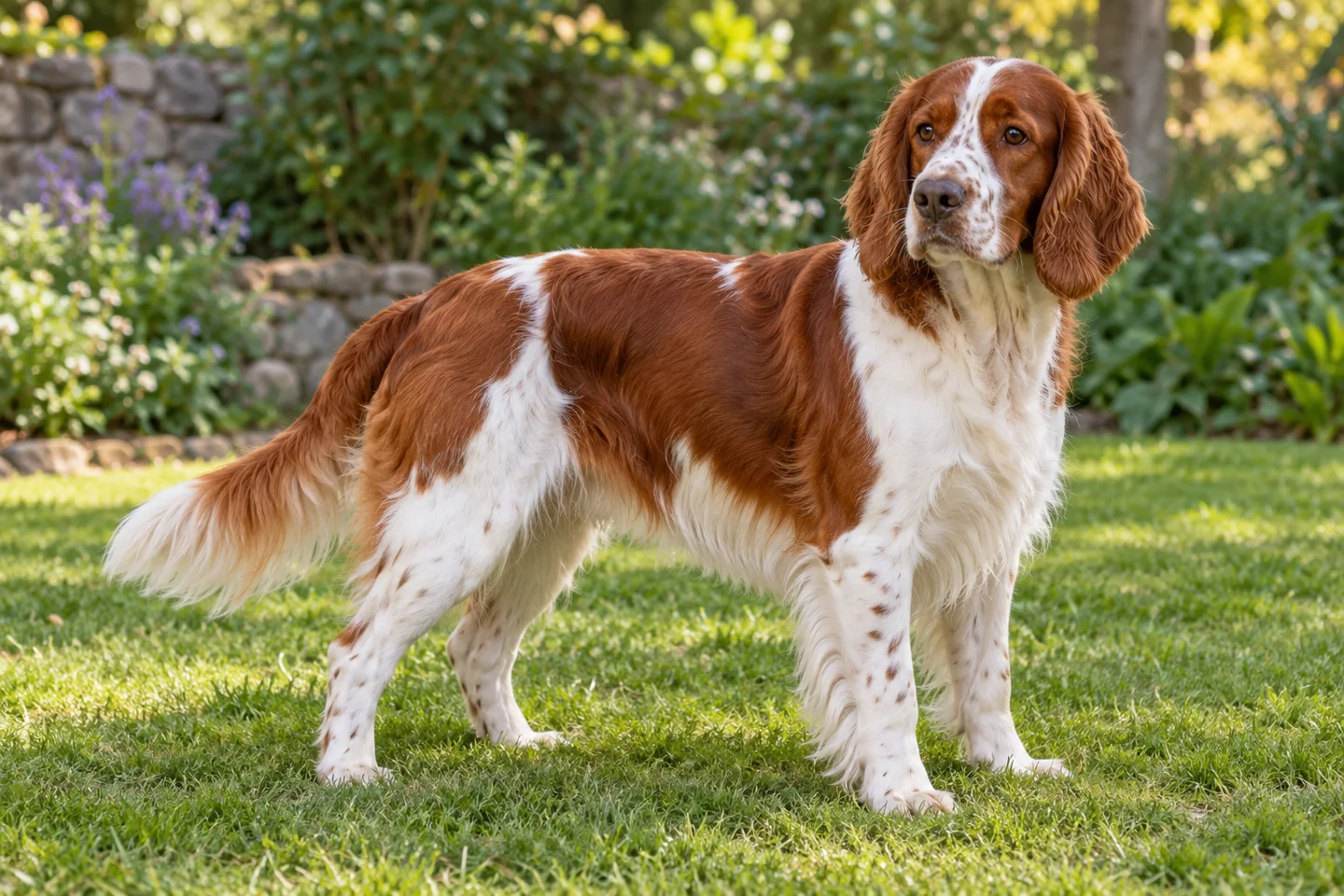
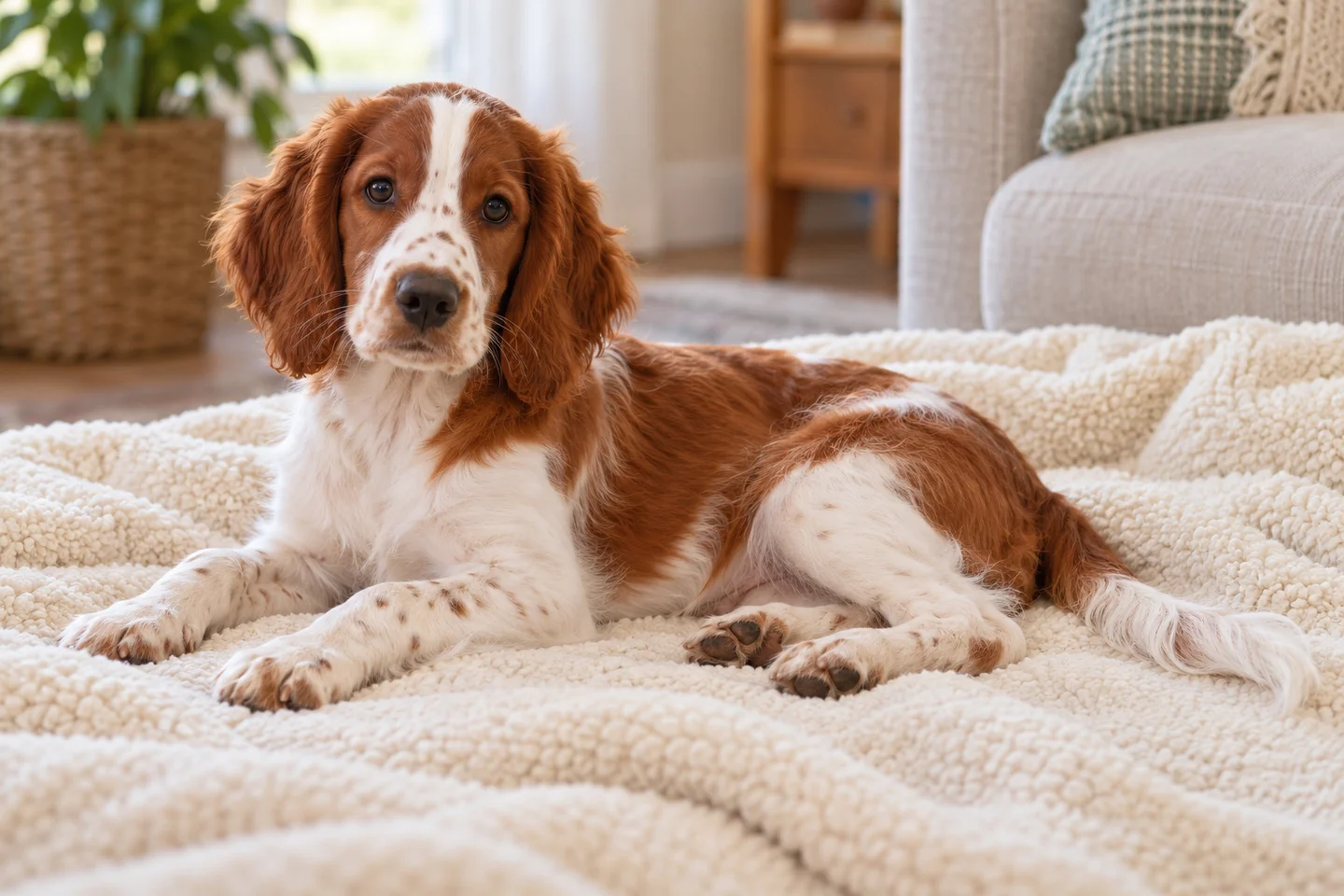
The illustrations select a straight red-and-white coat, natural hanging ears, and a full lightly feathered tail. Puppy feathering is less developed than adult feathering. These images explain the chosen appearance without documenting real parentage or showing a medical condition. A prospective owner should meet the actual animal and discuss ordinary life. How does it settle, travel, accept care, and respond when another dog passes? Those answers are useful beyond a general description of an active spaniel. A family still needs to teach the routines expected in its own home, whatever the puppy's pedigree.
Welsh gundog context and present-day companionship
The standard identifies a British gundog and describes an active, sturdy spaniel. Working context helps explain why a household should provide investigation and purposeful activity, while it cannot predict every individual's preferences. Companion owners can use safe searches and controlled tasks without giving access to quarry. Participation in sport should follow suitable instruction and the animal's condition, rather than an expectation to perform a historical job.
Ask a breeder what happens on days without training or an event. A sustainable home needs rest, necessary handling, and a workable absence routine as well as enjoyable outings. Discuss your actual surroundings and schedule, including children, other animals, and travel. An adult from another setting may have useful experience while needing new domestic lessons. Describe those needs without treating them as a character failure. Recent history, current health, and observed responses provide a better placement discussion than assuming every Welsh Springer will adjust in exactly the same way.
Adult height and equipment for a working-sized spaniel
The FCI gives approximate height references of 48 cm for males and 46 cm for females. It does not prescribe a kilogram target in that standard. Evaluate condition with the veterinary team through the individual's frame and muscle rather than comparing a pet with a posed show image. Growth should be monitored without trying to make every puppy reach an imagined maximum as quickly as possible.
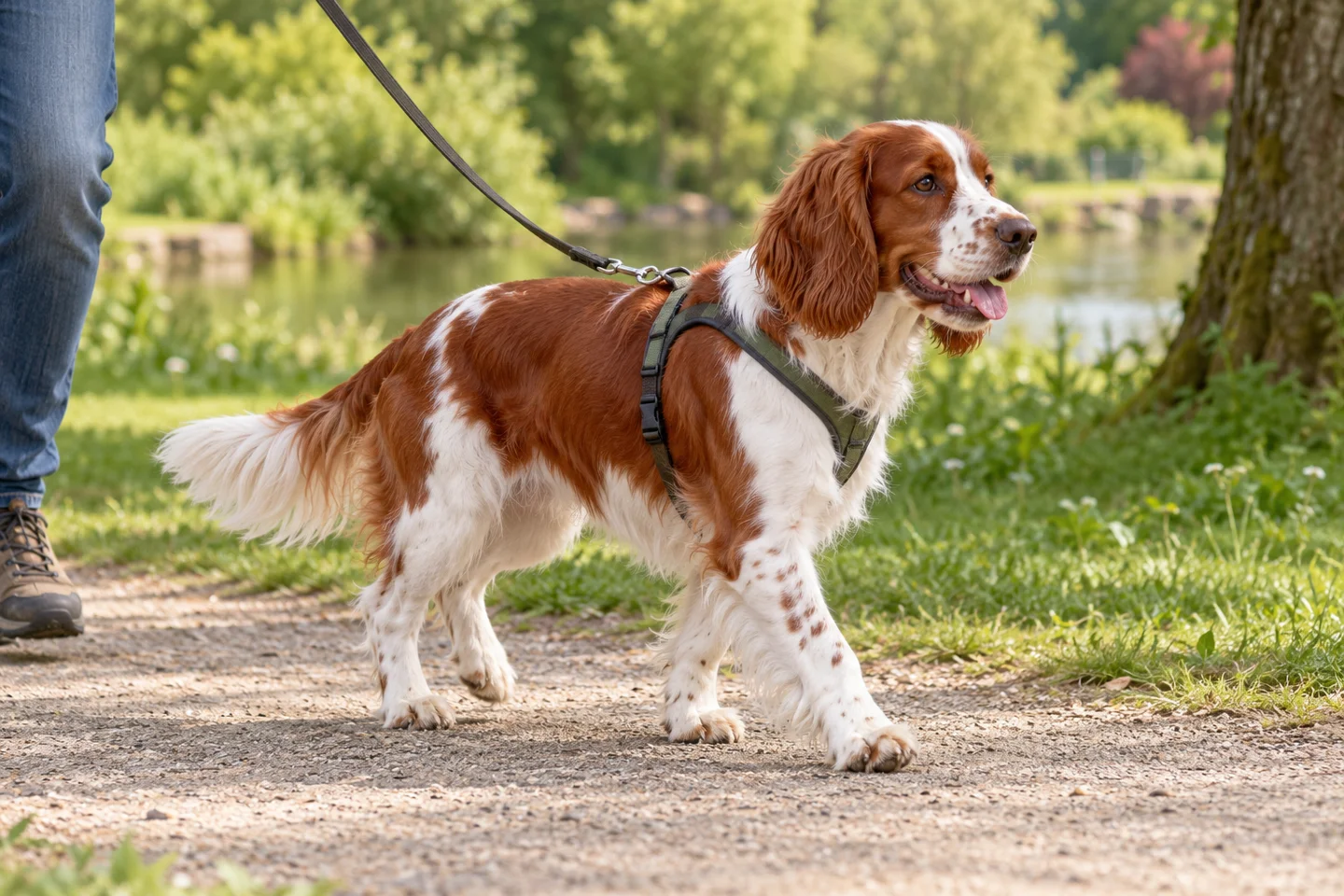
Measure travel and resting arrangements for the adult. The dog needs room to turn and lie comfortably, suitable restraint, and a safe way to enter and leave. Teach car access while it is well, with stable footing and the outside secured. Recheck equipment during growth and after substantial coat changes. A harness should not rub beneath feathering or allow escape during a backward movement. If the animal later becomes reluctant to rise, turn, or load, record the change and seek advice. An eager spaniel can still have discomfort that becomes more obvious after the outing than during it.
Red and white, moderate feathering, and a natural tail
The standard calls for red and white coloring and a straight or flat silky coat. Feathering is moderate on the limbs and lighter on the ears and tail. The selected illustration avoids a curly water-dog coat or very long ornamental ears. A full natural tail is shown rather than assuming shortening is necessary to identify the breed.
Ask about the care required in the particular family and the puppy's expected development. An early picture cannot guarantee an exact adult coat. Appearance also cannot show how much debris collects after a walk or whether grooming has become uncomfortable. Meet the animal in an ordinary context and ask to see gentle care. A seller should answer medical and behavioral questions separately from claims about markings. For a rescue, a red-and-white coat can suggest a possible background without establishing a pedigree. Use actual records and observations to guide care, and describe uncertainty rather than presenting resemblance as certainty.
Training a spaniel through a tempting verge
Teach short periods of comfortable walking in a place where the dog can respond. Reward attention and sometimes allow access to a safe smell afterward. Cooperation then becomes part of investigation instead of always removing it. Build the distance and distraction gradually. If the dog cannot turn back near birds or strong scent, move farther away and simplify the exercise before it becomes a pulling contest.
Practice returning in a suitable secured setting and keep any long line clear of people and obstacles. A reliable response indoors does not establish reliability beside moving animals. Teach an exchange for harmless objects, along with a pause at an external door. Avoid repeated chasing or forced mouth opening as everyday methods. Secure hazards so the animal can succeed while learning. A qualified reward-based instructor can help with the practical setup and handling. The aim is a skill available in the real situation, with safeguards, rather than a promise that a spaniel's willingness to work should override every distraction.
Exercise through weather, terrain, and recovery
Provide activity across the week with time for investigation and rest. Adapt walks and tasks to growth, fitness, illness, and age. A puppy needs manageable experiences rather than an adult endurance target. Older dogs may continue enjoying short searches after longer terrain becomes uncomfortable. Observe recovery and ordinary movement as carefully as excitement at the start.
For a new route, consider water, shade, ground temperature, livestock, and the possibility of leaving early. A circular walk with no exit is harder to manage if a dog becomes lame halfway through. Carry drinking water and adjust to conditions instead of assuming outdoor ancestry supplies protection. Check pads and coat contact areas afterward. Repeated stiffness or reluctance the next morning calls for advice and a revised plan. Inspect any enclosed exercise field before release, including gates and gaps. Safe movement depends on the condition of that place for this dog, not the reassuring wording of an advertisement.
Rest, absences, and a realistic working-day schedule
Place the bed where the dog can rest without being repeatedly crossed or summoned by every arrival. Practice calm time while the household performs ordinary tasks nearby. A window onto constant activity may keep the animal alert; changing access can support training a quieter response. Rest should not require a daily attempt to exhaust the dog first.
Introduce time apart gradually and check the response. Persistent pacing, vocalizing, or inability to recover warrants veterinary and qualified behavior support. Damage alone cannot determine the cause, and another dog may add new needs without treating the original concern. Arrange a trusted carer and rehearse walks and feeding before an unavoidable absence. Discuss the actual weekly schedule before placement, including what happens when the main person works late or becomes ill. A companion with a reputation for enjoying people still needs a practical routine that supports comfort when one familiar individual is unavailable.
Socialization that includes quiet observation
Let a puppy see new people, dogs, sounds, and surfaces at a manageable distance. Reward comfortable engagement and preserve a route away. A useful experience need not include touch. Ask visitors to wait rather than lean over or lift the animal for a greeting. If the puppy repeatedly hides, freezes, or stops responding to a simple familiar cue, reduce the demands.
Practice handling separately, including a brief paw check, an ear look, equipment fitting, and a comfortable examination surface. These lessons should begin before an injury makes care urgent. Adult rescues need the same respect for their actual experience. Rural confidence does not establish familiarity with busy pavements, and city experience does not necessarily include livestock. Continue learning through adolescence and after changes in the home. Notice how readily ordinary sleep and activity return afterward. Exposure that leaves the dog vigilant for hours needs a different progression, rather than simply more time in the same overwhelming setting.
Children and the spaniel’s protected rest
Plan contact around both the child's activity and the dog's state. A sleeping spaniel beneath a table should not be reached through or climbed over. Give it a protected bed outside running routes, and stop children following when it leaves. Ear feathering is not a handle, and hugging around the neck can restrict the animal's ability to move away.
Adults manage meals, chews, and exchanges for found objects. A child should call for help rather than pull something from the mouth. Suitable participation can involve preparing a search while the dog waits elsewhere or rewarding a familiar cue under adult control. Visiting children need their own supervision even if household relationships are comfortable. Before a noisy game or party, arrange separation rather than waiting for a warning. If adult attention must shift to cooking or another child, use a reliable barrier. A general reputation for affection cannot certify comfort with every kind of contact or every group of visitors.
Aggression and the importance of the immediate circumstances
Record what happened before a growl, snap, or bite. A response to painful ear handling needs different questions from a response to another dog approaching food. Include location, distance, touch, resources, and the ability to retreat. First create safety and prevent another exposure. Repeating the trigger to see whether the dog means it risks another injury.
Veterinary assessment is particularly important when behavior changes abruptly or contact becomes newly difficult. Qualified reward-based help can support a plan for recurring threats, alongside dependable barriers while learning progresses. Avoid punishment for warning; the underlying problem can remain after the signal becomes quieter. If a basket muzzle is advised, teach it comfortably and use it for the agreed purpose. It does not make forced contact appropriate. After a bite, obtain suitable care for the person and review the practical access failure. Breed descriptions cannot predict the next encounter, so prevention must fit the actual animal and situation.
Dogs, cats, and what a peaceful first look cannot prove
Introduce prospective dog companions with separate handlers and space to turn away. Watch for voluntary pauses and comfortable disengagement. Repeated pursuit of an animal trying to leave is a reason to interrupt, regardless of whether the other dog looks playful. Agreement during a short walk does not establish immediate comfort sharing every resource at home.
Prepare separate feeding and resting arrangements before adding an animal. Cats need protected routes to food, litter, and quiet places without passing close to the spaniel. Prevent chase rehearsals as introductions progress. A still cat behind a barrier presents a different situation from a running animal outdoors. Small pets require secure accommodation and a plan for cleaning or transfers. Ask what the individual has done previously, then assess the new environment too. If necessary separation would fail during ordinary chores or absences, discuss suitability before adoption rather than expecting intelligence or friendliness toward people to eliminate all interest in pursuit.
Grooming feathering after grass, mud, and water
Inspect longer hair after outdoor activity, particularly behind ears, around limbs, and under equipment. Remove small debris gently before it tightens into a knot. Do not cut into a mat when the skin beneath cannot be identified safely; a suitable professional can help. A practical grooming arrangement should preserve movement and make skin accessible rather than prioritize an ornamental outline.
Dry the dog appropriately after wet activity and notice persistent redness, odor, or licking. Maintain nails and introduce tooth brushing through brief cooperative work. Hanging ears need observation for discharge, pain, and repeated shaking. Cleaning and treatment depend on the cause, so deep tools and leftover drops are unreliable shortcuts. If one area becomes newly difficult to touch, stop and consider discomfort. A stable nonslip surface and achievable session length can make care easier. Grooming offers useful opportunities to notice changes, while persistent findings need clinical assessment rather than a diagnosis based only on breed.
Health: distinguish the recommended assessments
The current AKC national-club recommendations include hip, elbow, ophthalmologist, and thyroid evaluations for the Welsh Springer Spaniel. Ask for identifiable reports and discuss the findings in relation to the actual parents. A phrase such as fully tested does not establish which examinations occurred or what the results mean. A routine puppy appointment is a different assessment.
Family history remains relevant, including diagnoses appearing later in life. Ask how a breeder records new information and communicates with owners. For an adult rescue, obtain current medicines, symptom history, and previous clinical findings even where pedigrees are absent. Do not borrow an English Springer DNA panel simply because the names are similar. Completed screening cannot exclude every cause of illness in the individual dog. If a new symptom appears, its own investigation is needed. Keep parental background available as context without allowing it to override the clinician's examination of a present problem.
Glaucoma screening and a painful eye are different situations
The Welsh Springer Spaniel Club discusses primary glaucoma and gonioscopy in its health work. Gonioscopy examines the drainage-angle anatomy; it should not be treated as the same test as a general eye examination or as proof that the dog can never develop disease. Ask which assessment was performed, when, and how the report was interpreted for breeding.
A new painful, red, cloudy, or unusually closed eye needs prompt veterinary advice. Do not wait for a scheduled screening event or choose drops from a previous dog. Record the onset and whether vision or behavior seems altered, without handling the eye forcefully. The veterinarian can assess pressure and other possible causes and decide on referral. The club's current page links a 2026 glaucoma-survey update, but survey findings should not become a universal prediction for every puppy. Screening information helps with a defined risk question while a clinical eye problem requires direct assessment of the individual now.
Seizure reports and the limits of inherited certainty
The club's Joint Health Group has investigated epilepsy and provides condition information. A reported family history is useful, but an absence of reported seizures cannot guarantee that a puppy will never have one. An episode also does not establish inherited epilepsy solely because the breed has a health project. Several causes require veterinary consideration.
If an episode occurs, keep people and other animals away, reduce nearby hazards where safe, and keep hands out of the mouth. Time the event and seek veterinary instructions; a video is useful only if it can be obtained without delaying help. Tell the team about recovery, medicines, possible exposures, and repeated episodes. After assessment, ask for an individual emergency plan and give carers the relevant instructions. Do not alter a prescription or borrow another dog's medication through breed-group advice. Accurate observation, appropriate investigation, and a clear follow-up arrangement are more useful than trying to assign a hereditary explanation before a clinician has assessed the animal.
Feeding, mixes, and daily ownership costs
Measure intake, including food delivered during training, and review it against body condition and activity. Choose complete food suited to life stage, with veterinary advice for medical changes. Persistent thirst, appetite, weight, or digestive changes deserve assessment. A working background does not justify unplanned supplements, and homemade feeding requires proper formulation. Secure medicines, rubbish, and dangerous products beyond reach.
A Welsh Springer mix may vary in size, feathering, voice, and pursuit. Ask which backgrounds are documented and avoid treating a crossbreed label as a guarantee of easier ownership or freedom from inherited disease. Relevant parental information still matters for a planned litter. Obtain local costs for veterinary care, grooming help, training, secure equipment, transport, and trusted cover. Include the time needed to inspect coat and ears after activity. A backup carer should practice the door and walking routine before an absence. Suitability depends on an ordinary sustainable week as well as enjoyable outings.
dogsDating and a route that permits an easy change
Describe the Welsh Springer's current preferences on dogsDating, including walking pace, comfortable partners, and situations needing additional room. Keep exact home coordinates private and leave the household address out of public information. An approximate locality is enough to agree on a public starting landmark where both handlers can prepare separately.
Choose a route with turning options and agree how either person will request a pause. Begin apart and observe whether each dog can notice the other, resume investigation, and move with its handler. A physical greeting is optional. Fixation, repeated blocking, or attempts to escape contact mean the plan should change promptly. Avoid shared toys or food during an initial encounter. Afterwards, compare specific responses and decide whether another walk would be useful for both animals. Either person can decline, and comfortable parallel movement can remain a worthwhile relationship without progressing to close play because the dogs share a spaniel label.
Sources and editorial notes
Sources checked October 22, 2026. Breed measurements describe reference ranges, not a diagnosis or an individual dog's ideal weight. Images are AI-generated breed illustrations and do not document a particular dog or health condition.
- AVSAB: Humane Dog Training Position Statement
- VCA Animal Hospitals: Food aggression in puppies
- Orthopedic Foundation for Animals: CHIC health screening programs
- VCA Animal Hospitals: Aggression toward unfamiliar dogs, diagnosis
- VCA Animal Hospitals: Grooming and coat care for your dog
- VCA Animal Hospitals: Ear infections in dogs (otitis externa)
- AAHA: Feeding plans for healthy, appropriate weight cats and dogs
- VCA Animal Hospitals: Heat stroke in dogs
- AVSAB: Puppy Socialization Position Statement
- VCA Animal Hospitals: Dog behavior problems, aggression toward children
- FCI Welsh Springer Spaniel standard 126, October 2026: identity, height and coat
- American Kennel Club: current Welsh Springer Spaniel national-club screening recommendations
- The Welsh Springer Spaniel Club: Joint Health Group, glaucoma work and epilepsy information
- OFA and American College of Veterinary Ophthalmologists: Welsh Springer drainage-angle and glaucoma information
- VCA Animal Hospitals: seizures in dogs and safe immediate response
Keep getting to know dogs.
Read another guide or return to your dogsDating community.
Explore breed guidesBack to dogsDating