Wire Fox Terrier
A distinct wire-coated Fox Terrier, with natural-tail illustrations, practical coat and handling guidance and source-specific patella, cardiac, VDEGS and lens-health questions.
How these guides are researched and reviewed
- Origin
- Great Britain
- Male height reference
- Not exceeding 39 cm; females slightly less
- Male show-weight reference
- 8.25 kg; females slightly less
- Coat
- Predominantly white, dense and wiry with specified markings
General information for owners. These articles have not been reviewed by a veterinarian. Medical decisions need your dog's history and an examination.
The Wire Fox Terrier is separate from the Smooth
The Wire Fox Terrier has a distinct breed identity from the Smooth Fox Terrier, although one American parent club represents both. It is also separate from the Toy Fox Terrier. Do not choose medical information or registration expectations by the shortened name Fox Terrier alone. Ask which identity is documented and which standard the seller is using.
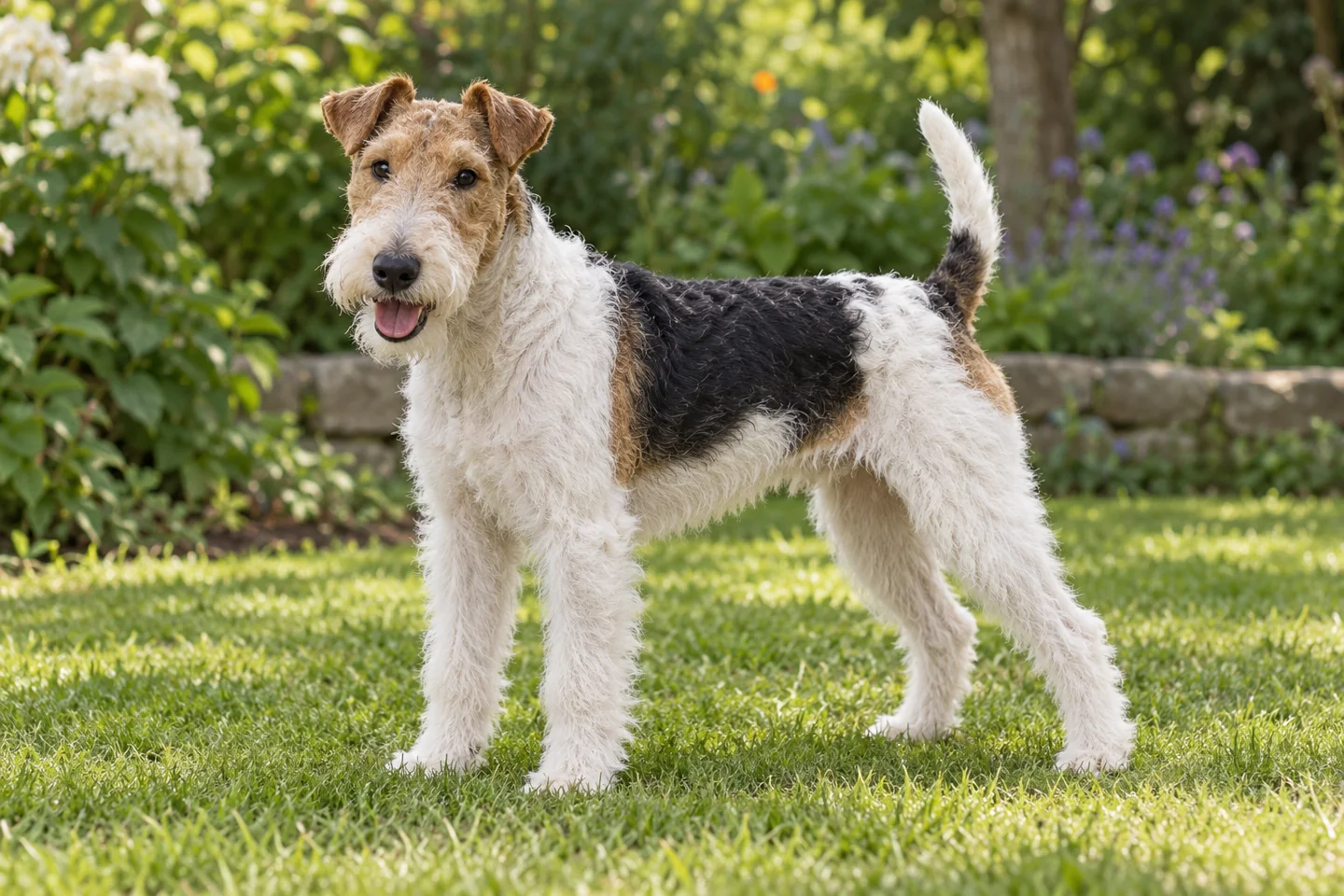
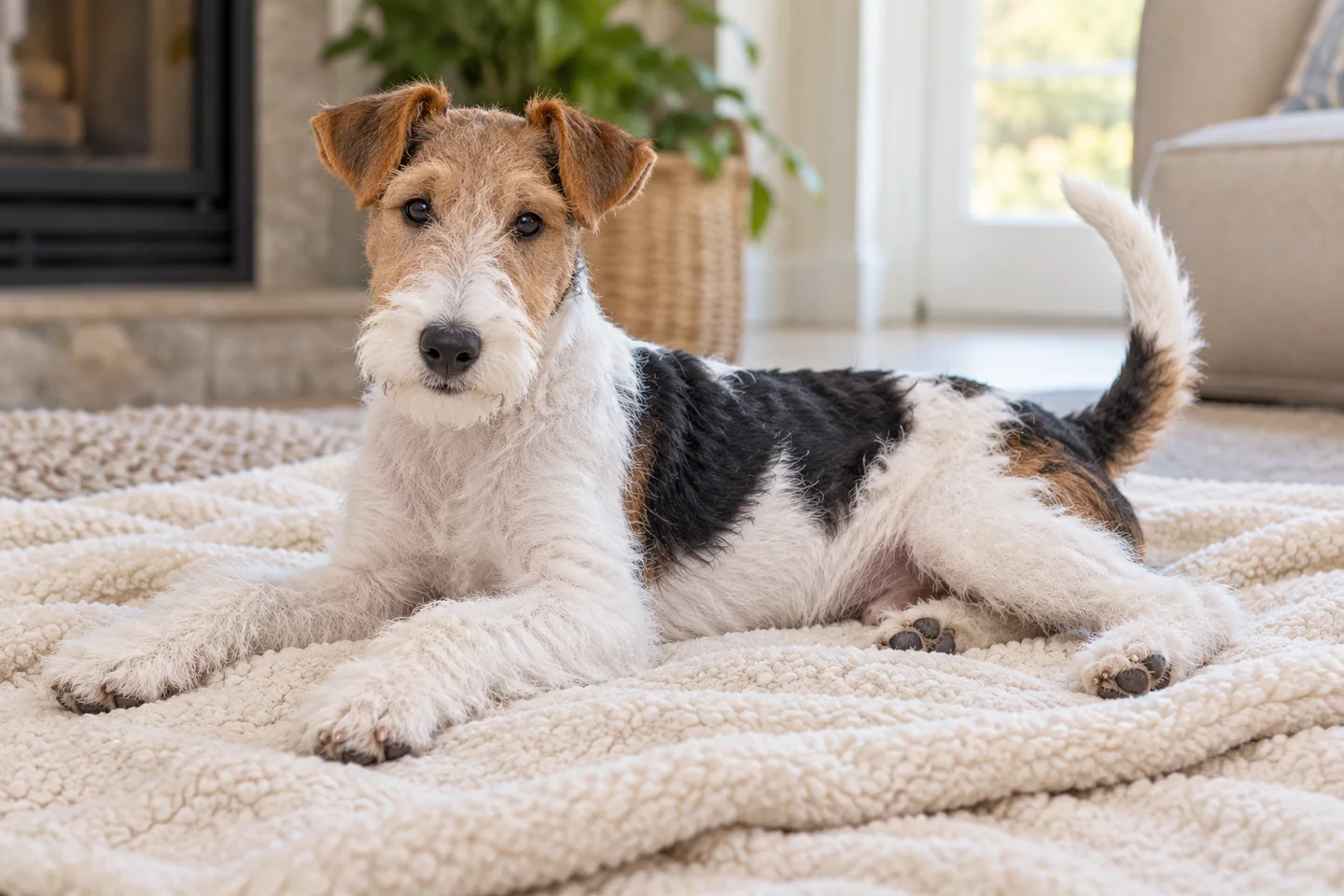
The illustrations select a predominantly white wiry coat with black and tan markings, natural forward-folded V ears, and a full straight tail carried upright. They avoid the smooth coat of the other Fox Terrier and a tail curled over the back. These images are appearance references, not photographs of parents or proof of health. Meet the real dog and discuss how it rests, travels, accepts grooming, and responds to unfamiliar animals. An appealing terrier expression cannot establish suitability for every home, and a puppy still needs a practical learning plan regardless of pedigree.
Working context without a promise about every terrier
The FCI places the breed in the British terrier tradition. Working background supplies context for investigation and interest in moving animals, while it does not require a companion household to recreate hunting tasks. A dog can search safely, explore appropriate places, and learn useful skills without being allowed to pursue wildlife or neighboring pets.
Ask what the breeder's adults do outside an event or prepared visit. How are doorways, necessary care, and quiet afternoons handled? A working or show record provides particular information rather than a complete account of household life. In adoption, discuss the animal's actual experience and the transition to your setting. A dog from a quieter place may need new lessons around traffic or shared entrances. An adult familiar with one grooming arrangement may need time to accept another. Practical questions about the recent family and individual are more useful than assuming that every member of an old working breed will suit the same owner.
Adult references and what slightly smaller means
The FCI states that male height should not exceed 39 cm, with females slightly less. It gives an ideal male show-condition weight of 8.25 kg, again describing females as slightly less. These statements do not create a precise female interval or a universal feeding target. Assess condition and frame with the veterinary team instead of inventing the missing range.
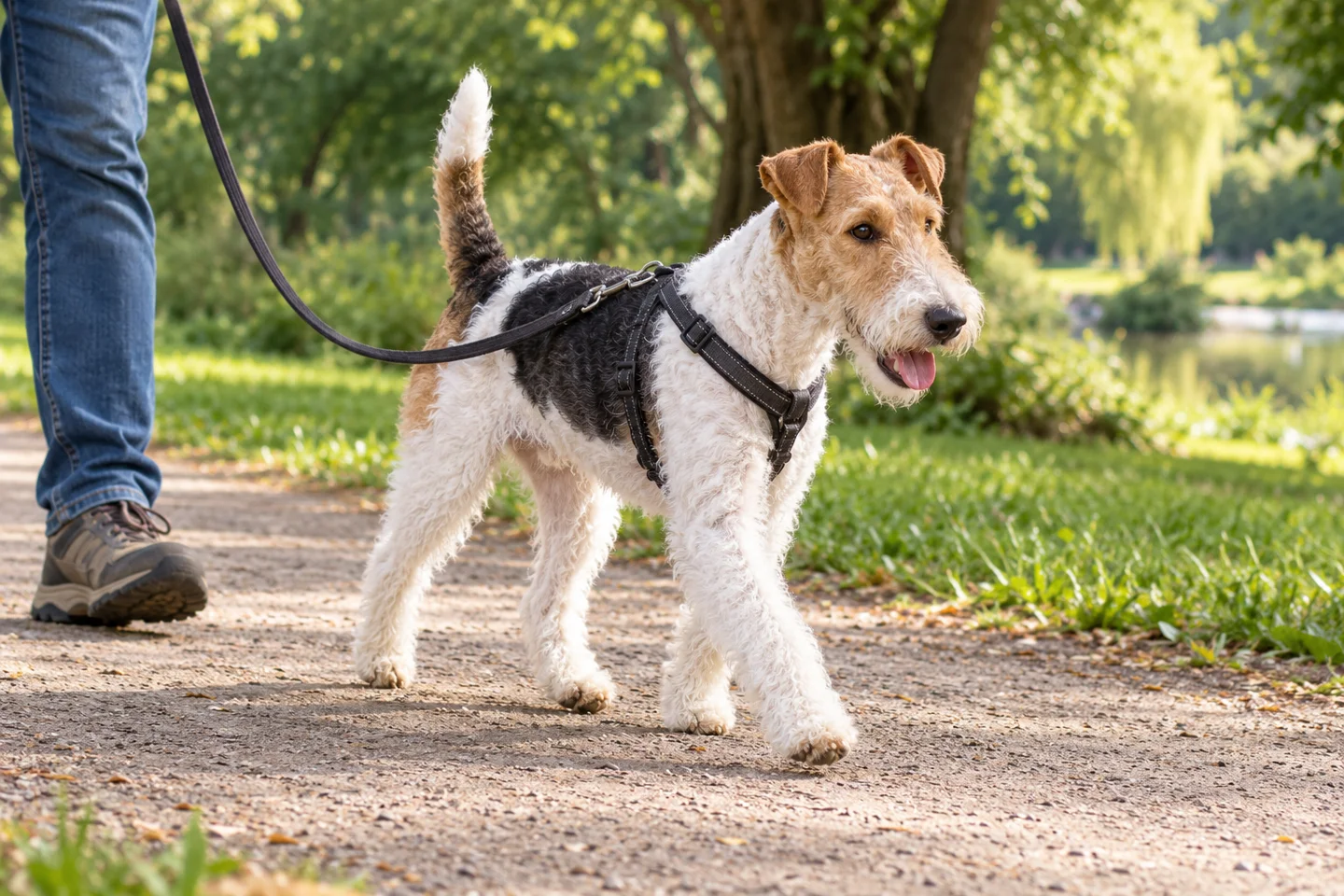
The intended dog is compact and athletic. A groomed outline can conceal gradual weight change, so learn to examine the body beneath furnishings. Plan travel restraint and equipment for the adult, rechecking during growth. A harness must allow movement while preventing escape when the dog backs away. Inspect gaps in gates and fencing from the animal's height. Teach supported lifting when necessary and comfortable vehicle access before either becomes urgent. Small size can simplify some handling, but it should not become an excuse to skip cooperation or disregard a new change in movement, appetite, or willingness to be touched.
Wire texture and the natural outline shown here
The standard describes a dense wiry coat with a softer undercoat. White predominates, with specified black or tan markings. The selected example preserves a recognizable long terrier head with moderate furnishings rather than an exaggerated beard or an invented curly coat. Natural ears fold forward; they are not erect spitz ears. The complete tail is carried upright without curling over the back.
Puppy coat and proportions change with development. A young animal should not be expected to show an adult grooming finish immediately. Ask how the family coat is maintained and what the household routine will require. A picture cannot reveal matting close to the skin or a painful area under equipment. For an adopted animal, assess comfort before cosmetic appearance, obtaining professional help when needed. Claims about unusual markings should not divert attention from identifiable medical records, observed behavior, and the source's explanation of care.
Training when the dog has acquired a household object
Prevent access to dangerous items while teaching exchanges with harmless objects. Offer a worthwhile alternative and let the dog release rather than repeatedly prying its mouth open. A chase around furniture can become part of the activity and makes a real hazard harder to manage. If swallowing objects or guarding is recurring, discuss medical and behavioral possibilities with the veterinary team and qualified help.
Teach attention and returning where the dog can succeed. Rewards can include food and access to an appropriate investigation. Add distractions gradually; a familiar cue is not automatically available beside a running animal. Practice pausing at the entrance behind a secure barrier before a delivery or exciting departure. Every regular carer needs the same routine. Avoid collar jerks, scruffing, or demonstrations of dominance. Useful training should clarify the requested action and reduce conflict. A dog that is easy to lift still benefits from skills that keep walks, grooming, and care manageable without a physical contest.
Exercise that does not depend on uncontrolled chasing
Offer regular movement and suitable investigation through the week. A terrier can enjoy searches and controlled play without every session becoming a high-speed contest. Adjust demands to age, fitness, and medical findings. Puppies need manageable experiences and rest, while older dogs may prefer shorter routes with more time to explore.
Inspect free-running areas for this particular animal. Check gates, gaps, surface hazards, and the behavior of other users before release. A facility name cannot guarantee containment or compatibility. Bring water and consider shade, ground temperature, and weather changes. An eager dog may still need the handler to stop. After activity, inspect feet and places where equipment touches, then notice movement later. A repeated limp or altered recovery deserves assessment rather than more jumping to build toughness. A sustainable plan includes alternatives when the preferred field is unavailable and enough quiet time that activity does not become continual anticipation of another chase.
Barking, boundaries, and a place to settle
Notice whether barking follows passing people, neighboring dogs, or difficulty when the owner leaves. Those situations need different responses. A window or fence that triggers the dog repeatedly may need a change in access while a calmer alternative is taught. Reward disengaging before the episode becomes sustained. Shouting from elsewhere in the house can increase the disturbance without teaching the next action.
Provide a resting place away from heavy traffic and introduce calm periods during ordinary tasks. Build time alone gradually and observe sleep, eating, pacing, and recovery. Persistent distress needs veterinary and qualified behavior advice. Another animal may add new concerns without resolving separation difficulty. Arrange a trusted carer before a long absence and practice equipment, doors, and walks together. The actual weekly schedule belongs in the placement discussion. Enthusiasm for a small companion cannot supply cover when work, illness, or travel interrupts the usual routine.
Socialization that includes the grooming surface
A puppy needs manageable experience of people, dogs, sounds, surfaces, and equipment. Let it observe from a comfortable distance and reward relaxed engagement. It does not have to greet everyone. Ask strangers to wait rather than reach down or lift the animal for contact. A clear retreat route helps keep the lesson within a useful level of difficulty.
The grooming surface deserves its own practice before a long appointment. Begin with stable nonslip footing, brief touch, and easy departures. Paw, ear, and mouth handling should develop gradually. An adult rescue needs the same assessment of actual familiarity rather than assumptions based on age. If the dog repeatedly freezes, withdraws, or remains unsettled afterward, simplify the next session and seek guidance. A sturdy exterior cannot establish emotional comfort. Successful social learning involves recovery and ordinary behavior after exposure, rather than merely remaining still until a person decides that the event has lasted long enough.
Children and a terrier’s protected choices
Keep interactions at a level the child and dog can manage with close adult attention. Invite an approach, touch briefly, and pause. If the terrier leaves, contact ends. Prevent lifting during games, hugging around the neck, climbing over the body, and pulling the beard. The coat should never become a handle for keeping the animal nearby.
Meals, chews, and stolen objects remain adult responsibilities. A child should call for help instead of reaching toward the mouth or testing trust around a bowl. Give the dog a protected bed outside the main play route. Visiting children need supervision even where familiar relationships are relaxed. Before a party or noisy running game, arrange separation rather than waiting for an objection. Use a reliable barrier when adult attention becomes divided. Suitability depends partly on whether the household can maintain those boundaries consistently, not a general assertion that terriers are courageous or affectionate.
Aggression and avoiding the small-dog exception
A snap from a small dog can cause injury and should not be dismissed as comic behavior. Identify the immediate situation: painful brushing, a resource, crowding, or an unfamiliar person may require different questions. Create safety and prevent another exposure while recording what occurred. Do not repeat the trigger to obtain proof or a better video.
New touch sensitivity or abrupt changes deserve veterinary assessment. Recurring threats need qualified reward-based help and practical management while teaching progresses. Punishment can suppress a warning without removing its cause. If a muzzle is recommended for a specific plan, introduce it comfortably and check fit; it cannot make forced contact suitable. After a bite, obtain care for the person and review how access occurred. A history of friendliness toward one person cannot certify the next encounter. Prevention should address the actual dog and circumstances, including how necessary care will be provided without allowing repeated painful or frightening confrontations.
Dogs, cats, and the practical limits of sharing
Assess canine partners with space and handlers able to move apart. Look for reciprocal pauses and comfortable disengagement. One dog repeatedly following another that tries to leave needs interruption. A large dog's enthusiasm does not justify knocking the terrier over. Agreement outside also does not establish immediate comfort sharing every home resource.
Arrange separate food and resting options before adding a companion. Cats need protected routes to their essentials, with introductions that prevent chasing. A peaceful view of a stationary cat cannot predict the response to running later. Rabbits, birds, and other small pets require secure accommodation and a plan whenever it is opened. Ask about the individual history and acknowledge unknowns. If separation cannot remain reliable during chores or absences, reconsider placement rather than expecting the dog to negotiate safety unaided. Training supports cooperation without guaranteeing the elimination of every pursuit interest across the animal's life.
Grooming decisions for a wire coat
The care arrangement can differ between a show coat and a practical pet routine. Ask a groomer experienced with the texture to explain maintenance choices and how they affect the individual coat. Regular examination and gentle brushing remain necessary in either arrangement. Do not pull repeatedly through tight knots or cut where the skin cannot be identified safely.
Check behind ears, around limbs, and beneath equipment for debris or irritation. Use a stable nonslip surface and brief cooperative sessions rather than one prolonged struggle. Introduce bathing, drying, nail maintenance, and tooth brushing gradually. The folded ears need observation for discharge, odor, or pain. Deep tools and leftover drops are poor substitutes for assessment of a new problem. If handling becomes difficult in one area, pause and investigate discomfort. Grooming should provide access to skin and condition checks while keeping the animal comfortable, rather than preserve a cosmetic outline at the expense of ordinary movement or care.
Health: the parent club adds VDEGS to its breeder guidance
The current American Fox Terrier Club breeder page names patella and cardiac assessments for Wire Fox Terriers and additionally specifies VDEGS testing. The shorter AKC national-club list names patella and cardiac evaluation. State that difference rather than assuming one page fully reproduces the other. Confirm the current program relevant to a proposed litter and request the reports.
A patella assessment, a cardiac examination, and a DNA result answer distinct questions. The vague phrase fully tested does not identify which occurred. Ask how the results relate to the actual mating and discuss interpretation with the veterinary team. Family medical findings appearing later also matter. For a rescue, current symptoms and treatment history remain valuable even where family records are absent. Completed breeding assessments cannot explain every new clinical change in your dog. Keep background information available without allowing it to replace an examination when movement, breathing, appetite, or behavior changes.
VDEGS concerns skeletal development, not every later limp
Primary research identified a SCARF2 defect in Wire Fox Terriers with a developmental skeletal disorder resembling van den Ende-Gupta syndrome. The parent club abbreviates the condition VDEGS. Ask for the exact test and dog identification rather than assuming a generic DNA package necessarily included the relevant variant. A research finding about affected dogs does not establish the frequency throughout every present-day population.
If a puppy has an unusual jaw relationship, difficulty moving, or another developmental concern, arrange veterinary assessment. Do not decide from a photograph that all findings have one genetic cause, or dismiss a functional problem as a cosmetic variation. The clinician can evaluate the animal and determine which information is relevant. A favorable test is useful for its defined question without clearing every possible skeletal disease. Similarly, a later limp in an adult needs its own investigation rather than an automatic VDEGS label. Distinguish the inherited-development question from a current clinical problem requiring direct care.
Eye problems need direct assessment rather than a copied panel
UC Davis lists Wire Fox Terriers among breeds relevant to primary lens luxation testing. The lens can move from its normal position and cause inflammation or glaucoma. Ask which variant was assessed and have any result interpreted professionally. A DNA finding does not replace examination of a painful eye or exclude every other cause of visual change.
A new red, cloudy, or unusually closed eye, or apparent visual difficulty, needs prompt veterinary advice. Do not use drops from an earlier dog or wait for the next scheduled screening event. Describe onset and behavior without forcing the eye open. The clinician decides on examination, pressure assessment, and referral where appropriate. Carrier terminology also needs care: laboratory guidance notes some clinical risk in carriers for this condition. Owners should not turn a single favorable result into a lifetime all-clear or use an online resemblance to assign a diagnosis. Keep actual reports and current findings distinct and available to the veterinary team.
Feeding, mixes, and the real cost of the coat
Measure the ration and include rewards and chews when reviewing condition. Choose complete food appropriate to life stage, with veterinary advice for persistent appetite, thirst, digestive, or weight changes. A groomed square outline is not a ration formula. Homemade feeding needs suitable formulation and supplements should have an identified purpose.
A Wire Fox mix may vary in coat texture, adult build, pursuit, and handling needs. A crossbreed name cannot promise effortless grooming, reliable recall, or freedom from inherited risk. Ask what ancestry is documented and which parental assessments are relevant. Obtain local costs for veterinary care, coat support, training, secure equipment, transport, and competent cover. Include maintenance between professional appointments, not just the appointment itself. Another person should practice the dog's handling and door routine before illness or travel makes a handover urgent. Suitability includes a workable ordinary week, with safe activity and protected rest as well as enthusiasm for the breed's appearance.
dogsDating and a meeting without pressure to play
A Wire Fox Terrier dogsDating profile should explain the individual's preferences, including pace, comfortable partners, and situations requiring more room. Keep exact home coordinates private and exclude the household address. Use an approximate locality to agree on a public starting landmark where the dogs can be prepared separately.
Set an initial gap and a simple way for either handler to request a pause or finish. Walk with enough room for each animal to notice the other and return to ordinary investigation. Contact is optional. Repeated blocking, fixation, or efforts to escape should change the plan promptly. Avoid shared toys or food that draw unfamiliar dogs together into a confined patch. Afterwards, compare concrete observations before deciding whether another outing suits both animals. Either person can decline. A calm walk apart can remain a useful relationship without progressing to close play or assuming that two similar terriers should automatically enjoy identical social contact.
Sources and editorial notes
Sources checked October 22, 2026. Breed measurements describe reference ranges, not a diagnosis or an individual dog's ideal weight. Images are AI-generated breed illustrations and do not document a particular dog or health condition.
- AVSAB: Humane Dog Training Position Statement
- VCA Animal Hospitals: Food aggression in puppies
- VCA Animal Hospitals: Common emergencies in dogs
- Orthopedic Foundation for Animals: CHIC health screening programs
- VCA Animal Hospitals: Aggression toward unfamiliar dogs, diagnosis
- VCA Animal Hospitals: Grooming and coat care for your dog
- VCA Animal Hospitals: Ear infections in dogs (otitis externa)
- AAHA: Feeding plans for healthy, appropriate weight cats and dogs
- VCA Animal Hospitals: Heat stroke in dogs
- AVSAB: Puppy Socialization Position Statement
- VCA Animal Hospitals: Dog behavior problems, aggression toward children
- FCI Wire Fox Terrier standard 169, October 2026: coat, natural tail and adult references
- American Fox Terrier Club: current breeder guidance including VDEGS, patella and cardiac assessments
- American Kennel Club: current Wire Fox Terrier national-club recommendation list
- Hytonen and colleagues, PLOS Genetics 2016: SCARF2 developmental skeletal disorder in Wire Fox Terriers
- UC Davis Veterinary Genetics Laboratory: primary lens luxation, relevant breeds and carrier interpretation
Keep getting to know dogs.
Read another guide or return to your dogsDating community.
Explore breed guidesBack to dogsDating