Wirehaired Pointing Griffon
The Korthals pointing griffon, with steel-gray and liver illustrations, practical wire-coat care, differentiated screening information and careful health-database interpretation.
How these guides are researched and reviewed
- Origin in FCI standard
- France
- Male height reference
- Approximately 55–60 cm
- Female height reference
- Approximately 50–55 cm
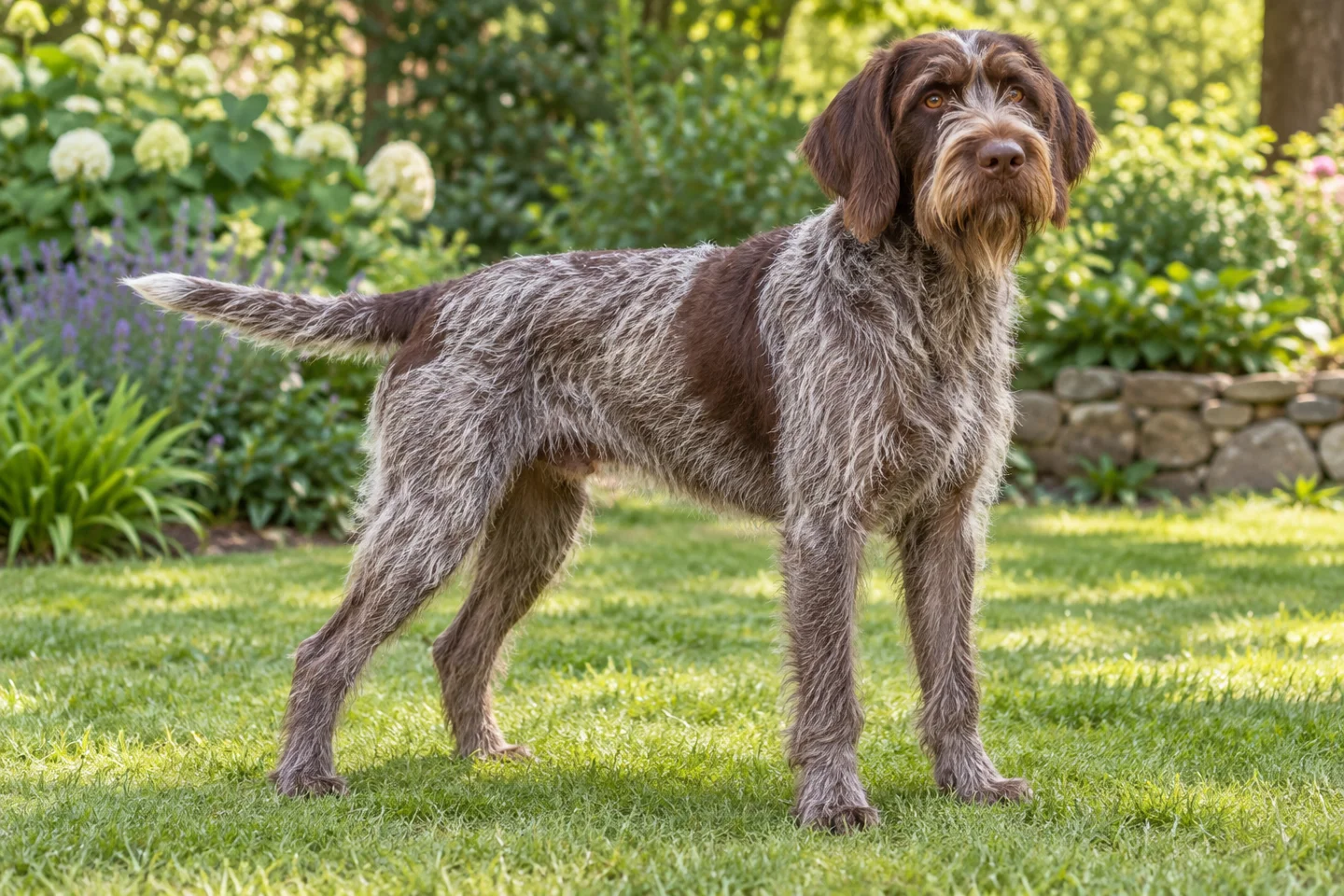
- Illustrated coat
- Steel-gray roan with liver head and patches
General information for owners. These articles have not been reviewed by a veterinarian. Medical decisions need your dog's history and an examination.
The Korthals griffon is a pointing dog, not a generic shaggy mix
The Wirehaired Pointing Griffon is also called the Korthals Griffon. It is separate from the German Wirehaired Pointer and from small companion breeds whose names include griffon. A shaggy brown face alone cannot establish ancestry. Ask which registered identity appears on the documents and acknowledge uncertainty for an adopted dog with limited background.
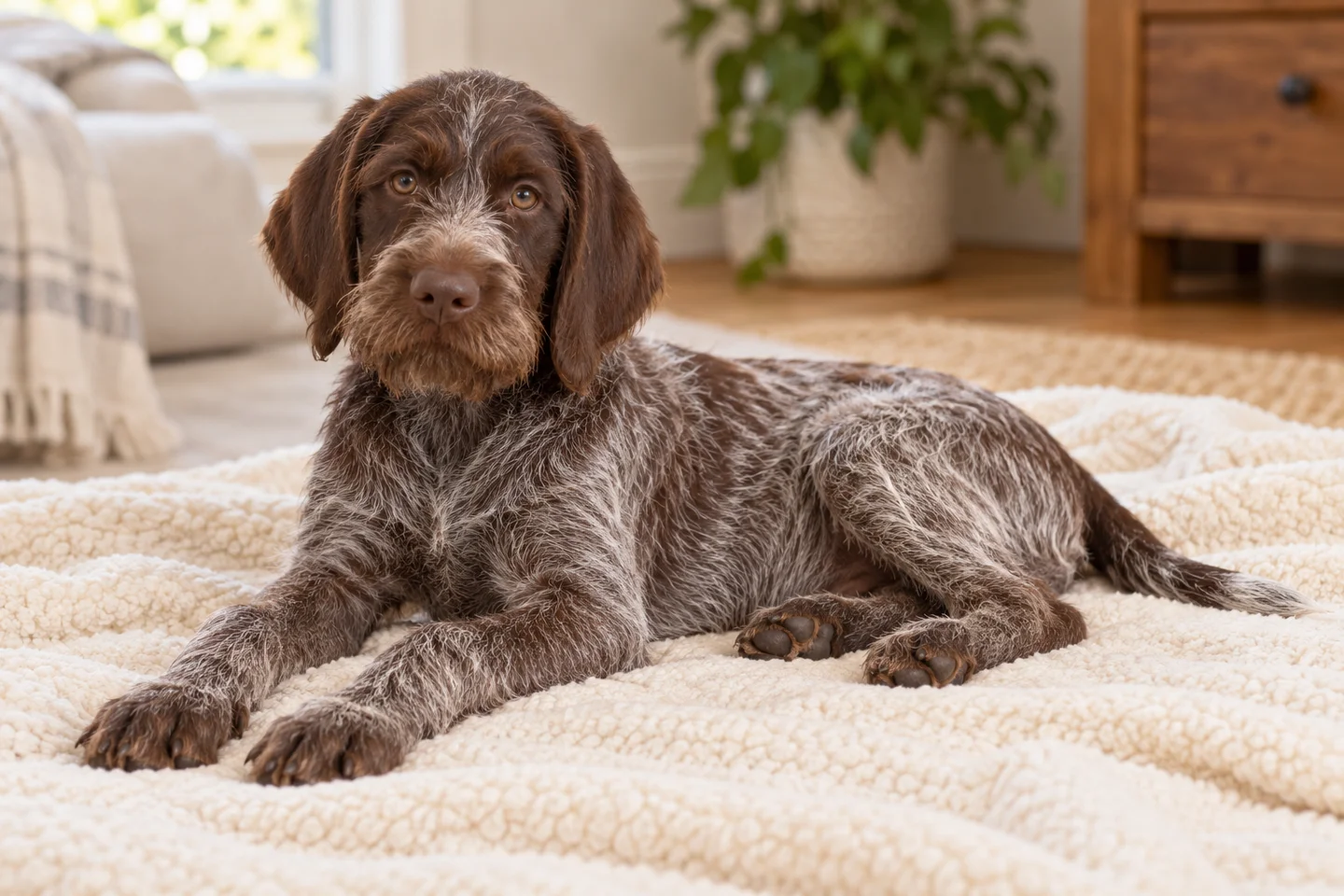
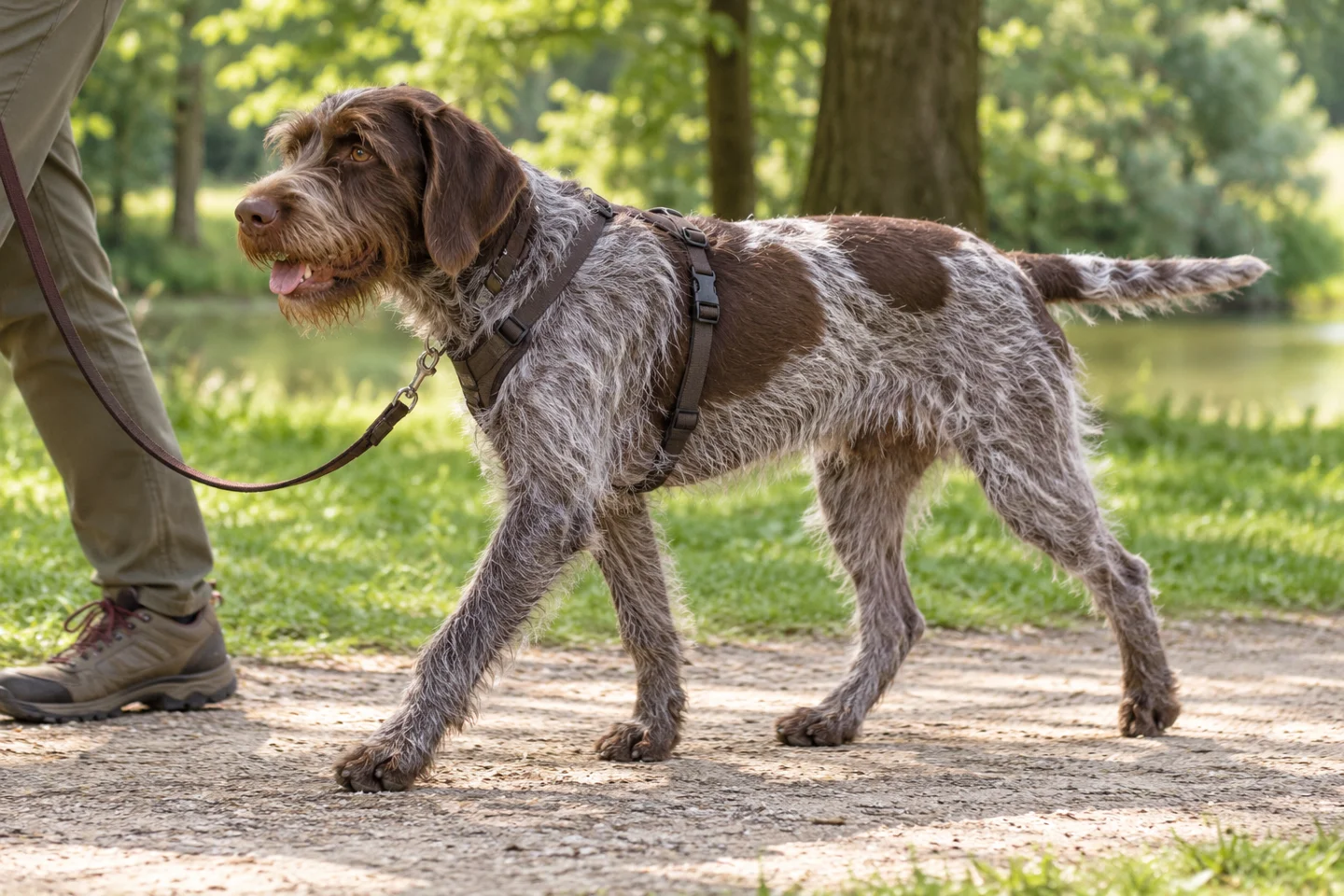
The illustrations choose a steel-gray roan body, liver-brown head and patches, natural hanging ears, and a full tail. They show moderate brows and beard over a functional athletic outline rather than a poodle-curly coat. Images cannot certify parentage, working ability, or health. A prospective owner needs information about the actual animal's handling, recovery, household experience, and response to other animals. Ask to see ordinary care rather than only a posed appearance. A puppy still needs domestic learning, even when its family has extensive field experience or show success.
Korthals development and the modern household question
The FCI standard identifies France as the country of origin and records the Korthals name associated with development. A historical background in versatile pointing work provides context for investigation and cooperation without promising that every puppy has the same abilities. Companion owners can offer safe searches and controlled activity without allowing pursuit of wildlife or reproducing every working task.
Ask how the adults live between events. What happens when an outing is cancelled, a visitor arrives, or a different carer must handle the dog? Those concrete examples matter to household suitability. A title describes accomplishment in a particular setting, not universal comfort. In rescue, discuss which skills are known and which need teaching. A dog accustomed to fields and vehicles may still find a lift or crowded entrance unfamiliar. Match the transition to the individual rather than assume maturity or a working record supplies every domestic skill. The proposed home needs a sustainable plan for quiet recovery as well as purposeful activity.
Adult height and measuring the individual rather than the coat
The FCI gives approximate heights of 55–60 cm for males and 50–55 cm for females. It does not prescribe a fixed adult kilogram interval in that document. Ask the veterinary team to assess condition, muscle, and growth through the coat instead of borrowing a weight from another wirehaired pointer. An eager appetite is not a measurement of energy need.
Plan vehicle space and equipment for the adult. It should turn and lie comfortably in suitable restraint, with a secure entry and exit procedure. Teach access on stable footing before an injury makes loading difficult. A ramp or other supported arrangement introduced calmly can later simplify care. Recheck harness fit during growth and look for friction hidden beneath hair. Changes in rising, turning, or recovery deserve attention even when the dog remains eager to investigate. The clinician needs the actual history and examination; an athletic outline cannot establish the absence of pain or decide the amount of work the animal should perform.
Harsh hair, a roan body, and normal natural anatomy
The standard describes harsh coarse outer hair over a dense undercoat, with several permitted brown, gray, and white arrangements. The selected steel-gray and liver example is one choice rather than the only possible griffon. Brows and beard should not conceal comfortable function or become a reason to ignore skin and eye access. Natural hanging ears and a complete tail are retained in the illustrations.
Puppy texture and furnishings develop with age, so an early photograph cannot promise an exact adult finish. Ask what normal maintenance looks like in the particular family. A photograph also cannot show how debris accumulates after activity or whether brushing has become painful. For an adopted animal, assess coat condition and handling comfort before planning cosmetic work. Professional help may be needed with neglected hair. Avoid a seller who treats a fashionable coat claim as an answer to medical or behavioral questions. Those subjects need their own evidence, tied to the real dogs being discussed.
Training that gives the handler a role in exploration
Begin with short attention and return exercises where the dog can respond. Reward promptly and sometimes allow an appropriate investigation afterward. The handler then helps the animal gain access to useful activity rather than always ending it. Add distraction gradually. A response available in the house is not automatically available beside birds, scent, or another running dog.
Use physical safeguards while learning develops and obtain instruction on line handling if needed. Tangling a line around people or obstacles creates a separate hazard. Teach a pause at exterior doors and an exchange with harmless objects. Repeated chasing or forcing an item from the mouth can make a genuine emergency harder to manage. Secure hazards and seek qualified reward-based help where guarding or swallowing objects is recurring. A cooperative working reputation does not replace a skill taught at the actual difficulty required. Review fatigue, understanding, emotional state, and discomfort before interpreting a failed response as a character problem.
Exercise through ordinary days and changing conditions
A sustainable week includes regular movement, suitable investigation, and recovery. Controlled searches and varied walks can provide purpose without every session becoming a high-speed chase. Adapt the plan to development, medical findings, and fitness. A puppy should not follow an adult endurance schedule, while an older griffon may enjoy shorter tasks and easier ground.
Consider weather, surfaces, water, and an early exit before choosing a demanding route. Carry drinking water and avoid assuming outdoor ancestry protects against temperature hazards. Check any enclosure for this particular dog before freedom. Gates, gaps, obstacles, and other users all matter. After activity, inspect pads and equipment contact areas and notice movement later. Repeated stiffness or reluctance the following morning needs advice rather than more work to improve toughness. A workable household also has alternatives when a preferred field or water location is unavailable. Rest and quiet learning remain part of the plan instead of being replaced by continual escalation.
Water access should be taught and supervised
A versatile gundog background does not establish automatic safety in every body of water. Introduce suitable access gradually, with supervision and a clear way to enter and leave. Assess current, temperature, bank conditions, local warnings, and the dog's actual confidence. Do not throw a hesitant animal in or make swimming a test of breed authenticity.
Recovery after wet activity matters too. Provide a comfortable drying arrangement and inspect skin, ears, and feet. A dog keen to continue may still be cold, tired, or uncomfortable, so the handler must make the decision. Obtain veterinary advice before strenuous new activity when health or fitness is uncertain. If coughing, altered breathing, or another problem follows an outing, describe the event accurately and seek assessment. A water-working label cannot diagnose the cause. Appropriate activity follows the individual animal and conditions, not an expectation that every member of the breed should enjoy unlimited swimming under any circumstances.
Socialization and the quiet part of an encounter
Let a puppy observe new people, sounds, surfaces, and animals from a manageable distance. Reward comfortable engagement and preserve a way to leave. Greeting is optional. Ask visitors to wait rather than lean over or restrain the animal for contact. A session can be useful without anyone stroking the dog.
Handling requires separate practice. Brief paw contact, an ear look, equipment fitting, and standing on a nonslip surface should develop before painful care becomes urgent. An adult rescue needs the same respect for actual experience. Confidence in one setting cannot establish familiarity with every city sound or examination room. Continue learning through adolescence and after household changes. If the dog repeatedly freezes, withdraws, or remains unsettled afterward, lower the demands and seek guidance. Review ordinary sleep and activity after exposure as well as behavior during it. Physical presence through a long event does not by itself demonstrate comfortable coping.
Children and a substantial dog’s movement
Plan running games away from the resting dog and manage hurried arrivals. A young griffon can knock over a child without threatening intent. Adults should control the lead near roads and entrances rather than rely on a child to manage an abrupt response to movement. Give the dog a protected bed outside the main play route.
During calm contact, invite an approach and pause after brief touch. Prevent beard pulling, neck hugging, climbing, and following into resting space. Meals, chews, and found objects need adult management; children should ask for help rather than reach into the mouth. Visiting children require supervision even when household relationships are relaxed. Arrange separation before parties or divided adult attention make observation unreliable. Affection toward family members cannot certify tolerance for every handling style or excited group. Suitability includes the adults' ability to keep these arrangements working consistently during ordinary days, rather than only while demonstrating a carefully staged first interaction.
Aggression and the difference between warning and diagnosis
A warning during beard care may involve pulling or painful skin, while a response near food or a doorway presents different circumstances. Stop access to the immediate problem and record what happened before it. Include touch, resources, space, and the animal's ability to retreat. Do not repeat the trigger to prove that the reaction was serious.
New sensitivity or abrupt changes need veterinary assessment. Qualified reward-based behavioral help can support recurring threats, with dependable barriers while teaching progresses. Punishment can make a growl less visible without resolving the concern. If a basket muzzle is advised, introduce it comfortably and use it for the agreed purpose. It cannot turn forced contact into a suitable encounter. After a bite, obtain care for the person and examine how access occurred before allowing another exposure. Breed reputation or previous friendly behavior cannot establish the next response. Prevention must address the actual dog and the practical circumstances in which contact became difficult.
Other dogs, cats, and the household layout
Meet prospective canine companions with separate handlers and room to turn away. Look for pauses and comfortable disengagement, not just the amount of running. A dog trying to hide or leave needs help when the other continues pursuit. A calm outdoor relationship cannot establish immediate agreement over beds or food inside the home.
Prepare independent resource access and reliable separation before adding an animal. Cats need protected routes to essentials, with introductions that prevent chase rehearsals. Acceptance of one stationary resident cannot predict the response to unfamiliar running animals outdoors. Small pets require secure accommodation and a plan whenever it opens for cleaning or handling. Ask about actual history and acknowledge gaps. If normal chores or absences would defeat necessary separation, reconsider placement rather than rely on the animals to negotiate safety. Training supports cooperation with the handler without promising that every moving animal will remain uninteresting throughout the dog's life.
Grooming a working wire coat after outdoor activity
Inspect the beard, brows, limbs, and areas beneath equipment after vegetation or mud. Remove small debris gently before it becomes a tight knot. Ask a groomer familiar with the texture to explain appropriate maintenance and a practical household routine. A harsh coat should not be treated automatically as poodle hair, and a cosmetic finish should not obscure skin access or comfortable movement.
Use a stable surface and achievable sessions for bathing, drying, nail care, and tooth brushing. Watch the hanging ears for odor, discharge, pain, and repeated shaking. Cleaning and treatment depend on the individual cause. Deep tools or routine painful manipulation are not substitutes for veterinary advice. If one area becomes newly difficult to touch, investigate discomfort before increasing restraint. A consistent routine can reveal rubbing, skin changes, or altered condition beneath furnishings. Persistent findings need clinical assessment rather than an assumption that a shaggy outdoor dog should tolerate them.
Health: the club’s current page includes thyroid assessment
The AKC's current national-club list names hip, elbow, and ophthalmologist evaluations. The AWPGA health page additionally describes thyroid assessment in its CHIC designation, with an effective date in 2017. State the difference between the resources and confirm the current program relevant to the particular litter rather than assume a short list reproduces every club detail.
Ask for actual identifiable reports and veterinary interpretation. Hip assessment, thyroid testing, and an eye examination answer different questions. A general claim that a dog works well cannot replace any one of them. Family diagnoses appearing later remain relevant, so ask how new information is recorded and communicated. For a rescue, current medicines, symptoms, and previous investigations are valuable even when pedigree records are absent. A favorable breeding screen cannot explain every new clinical problem in an offspring. Preserve the distinction between background risk assessment and the examination needed when your dog develops a change.
Eyes beneath furnishings still need direct attention
The AWPGA health discussion includes eye concerns such as entropion. Hair around the face can make early irritation harder to notice, so observe squinting, rubbing, discharge, or a change in how the dog holds an eye. Do not decide that all tearing is simply a beard or grooming issue. A painful or suddenly abnormal eye needs prompt veterinary advice.
Avoid forcing the eye open or choosing drops from another animal. Describe onset, apparent vision changes, and any possible trauma or contact with vegetation. The clinician determines the cause and appropriate care. A screening result from an earlier date cannot exclude a new injury or every other eye disease. Likewise, a photograph of clear eyes does not supply specialist assessment. Keep relevant reports with the dog's identification and discuss follow-up where indicated. The practical purpose is comfortable individual care, with clinical findings guiding the next step instead of an owner selecting a diagnosis from a list of breed-associated possibilities.
Using the health database without turning anecdotes into rates
The AWPGA database policy distinguishes anecdotal health information from findings supported by a professional report. That distinction is useful when researching a family. An unverified account and a documented diagnosis should not be presented as equal certainty. The database also explains how certification information is checked and who may submit records.
Ask a breeder which entries support a claim and review the underlying report where available. Absence of a listed condition cannot prove that every relative remained unaffected, since reporting and follow-up vary. Do not calculate population prevalence from a group of submitted records without a suitable study design. Owners can contribute useful information through the established process while respecting privacy and accuracy. For current care, the individual veterinary history remains central. A confirmed diagnosis should be communicated clearly rather than replaced with a broad online label. Thoughtful use of a database supports questions and continuity, without making it a substitute for examination or a guarantee about the next puppy.
Meals, mixes, and the budget beyond purchase
Measure the ration and include rewards and chews when reviewing intake. Choose complete food appropriate to life stage, and seek veterinary advice for persistent appetite, thirst, digestive, or weight changes. An active appearance does not establish energy need by itself. Homemade alternatives require proper formulation, with supplements serving a defined purpose rather than a general claim about hunting dogs.
A griffon mix may vary in adult size, coat, pursuit, and handling needs. Ask what ancestry is documented and avoid promises of easy grooming, automatic recall, or freedom from inherited disease. Relevant parental information remains useful where known. Obtain local costs for veterinary care, coat support, training, transport, secure equipment, and competent cover. Include maintenance after outings and between appointments. A backup carer must know doors and walking routines, so practice a handover before illness or travel makes it urgent. Suitability depends on a sustainable ordinary week as well as an enjoyable occasional field outing.
dogsDating and choosing an initial walking arrangement
A Wirehaired Pointing Griffon dogsDating profile should describe actual preferred pace, partners, and situations needing additional room. Keep exact home coordinates private and omit the household address. An approximate locality is enough to select a public starting landmark with space for each handler to prepare separately.
Agree on an initial gap and a simple way to pause or finish. Begin with controlled movement where both dogs can notice each other and resume investigation. Contact is optional. Repeated blocking, fixation, or attempts to escape mean the plan needs changing. Avoid shared toys and food during the first encounter. Afterwards, compare specific observations before deciding whether another outing suits both animals. Either person can decline. A quiet parallel walk may remain the useful relationship, without progressing to close play or assuming that shared gundog interests establish automatic compatibility.
Sources and editorial notes
Sources checked October 22, 2026. Breed measurements describe reference ranges, not a diagnosis or an individual dog's ideal weight. Images are AI-generated breed illustrations and do not document a particular dog or health condition.
- AVSAB: Humane Dog Training Position Statement
- VCA Animal Hospitals: Food aggression in puppies
- VCA Animal Hospitals: Common emergencies in dogs
- Orthopedic Foundation for Animals: CHIC health screening programs
- VCA Animal Hospitals: Aggression toward unfamiliar dogs, diagnosis
- VCA Animal Hospitals: Grooming and coat care for your dog
- VCA Animal Hospitals: Ear infections in dogs (otitis externa)
- AAHA: Feeding plans for healthy, appropriate weight cats and dogs
- VCA Animal Hospitals: Heat stroke in dogs
- AVSAB: Puppy Socialization Position Statement
- VCA Animal Hospitals: Dog behavior problems, aggression toward children
- FCI Wire-Haired Pointing Griffon Korthals standard 107, 2023: identity, coat and height
- American Wirehaired Pointing Griffon Association: current health page including thyroid and CHIC context
- American Kennel Club: current Wirehaired Pointing Griffon national-club recommendation list
- AWPGA Health and Pedigree Database: verification and diagnosed-versus-anecdotal policies
Keep getting to know dogs.
Read another guide or return to your dogsDating community.
Explore breed guidesBack to dogsDating